
Finding the Best Serum for Oily Skin
The best serum for controlling oil and minimising pores is a water-based, non-comedogenic formula featuring ingredients with proven sebum-regulating properties. A niacinamide serum for oily skin is often the top recommendation, supported by clinical data. Niacinamide, or vitamin B3, is a cornerstone ingredient for its ability to reduce sebum excretion rate and improve pore appearance without irritation. This aligns with findings from a study in the Journal of Cosmetic Science, which noted specific ingredients can help normalise oil production.
- Finding the Best Serum for Oily Skin
- What to Look for in an Oily Skin Serum
- Our Top Picks for Oily Skin Serums
- La Roche-Posay Effaclar Serum
- The Ordinary Niacinamide 10% + Zinc 1%
- Paula’s Choice 10% Niacinamide Booster
- Glow Recipe Watermelon Glow Niacinamide Dew Drops
- Kiehl’s Clearly Corrective Dark Spot Solution
- CeraVe Skin Renewing Vitamin C Serum
- Key Ingredient Comparison for Oily Skin
- How to Layer Serums with Oily Skin
- Debunking the Myth: Can Serums Make Oily Skin Worse?
- FAQs: Oily Skin Serums
- Conclusion
For those with oily skin, the fear that a serum will add weight or cause breakouts is common. The right product does the opposite, providing hydration and targeted actives in a vehicle that supports, not compromises, your skin’s balance. This guide focuses on serums that meet these criteria, including options for those also dealing with acne-prone skin and large pores.
What to Look for in an Oily Skin Serum
Your skin’s primary need is balance, not stripping. A good serum for oily skin should address excess sebum, refine texture, and deliver hydration in a lightweight format. Avoid heavy oils, thick butters, and occlusive waxes that can trap sebum and debris. Instead, prioritise specific ingredient classes and formulations.
Non-comedogenic serum: This is a formulation designation, not a specific ingredient. It means the product has been tested and is unlikely to clog pores, which is non-negotiable for oily skin types.
Look for key active ingredients backed by research. Niacinamide is a multitasker that reduces oiliness, calms inflammation, and improves skin barrier function. Salicylic acid (a beta-hydroxy acid or BHA) is oil-soluble, allowing it to penetrate and exfoliate inside pores, making it a prime choice for a serum for oily skin and large pores. Zinc PCA is another excellent, often overlooked ingredient that helps regulate sebum production. Lightweight humectants like hyaluronic acid and glycerin provide hydration without greasiness, a common feature in a water-based serum for oily skin.
You can dive deeper into the science of this key ingredient in our comprehensive niacinamide serum guide.
Our Top Picks for Oily Skin Serums
We evaluated dozens of serums based on ingredient efficacy, formulation elegance, user feedback, and dermatologist endorsements (such as those highlighted in the Byrdie oily skin serum roundup). The following selections are standout performers for oily, combination, and acne-prone skin types. Each offers a distinct approach to managing shine and refining skin texture.
La Roche-Posay Effaclar Serum
This serum is a targeted treatment for visibly reducing excess oil and unclogging pores. Its formula centers on a high concentration of salicylic acid (1.5%) combined with lipo-hydroxy acid (LHA) for multi-level exfoliation. It is specifically designed as a non-comedogenic serum for oily, acne-prone skin. The lightweight, fluid texture absorbs quickly, making it an ideal base for moisturiser and sunscreen. It’s best used in the evening or as a spot treatment, and consistent use over several weeks can lead to a noticeable reduction in blackheads and pore congestion.
The Ordinary Niacinamide 10% + Zinc 1%
A cult-favorite and budget-friendly niacinamide serum for oily skin, this formula delivers a high-strength 10% niacinamide paired with 1% zinc PCA. The combination is clinically studied to reduce the appearance of blemishes and balance sebum activity. Its water-based, slightly viscous texture spreads easily and dries to a matte finish. For some, the 10% concentration can be initially sensitising, so patch testing is advised. For a broader view of formulas with this ingredient, see our curated list of the best niacinamide serums 2026.
Paula’s Choice 10% Niacinamide Booster
This concentrated booster is a versatile choice. It contains 10% niacinamide alongside vitamin C and licorice root extract to tackle oiliness, uneven tone, and enlarged pores. The formula is exceptionally lightweight and can be used alone or mixed with a moisturiser. Its strength lies in its purity and efficacy; it’s free of fragrance, parabens, and other potential irritants, making it suitable for sensitive oily skin. It represents a premium, cosmetically elegant take on a water-based serum for oily skin.
Glow Recipe Watermelon Glow Niacinamide Dew Drops
For those who want oil control with a radiant, not matte, finish, this serum is a standout. It combines niacinamide with hydrating watermelon extract and hyaluronic acid. The formula is incredibly lightweight and absorbs instantly, leaving skin smooth and prepped for makeup. It’s designed to minimise pores and reduce sebum while imparting a hydrated glow, effectively addressing the desire for a serum for oily skin and large pores without a dry, flat result.
Kiehl’s Clearly Corrective Dark Spot Solution
While marketed for dark spots, this serum is an excellent all-rounder for oily skin. Its blend of activated vitamin C, white birch extract, and niacinamide works to clarify skin, reduce excess oil, and improve overall texture and radiance. The formula is oil-free and non-comedogenic. It provides a more comprehensive approach, targeting post-acne marks and dullness often associated with oily skin types, making it more than just a simple mattifying treatment.
CeraVe Skin Renewing Vitamin C Serum
This drugstore option proves effective serums don’t have to be expensive. It features 10% pure vitamin C (L-ascorbic acid), ceramides, and hyaluronic acid. While vitamin C is the star for brightness, the inclusion of three essential ceramides is crucial for oily skin; they help restore and maintain the skin barrier, which can be compromised by harsh acne treatments. The texture is light and fast-absorbing, and it’s formulated without oils or heavy emollients, aligning with the principles of a non-comedogenic serum.
Key Ingredient Comparison for Oily Skin
Understanding how different actives work helps you choose the right serum for your specific concerns. Here is a comparison of the most effective ingredients for oily skin.
How to Layer Serums with Oily Skin
Applying multiple products correctly is key to seeing benefits without causing congestion. The golden rule is to apply products from thinnest/wateriest consistency to thickest. After cleansing and toning, apply your treatment serum (like niacinamide or salicylic acid). Wait 60-90 seconds for it to fully absorb before applying a lightweight moisturiser, followed by sunscreen in the AM. Avoid layering multiple strong actives (like a high-strength niacinamide serum and a retinol) in the same routine if you’re new to them; consider alternating nights. For a detailed routine breakdown, consult our dedicated serum layering guide for oily skin.
Debunking the Myth: Can Serums Make Oily Skin Worse?
A common misconception is that serums add moisture that oily skin doesn’t need, potentially making it worse. This is false when you choose the correct formula. Oily skin often suffers from dehydration, where the skin lacks water but produces excess oil to compensate. Using a lightweight, hydrating serum can signal to the skin that it has sufficient hydration, potentially helping to normalise oil output over time. The problem arises from using the wrong type of serum, such as one packed with heavy plant oils or silicones. A targeted, water-based serum for oily skin delivers beneficial actives and hydration without contributing to greasiness or clogged pores.
FAQs: Oily Skin Serums
Can I use a serum if I have very oily, acne-prone skin?
Yes, absolutely. In fact, using a serum with ingredients like niacinamide or salicylic acid can be more beneficial than a heavier cream. The key is to select formulas explicitly labeled oil-free and non-comedogenic, which are designed not to clog pores or exacerbate acne.
Should I use a niacinamide serum in the morning or night?
Niacinamide is versatile and can be used both morning and night. It’s stable and works well with other actives, including vitamin C and sunscreen. Many people prefer using it in the morning for its sebum-regulating benefits throughout the day.
What is the difference between a water-based and an oil-based serum for my skin type?
A water-based serum has a light, often liquid texture and uses water as its primary carrier. An oil-based serum uses plant or synthetic oils. For oily skin, a water-based serum is almost always the better choice as it hydrates and delivers actives without adding a layer of oil that can feel heavy or contribute to clogged pores.
How long does it take to see results from a pore-minimising serum?
Realistic expectations are important. While some immediate smoothing and mattifying effects can be seen, significant changes in pore appearance and oil control typically take 4 to 8 weeks of consistent, twice-daily use. Pores don’t physically shrink, but they can appear less prominent as they become cleaner and the surrounding skin is plumped with hydration.
Can I use a vitamin C serum if I have oily skin?
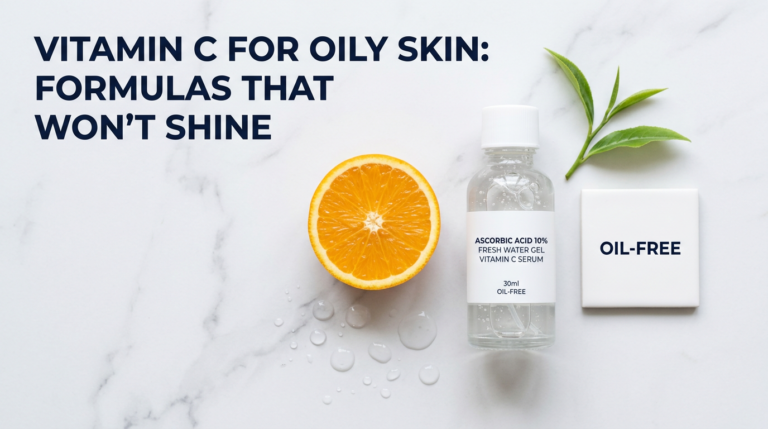
Yes, many vitamin C serums are formulated to be oil-free and suitable for oily skin. Look for formulas with L-ascorbic acid in a lightweight, water-based vehicle. Vitamin C offers antioxidant protection and can help with oil-induced oxidative stress and post-inflammatory hyperpigmentation.
Is it necessary to use a moisturiser after applying a serum for oily skin?
Generally, yes. A serum treats specific concerns, while a moisturiser seals in hydration and supports the skin barrier. For oily skin, choose an oil-free, gel-cream moisturiser. In very humid conditions or if your serum is exceptionally emollient, you may find the serum provides sufficient hydration on its own.
What should I avoid in a serum if I have large, visible pores?
Avoid serums with heavy, occlusive ingredients like coconut oil, cocoa butter, or thick silicones like dimethicone high on the ingredient list. These can sit on top of the skin and trap debris in pores, making them appear more prominent. Stick to lightweight, non-comedogenic formulas.
Conclusion
Choosing the best serum for oily skin is about finding a lightweight, non-comedogenic formula with evidence-backed actives like niacinamide, salicylic acid, or zinc. The right serum won’t add grease but will help balance sebum production, refine texture, and provide essential hydration. From the targeted power of La Roche-Posay Effaclar to the radiant finish of Glow Recipe Dew Drops, there is an effective option for every preference and budget. Consistency is key. Integrate your chosen serum into a balanced routine, and you can expect a noticeable improvement in shine control and skin clarity over time. Check current prices and reviews to find the best match for your skincare goals.