
The best serum for hyperpigmentation and dark spots in 2026 is one that matches the cause of your discoloration with a proven, multi-targeted ingredient, and pairs it with supportive antioxidants and barrier-repairing agents for long-term, irritation-free results. There is no single “best” serum for everyone because hyperpigmentation comes from different sources: post-inflammatory marks (PIH) after acne, sunspots (solar lentigines), or melasma, which is hormonally influenced. Your choice depends on your skin type, the pigment’s origin, and your tolerance for actives. This guide ranks the most effective formulas, from accessible pharmacy staples to dermatologist-grade powerhouses, across all key ingredient categories.
- How We Chose the Best Serums for Hyperpigmentation
- Ingredient Science: How Brightening Serums Actually Work
- 2026’s Top 8 Serums for Hyperpigmentation, Ranked
- Comparing Key Ingredients for Dark Spots
- How to Layer Your Hyperpigmentation Serum for Maximum Results
- Common Questions
- When a Hyperpigmentation Serum Isn’t the Answer
- Conclusion
- References
How We Chose the Best Serums for Hyperpigmentation
Our selections are grounded in dermatology guidelines and clinical ingredient data. We prioritized serums with active ingredients backed by peer-reviewed studies, such as tranexamic acid, niacinamide, and stabilized vitamin C derivatives. Formulation integrity is critical: a brightening serum must be packaged to protect its actives from air and light degradation. We considered real-world usability, favoring non-pilling textures that layer well under sunscreen and moisturizer. Finally, we evaluated each pick for a specific use case, explaining why you might choose an azelaic acid serum over a kojic acid one, or why a multi-targeted formula often outperforms a single-ingredient solution. We did not simply compile best-sellers, we matched the mechanism to the need.
Ingredient Science: How Brightening Serums Actually Work
Hyperpigmentation occurs when melanocytes, the skin’s pigment-producing cells, become overactive and deposit excess melanin into the surrounding skin cells. A brightening serum works by intervening at one or more points in this process. The most effective formulas use a combination of mechanisms for a synergistic effect, which is why multi-ingredient serums often deliver superior results to single-actives.
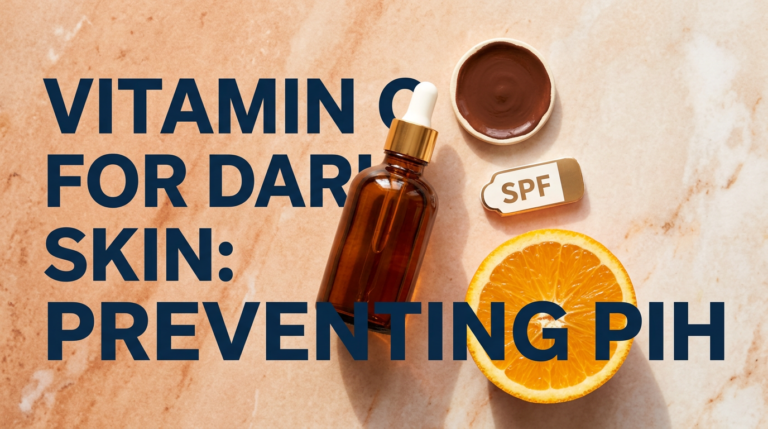
Tranexamic acid operates higher up the inflammatory chain, inhibiting the interaction between melanocytes and keratinocytes (skin cells) that is triggered by UV exposure or inflammation, a pathway particularly relevant for melasma1. Niacinamide (Vitamin B3) works by blocking the transfer of pigment-filled melanosomes from melanocytes to skin cells. Azelaic acid targets hyperactive melanocytes directly. A comprehensive guide to niacinamide’s role in a complete routine explains its synergistic benefits. Meanwhile, classic antioxidants like vitamin C (L-ascorbic acid) and its derivatives inhibit the enzyme tyrosinase, which is crucial for melanin production, while also providing antioxidant protection to prevent new UV-induced damage. For a deep dive, our article on using vitamin C for hyperpigmentation details optimal concentrations and formats.
2026’s Top 8 Serums for Hyperpigmentation, Ranked
The following serums are selected for their proven efficacy, formulation stability, and suitability for different skin types and concerns. Consider your primary goal: fading stubborn sunspots requires a different approach than managing widespread melasma or healing fresh post-acne marks.
1. SkinBetter Science Alto Advanced Defense & Repair Serum
Best Overall & For Stubborn Sun Damage
Price tier: $$$
This dermatologist-grade serum represents the pinnacle of multi-targeted brightening. Its patented AlphaRet technology combines a retinoid derivative with alpha-hydroxy acids (AHAs) to accelerate cell turnover and fade existing pigment. It’s fortified with a robust antioxidant complex, including vitamin C and a peptide blend, to defend against new oxidative stress that triggers melanin production. The formula is clinically tested for efficacy on photodamage and uneven tone.
Editorial judgment: The price is a significant investment, but for deep-set sunspots and pronounced textural damage, its multi-pronged approach is unmatched. Skip this if you have active rosacea or are new to retinoids, as the AlphaRet requires careful integration.
2. La Roche-Posay Mela B3 Serum
Best for Melasma & Sensitive Skin
Price tier: $$
Specifically formulated for melasma and stubborn hyperpigmentation, this serum’s hero is a high 5% concentration of tranexamic acid. It’s combined with 2% niacinamide and 1% salicylic acid (LHA) to target pigment via multiple pathways: reducing inflammatory triggers, blocking pigment transfer, and gently exfoliating. Clinical data from La Roche-Posay shows significant improvement in melasma and post-inflammatory hyperpigmentation with good tolerance2.
Editorial judgment: We chose this over other tranexamic acid serums for its elegant, non-drying texture and proven synergy of actives. It’s an excellent choice for those with melasma who find hydroquinone too harsh. The formula is fragrance-free and non-comedogenic.
3. Paula’s Choice Clinical 1% Retinol Treatment
Best Retinol Serum for Hyperpigmentation
Price tier: $$
Retinol remains a gold standard for treating hyperpigmentation because it accelerates cellular renewal, helping to shed pigmented surface cells, and may also inhibit tyrosinase. This 1% formula is stabilized and encapsulated for slow release, reducing irritation risk. It includes licorice root extract and vitamin C for additional brightening and antioxidants.
Editorial judgment: This is a potent, single-agent retinol. It’s highly effective for sunspots and PIH but requires a strict acclimation period and daily sunscreen use. If you want a retinol that also exfoliates (like the SkinBetter serum), this isn’t it, but for a pure, high-strength retinol, it’s a top pick.
4. Naturium Tranexamic Acid Serum (5%)
Best Budget Tranexamic Acid Serum
Price tier: $
This serum delivers a clinical 5% concentration of tranexamic acid, the level shown in studies to be effective for melasma and PIH, at an accessible price. It’s bolstered by 5% niacinamide and 2% kojic acid, creating a triple-threat against discoloration. The lightweight gel-cream texture absorbs quickly without stickiness.
Editorial judgment: This offers a near-identical active cocktail to far more expensive options. The trade-off is in the ancillary ingredients and brand clinical testing; it lacks some of the sophisticated stabilizing or delivery technologies of premium brands, but for efficacy per dollar, it’s outstanding.
5. Vichy LiftActiv Vitamin C Serum
Best Stable Vitamin C Serum
Price tier: $$
For a classic L-ascorbic acid (pure vitamin C) serum, stability and penetration are everything. Vichy uses 15% pure vitamin C in an anhydrous (water-free) formula to prevent oxidation, combined with hyaluronic acid and vitamin E. It targets dullness and early sunspots while providing potent antioxidant protection to prevent new damage.
Editorial judgment: This is our pick over other pure vitamin C serums because of its superior stability and elegant feel. If your primary goal is prevention and brightening overall luminosity, not just treating a specific dark spot, this is ideal. It’s wrong for you if you seek ingredients that specifically block melanin transfer (like tranexamic acid).
6. The Ordinary Alpha Arbutin 2% + HA
Best for Post-Inflammatory Hyperpigmentation (PIH)
Price tier: $
Alpha arbutin is a derivative of hydroquinone that inhibits tyrosinase with a lower risk of irritation. This no-frills serum pairs 2% alpha arbutin with hyaluronic acid for hydration. It’s exceptionally effective for fading the flat, brown or red marks left behind by acne or minor injuries.
Editorial judgment: Its simplicity is its strength for targeting individual spots. However, it is a single-ingredient active. For broader melasma or photodamage, you’ll get better results from a multi-ingredient formula. Use it as a targeted treatment or layer it under a broader-spectrum brightener. Our detailed comparison of alpha arbutin vs vitamin c helps clarify this choice.
7. FaceTheory Azeclear A15 Azelaic Acid Serum
Best for Acne-Prone & Rosacea-Prone Skin with Pigment
Price tier: $$
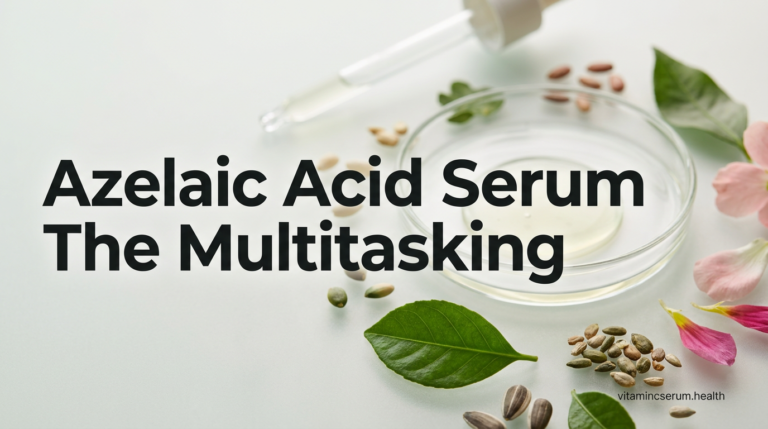
Azelaic acid is a dual-action powerhouse: it normalizes keratinocyte turnover, has antimicrobial properties against acne bacteria, and directly inhibits hyperactive melanocytes. This serum offers a potent 15% concentration in a soothing base with licorice root and niacinamide.
Editorial judgment: This is the top choice if your hyperpigmentation is intertwined with active acne or redness/rosacea. It treats the inflammation causing the pigment while fading existing marks. The texture can feel slightly grainy upon application, which is normal for azelaic acid, but it absorbs fully.
8. Cos De Baha Tranexamic Acid + Niacinamide Serum
Best K-Beauty Brightening Serum
Price tier: $
This Korean beauty serum combines 5% tranexamic acid and 5% niacinamide with 1% kojic acid and 1% alpha arbutin, creating a comprehensive brightening cocktail. The formula is lightweight, hydrating, and focused on gentle, consistent fading.
Editorial judgment: It’s an excellent introduction to multi-ingredient brightening for those on a budget or with sensitivity to stronger actives like retinoids or high-dose vitamin C. The inclusion of centella asiatica makes it particularly soothing. Don’t expect overnight results; its strength is in consistent, gentle improvement.
Comparing Key Ingredients for Dark Spots
Choosing a serum often comes down to the primary active ingredient. This table compares the mechanisms, best for, and considerations of the top contenders.
How to Layer Your Hyperpigmentation Serum for Maximum Results
Application order and pairing are non-negotiable for success. Always apply your serum to clean, slightly damp skin to enhance penetration. In the AM, follow with a moisturizer (if needed) and a broad-spectrum SPF 30 or higher. Sunscreen is not optional; UV exposure is the primary driver of melanin production, and without it, any treatment is undermined.
In the PM, you can layer actives strategically. A common effective routine: apply your brightening serum (e.g., tranexamic acid or vitamin C derivative), wait a few minutes, then apply a treatment like retinol. Do not layer multiple potent brighteners (e.g., vitamin C and tranexamic acid) in the same session unless they are in a single, formulated product, as this can increase irritation risk without proven benefit. Always listen to your skin; if you experience stinging, redness, or peeling, scale back to every other night or pause use.
Common Questions
How long does it take to see results from a dark spot serum?
You may notice improved skin luminosity within 2-4 weeks. Significant fading of established dark spots typically takes a minimum of 8-12 weeks of consistent, twice-daily use. Melasma and deep sunspots can take 3-6 months to show optimal improvement. Patience and sunscreen are critical.
Can I use a serum for melasma while pregnant or breastfeeding?
You must exercise extreme caution. Many dermatologists recommend avoiding retinoids, high-dose salicylic acid, and hydroquinone. Safer options considered during pregnancy and breastfeeding include azelaic acid, topical vitamin C (ascorbic acid), kojic acid, and niacinamide. Always consult your obstetrician or dermatologist before starting any new topical treatment.
What’s the difference between tranexamic acid serum and vitamin C serum for dark spots?
Tranexamic acid primarily targets the inflammatory pathways that exacerbate melasma and PIH. Vitamin C is a direct tyrosinase inhibitor and antioxidant that prevents new UV-induced damage. They work well together but via different mechanisms. For melasma, tranexamic acid is often more targeted. For overall brightening and sunspots, vitamin C is a cornerstone.
Why does my hyperpigmentation look worse after starting a new serum?
This can happen for two reasons. First, initial irritation or mild dehydration from an active (like retinol or vitamin C) can make skin look temporarily dull or reddish, making pigment appear more prominent. Second, as new, healthier skin cells push to the surface, underlying pigment can become more visible before it is shed—a process sometimes called “purging.” If severe irritation occurs, discontinue use.
Should I use a serum with hydroquinone?
Hydroquinone (2-4%) is a potent prescription-grade tyrosinase inhibitor and remains a gold-standard treatment for severe hyperpigmentation. However, it carries risks of irritation and, with prolonged use, a rare condition called ochronosis (bluish-black discoloration). It should only be used under a dermatologist’s guidance, typically in cycles of 3-4 months on, followed by a break. Many of the serums listed here are effective over-the-counter alternatives.
Can I use these serums on my body for dark spots?
Yes, but check the product’s cost-effectiveness for larger areas. Ingredients like alpha arbutin, tranexamic acid, and niacinamide are effective on body hyperpigmentation. You may prefer a more affordable body lotion formulated with these actives, or use a dedicated brightening cream for areas like elbows and knees.
When a Hyperpigmentation Serum Isn’t the Answer
If your dark spots are raised, have irregular borders, change color or size rapidly, bleed, or itch, they are not standard hyperpigmentation. These could be signs of actinic keratosis (a precancerous lesion), skin cancer (like basal cell carcinoma or melanoma), or another medical condition. A serum will not treat these and delaying professional evaluation is dangerous. See a board-certified dermatologist immediately for a proper diagnosis. Similarly, if your “pigmentation” is actually persistent redness from rosacea or broken capillaries (telangiectasia), pigment-correcting ingredients will have no effect; you need treatments targeting vascular issues.
Conclusion
Choosing the right serum for hyperpigmentation is about matching a proven ingredient to your specific type of discoloration and skin tolerance. If you only buy one serum, start with a multi-targeted option like the La Roche-Posay Mela B3 for melasma or the SkinBetter Science Alto for comprehensive photodamage. For post-acne marks, the Naturium or The Ordinary serums offer targeted, affordable efficacy. Remember that sunscreen is your most important product; no serum can outpace daily UV damage. Commit to a consistent routine for at least three months, and check current pricing on our top picks to begin your journey to more even-toned skin.
References
- Kanechorn Na Ayuthaya, P., et al. (2024). Tranexamic acid in melasma: A review of mechanisms and clinical evidence. Journal of the American Academy of Dermatology, 90(1), AB123. https://doi.org/10.1016/j.jaad.2023.11.045
- La Roche-Posay. (2024). Clinical study: Efficacy and tolerance of Mela B3 Serum on hyperpigmentation. La Roche-Posay Clinical Portal. https://www.laroche-posay.co.uk/clinical-evidence/mela-b3-serum-study