
How Hyaluronic Acid Serum Works to Hydrate Skin
A hyaluronic acid serum hydrates your skin by acting like a supercharged, multi-level water magnet. Your skin naturally produces hyaluronic acid (HA), a humectant molecule that can hold up to 1,000 times its weight in water. A serum delivers a concentrated dose topically. It doesn’t add moisture itself. Instead, it pulls water from the deeper layers of your skin and, when applied correctly, from the humid air around you, binding it to the skin’s surface. This process plumps the skin, temporarily smoothes fine lines caused by dehydration, and fortifies the skin’s moisture barrier. For the science-curious, a Healthline review of HA skin benefits notes this humectant property is key to its widespread use in dermatology and skincare.
- How Hyaluronic Acid Serum Works to Hydrate Skin
- Understanding Hyaluronic Acid: It’s All About Size
- How to Use Hyaluronic Acid Serum: The Damp Skin Rule
- Choosing the Best Hyaluronic Acid Serum for Your Skin Type
- The Science of Layering: Where Does HA Serum Fit?
- Common Mistakes and How to Avoid Them
- Pairing Hyaluronic Acid with Other Actives
- Frequently Asked Questions
- Conclusion
Understanding Hyaluronic Acid: It’s All About Size
Not all hyaluronic acid in serums is the same. Its performance is dictated by molecular weight, which refers to the size of the HA molecule. Think of it like a delivery system: smaller molecules can penetrate deeper, while larger ones work on the surface. The most effective serums often combine multiple weights for a comprehensive hydrating effect.
Multi-weight Hyaluronic Acid: A formulation strategy that combines high, medium, and low molecular weight hyaluronic acid to hydrate multiple layers of the skin simultaneously, from the surface to the deeper dermis.
How to Use Hyaluronic Acid Serum: The Damp Skin Rule
Using your serum correctly is non-negotiable for results. The most common mistake is applying HA to dry skin. Remember, HA needs water to bind to. On a dry face in a dry environment, it may pull moisture from deeper within your skin, potentially leading to more dehydration. The correct method is simple and transformative.
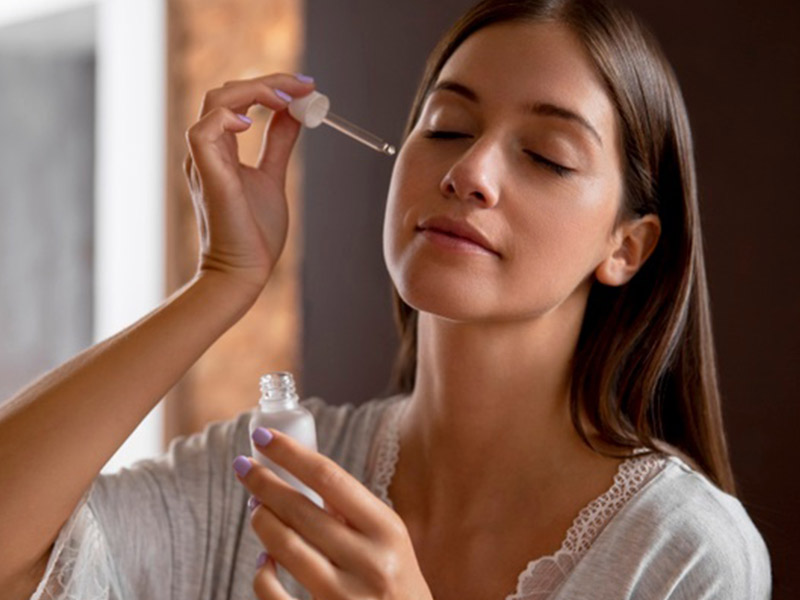
Start with a clean face. Do not dry it completely. Pat your skin until it’s damp or mist it with water or a toner. Apply 2–3 drops of your hyaluronic acid serum to your face and neck, gently pressing and patting it in. The damp surface provides immediate water for the HA to grab onto. Follow immediately, while your skin is still tacky, with a moisturizer. The moisturizer’s occlusive ingredients (like ceramides, squalane, or shea butter) seal all that hydration in. For a detailed breakdown of combining actives, see our dedicated serum layering guide.
Choosing the Best Hyaluronic Acid Serum for Your Skin Type
While HA is suitable for almost all skin types, the supporting ingredients in a serum formula make it ideal for specific concerns. A one-size-fits-all approach doesn’t work in skincare.
For a curated list of top-performing options, you can explore our research on the best hyaluronic acid serums for 2026.
- For Dry or Very Dry Skin: Look for a hyaluronic acid serum for dry skin that pairs HA with lipid-replenishing ingredients like ceramides, fatty acids, or cholesterol. These help repair the skin barrier, preventing moisture loss. A slightly thicker, creamy serum texture can also be more comforting.
- For Oily or Acne-Prone Skin: Choose a lightweight, water-gel formula. Serums with added niacinamide can help regulate oil production, while those with zinc offer anti-inflammatory benefits. Avoid formulas with heavy oils or comedogenic ingredients.
- For Sensitive Skin: Prioritize minimal ingredient lists. Look for serums with soothing partners like panthenol (provitamin B5), centella asiatica, or oat extract. Avoid formulas with high concentrations of fragrance, essential oils, or alcohol.
- For Mature Skin: A multi-weight HA serum is ideal. Also, look for formulas that include peptides for collagen support or antioxidants like vitamin C to protect against environmental damage, creating a powerful anti-aging duo.
The Science of Layering: Where Does HA Serum Fit?
Hyaluronic acid serum is a team player in your skincare routine. Its water-based, humectant nature dictates its place in your regimen. The golden rule is to apply products from thinnest to thickest consistency, and water-based products before oil-based ones.
After cleansing and toning, apply any treatment serums with active ingredients like vitamin C (for AM) or retinoids (for PM). Hyaluronic acid serum should be applied next, as it is typically a lightweight, water-based treatment. It hydrates and prepares the skin to absorb subsequent products. Finally, lock everything in with your moisturizer and, during the day, sunscreen. This order ensures each product can perform its function without being blocked by a heavier layer.
Common Mistakes and How to Avoid Them
Even with a fantastic product, mistakes can undermine your results. Here are the key pitfalls to sidestep.
First, using too much product. More is not better. A few drops are enough for your entire face and neck. Excess serum can pill under other products or simply sit on the skin without absorbing fully. Second, applying to dry skin, as discussed, is the cardinal error. Third, not sealing it in. HA is a humectant, not an occlusive. If you don’t follow with a moisturizer, the hydration it draws in can evaporate back into the air, especially in low-humidity environments. Finally, expecting instant, permanent wrinkle eradication. HA smoothes lines via hydration, which is temporary and needs daily maintenance. It is a hydrator, not a neurotoxin or a collagen stimulant.
Pairing Hyaluronic Acid with Other Actives
Hyaluronic acid is exceptionally versatile and stable, making it easy to pair with almost any other skincare active. Its primary role is hydration, which can complement and enhance other treatments.
With Vitamin C: This is a powerhouse morning duo. Apply your vitamin C serum first, let it absorb for 60 seconds, then apply HA serum. The HA helps hydrate and plump, while vitamin C protects against free radicals and brightens. With Retinol: A classic nighttime pairing. Apply your retinol treatment first (on dry skin to minimize irritation), wait 10–20 minutes, then apply HA serum and moisturizer. The HA helps counteract the potential dryness and irritation retinol can cause. With Niacinamide: These two work synergistically. Niacinamide helps strengthen the skin barrier and regulate oil, while HA hydrates. They can often be found in the same serum formula, or applied sequentially.
Frequently Asked Questions
Can hyaluronic acid serum cause breakouts?
Pure hyaluronic acid is non-comedogenic, meaning it should not clog pores. Breakouts are usually caused by other ingredients in a specific serum formula, such as certain oils, thickeners, or fragrances. If you have acne-prone skin, choose a lightweight, oil-free HA serum with minimal non-essential ingredients.
How often should I use a hyaluronic acid serum?
You can use a hyaluronic acid serum twice daily, morning and night. It is gentle enough for everyday use. Consistency is key for maintaining optimal hydration levels in your skin.
Can I use hyaluronic acid serum if I have oily skin?
Absolutely. Hydration is crucial for all skin types, including oily skin. Sometimes, excess oil production is a reaction to underlying dehydration. Using a lightweight, water-based HA serum can help balance skin hydration without adding oiliness or heaviness.
What’s the difference between hyaluronic acid serum and moisturizer?
They have different, complementary functions. A hyaluronic acid serum is a concentrated humectant that draws water into the skin. A moisturizer typically contains occlusives (like oils, butters, silicones) that create a seal on top of the skin to prevent that water from escaping. For best results, use the serum first, then the moisturizer.
Why does my skin feel tight after using hyaluronic acid serum?
This usually means you applied the serum to dry skin or you didn’t seal it in with a moisturizer. In a dry climate, the HA may pull moisture from your skin instead of the air, leading to dehydration. Always apply to damp skin and follow with moisturizer to lock in hydration.
Is a hyaluronic acid serum good for sensitive skin?
Yes, it is often recommended for sensitive skin because it is a substance naturally found in the body and is generally very well-tolerated. The key is to select a formula free from common irritants like fragrance, essential oils, and denatured alcohol. Look for serums marketed for sensitive skin types.
Can I use hyaluronic acid serum around my eyes?
Yes, you can gently pat a small amount onto the orbital bone around your eyes. Avoid getting it directly in your eye. The hydrating effect can help temporarily smooth fine lines and de-puff the area. For dedicated eye concerns, a separate eye cream may be more targeted.
Conclusion
A hyaluronic acid serum is a foundational skincare tool, but its benefits hinge on understanding its science and proper application. Choosing a formula with multi-weight molecules, applying it to damp skin, and sealing it with a moisturizer are the non-negotiable steps for transformative hydration. Whether your primary goal is quenching dry skin, balancing oiliness, or supporting anti-aging routines, a well-chosen HA serum can be a simple yet powerful addition. For more targeted recommendations, explore our guide on the best serums for dry skin to see how HA fits into a comprehensive hydration strategy.