
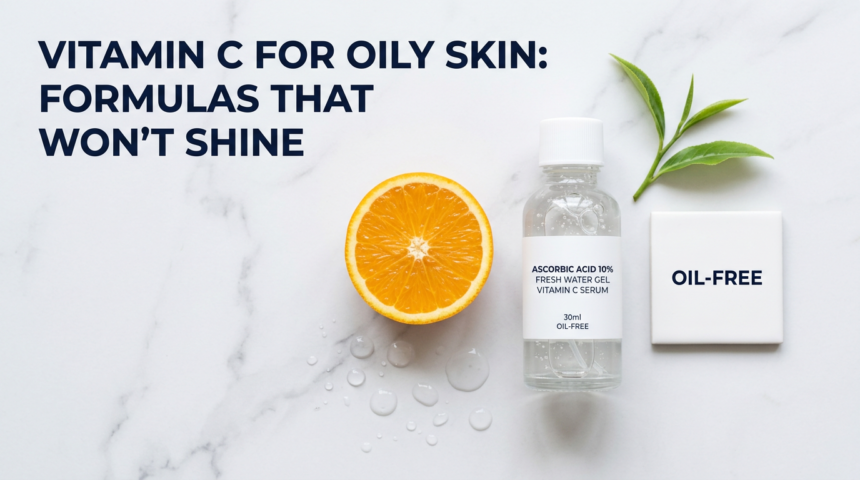
Yes, vitamin C serum is suitable for oily skin. The vitamin C molecule itself is water-soluble and non-comedogenic, meaning it won’t clog pores or directly cause oiliness. The problem arises when the delivery vehicle is a heavy, oil-based, or silicone-laden formula that can feel greasy and trap sebum. For oily skin, the ideal is vitamin C serum good for oily skin solution is a lightweight, water-based gel or serum designed for rapid absorption. These formulas deliver the antioxidant benefits of vitamin C without the shine, and some can even help modulate sebum production over time.
Why Vitamin C Isn’t Just for Dry Skin
If you have oily skin, you might assume antioxidants are meant for mature or dry complexions. That’s a misconception. Oily skin faces unique challenges that vitamin C directly addresses. Its primary function is to neutralize free radicals generated by UV exposure and pollution, which trigger inflammation1. Inflammation is a key driver of excess sebum production; your skin’s oil glands can overreact to inflammatory signals. By calming this cascade, consistent vitamin C use can, over several weeks, lead to a more balanced, less reactive oil output. Furthermore, by brightening post-inflammatory hyperpigmentation (the dark marks left behind by breakouts) and supporting collagen repair, vitamin C helps oily skin look clearer and more resilient. For a broader look at options, explore our guide to the best serums for oily skin.
Finding the Right Vitamin C Serum for Oily Skin
The type of vitamin C and the formula’s base are more important than the percentage on the label. You need a serum that works with your skin’s biology, not against it.
Non-Comedogenic Vitamin C Serum Oily Skin: This is a non-negotiable label. “Non-comedogenic” means the formula has been tested and shown not to clog pores, which is critical for preventing breakouts.
Water Based Vitamin C Serum Oily Skin: The ideal vehicle. Water-based or gel-serum textures absorb quickly without leaving a heavy film. They typically use humectants like glycerin or hyaluronic acid to hydrate, which oily skin still needs, without adding oils.
Vitamin C Serum for Oily Skin Without Silicone: Silicones (ingredients ending in -cone or -xane) create a smooth, occlusive layer. While fine for some, they can feel suffocating on very oily skin and may trap sebum and sweat. Seeking silicone-free formulas ensures a breathable feel.
Ascorbic Acid vs. Derivatives: Pure L-ascorbic acid is the most potent and researched form, but it requires a low pH (acidic) formula, which some find irritating. Stable derivatives like Sodium Ascorbyl Phosphate (SAP) or Ethyl Ascorbic Acid are gentler, often more stable in water-based formulas, and SAP has specific data suggesting it can help reduce sebum and acne lesions2.
To help visualize the core differences, here’s a comparison of the two main vitamin C forms suitable for oily skin.
Top Vitamin C Serums for Oily Skin
These recommendations prioritize lightweight, fast-absorbing textures, non-comedogenic ingredients, and forms of vitamin C proven effective for oily and acne-prone concerns.
1. SkinCeuticals Silymarin CF
This is a professional-grade option formulated specifically for oily and acne-prone skin. It combines 15% L-ascorbic acid with 0.5% salicylic acid and silymarin (milk thistle extract). The salicylic acid provides gentle exfoliation in the pores, while silymarin is a potent antioxidant shown to reduce oiliness. The formula is an aqueous solution, not an oil or cream, so it absorbs almost instantly with a dry, matte finish. Editorial judgment: This is the most targeted option for severely oily and acne-prone skin, but the high concentration and salicylic acid make it too strong for those with sensitive skin or a compromised barrier. Price tier: $$$
2. Paula’s Choice C15 Super Booster
A 15% vitamin C (L-ascorbic acid) serum with vitamin E and ferulic acid in a primarily water-based, silicone-free formula. It has a thin, slightly oily-feeling texture upon application due to the vitamin E, but it absorbs fully within a minute, leaving no residue. The air-restrictive packaging is excellent for stability. Editorial judgment: We chose this over other ascorbic acid serums because it’s explicitly formulated without silicones or fragrance, a win for clog-prone skin. The initial slip can be misleading; it truly does dry down. Price tier: $$
3. Geek & Gorgeous C-Glow
A fresh, 15% L-ascorbic acid serum made in small batches to ensure potency. The formula is strikingly simple: vitamin C, ferulic acid, and glycerin in an aqueous base. It’s a true, lightweight water-like serum with no silicones, oils, or alcohol. You must keep it refrigerated to prolong its clear, effective state. Editorial judgment: This is the purest, most minimalist ascorbic acid serum available. The tradeoff is the short shelf life (about 3 months) and the need for refrigeration, making it less convenient for travel. Price tier: $
4. Naturium Vitamin C Complex Serum
This serum uses 3% of the derivative Sodium Ascorbyl Phosphate (SAP), combined with 5% vitamin C derivative Magnesium Ascorbyl Phosphate. It’s a milky, opaque gel-serum that feels incredibly lightweight and leaves a soft, semi-matte finish. It’s fragrance-free and contains niacinamide and zinc for additional vitamin c serum shine control and barrier support. Editorial judgment: Ideal for those who find pure ascorbic acid irritating or who want the specific sebum-regulating benefits of SAP. The gel texture layers perfectly under sunscreen without pilling. Price tier: $$
5. Vichy LiftActiv Vitamin C Serum
Containing 15% pure vitamin C (L-ascorbic acid) in a water-gel base with Vichy’s mineralizing thermal water. The formula includes low-weight hyaluronic acid for hydration and is packaged in an airtight, opaque tube to prevent oxidation. It absorbs quickly with a fresh, slightly tacky feel that disappears once you apply moisturizer. Editorial judgment: A reliable mid-range option from a dermatologist-trusted brand. The texture is a good middle ground: more substantial than a water, but less greasy than an oil. Skip it if you dislike any initial tackiness at all. Price tier: $$
How to Apply Vitamin C Serum on Oily Skin
Application technique matters just as much as product selection to avoid shine.
- Cleanse: Start with a gentle, pH-balanced cleanser to remove overnight sebum without stripping the skin.
- Apply to Damp Skin (Optional): Some dermatologists suggest applying water-based serums to slightly damp skin to enhance absorption of humectants. For very oily skin, patting your face dry first may be preferable to avoid diluting the formula.
- Dispense a Pea-Sized Amount: More is not better. A small amount is all you need for your face and neck.
- Press and Pat: Dot the serum on your forehead, cheeks, nose, and chin. Gently press and pat it into the skin with your fingertips. Avoid rubbing, which can generate friction and irritation.
- Wait, Then Layer: Allow 60-90 seconds for the serum to fully absorb. Follow with a lightweight, oil-free moisturizer if needed, and always finish with a broad-spectrum sunscreen. Vitamin C enhances photoprotection but does not replace it.
Common Questions
Can vitamin C serum make my oily skin worse?
Vitamin C itself will not increase oil production. However, a poorly chosen serum with a heavy, occlusive base (rich in oils, butters, or heavy silicones) can sit on top of the skin, trap heat and sebum, and potentially lead to clogged pores and breakouts. This is why formula selection is critical.
Should I use niacinamide with vitamin C for oily skin?
Absolutely. Niacinamide is a superstar ingredient for oily skin. It helps regulate sebum production, improves barrier function, and reduces redness. Using a niacinamide serum in the same routine as vitamin C is highly complementary. You can apply them together (they are stable at similar pH levels) or use vitamin C in the AM and niacinamide in the PM.
What’s the best vitamin C percentage for oily skin?
Effective concentrations start as low as 10%. For L-ascorbic acid, 10-15% is the sweet spot for efficacy without excessive irritation risk. For derivatives like SAP, 2-5% is common and effective. Higher percentages (20%+) offer diminishing returns and significantly higher irritation potential, which can ironically trigger more oil production as the skin reacts.
How long does it take to see results on oily skin?
Brightening effects and a more even skin tone can be noticeable within 4-8 weeks of consistent daily use. Any modulation in sebum production is a slower, secondary effect of reduced inflammation and may take 8-12 weeks to become apparent. Patience and consistency are key.
Is a vitamin C serum or moisturizer better for oily skin?
A dedicated serum is almost always preferable. Vitamin C moisturizers often contain lower concentrations of the active and are formulated with more emollients and occlusives to provide moisture, which can be too rich for oily skin. A well-formulated serum delivers a higher, more effective dose in a lighter vehicle.
When a Vitamin C Serum Isn’t the Answer
If your primary skin concern is active, inflamed cystic acne, introducing an acidic vitamin C serum (especially L-ascorbic acid) on broken skin can cause significant stinging and may worsen irritation. In this case, prioritize acne treatment first. See a dermatologist for prescription options, and focus on a simple, calming routine with ingredients like niacinamide and zinc. Once active inflammation is under control, you can slowly introduce a gentle vitamin C derivative like SAP. Similarly, if you have a diagnosed skin condition like rosacea or perioral dermatitis, vitamin C can be a trigger during a flare. For a specialized approach, our detailed guide on the best vitamin C serum for oily, acne-prone skin offers more targeted advice.
Conclusion
Choosing a vitamin C serum for oily skin comes down to prioritizing the vehicle over the vitamin. If you only buy one, start with a water-based formula containing a stable form of vitamin C, like Geek & Gorgeous C-Glow for potency or Naturium Vitamin C Complex Serum for gentleness. For those with significant shine and acne, SkinCeuticals Silymarin CF is the targeted professional choice. Remember, the right serum should absorb completely, leaving your skin prepped for sunscreen, not shiny. Check the current formulations and prices to find your perfect lightweight match.
References
- Pullar, J. M., Carr, A. C., & Vissers, M. C. M. (2017). The Roles of Vitamin C in Skin Health. Nutrients, 9(8), 866. https://doi.org/10.3390/nu9080866
- Klock, J., Ikeno, H., Ohmura, K., et al. (2005). Sodium ascorbyl phosphate shows in vitro and in vivo efficacy in the prevention and treatment of acne vulgaris. International Journal of Cosmetic Science, 27(3), 171–176. https://doi.org/10.1111/j.1467-2494.2005.00262.x