
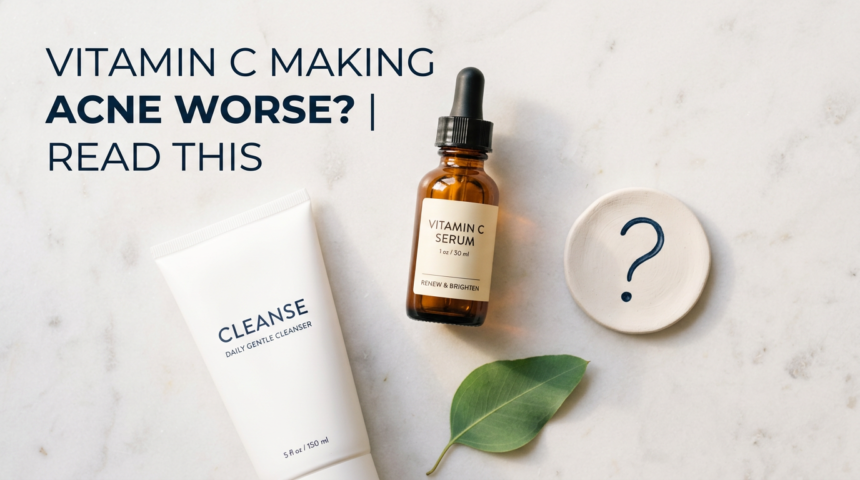
If your vitamin C serum is making your acne worse, the issue is almost certainly not the antioxidant itself. Pure ascorbic acid and its derivatives are not inherently comedogenic. The problem likely stems from other ingredients in the formula, a destabilized or oxidized product, or your skin’s unique sensitivity. You should consider stopping your current serum and switch to a lightweight, non-comedogenic formula if you experience persistent, new breakouts. Understanding the cause is the first step to finding a vitamin C serum for oily, acne-prone skin that works.
- The Acne Culprit Is Usually the Formula, Not the Vitamin C
- The Oxidation Problem: When Your Serum Turns Against You
- Is This a Vitamin C Serum Purging Acne or a Bad Reaction?
- How to Choose a Truly Vitamin C Serum Comedogenic Risk-Free Formula
- What to Do If Your Current Serum Is Causing Breakouts
- Editorial Picks: Better Vitamin C Formulas for Acne-Prone Skin
- When a Vitamin C Serum Isn’t the Answer
- Common Questions
- Conclusion
- References
The Acne Culprit Is Usually the Formula, Not the Vitamin C
Vitamin C (ascorbic acid) is a water-soluble antioxidant with extensive data supporting its role in promoting collagen synthesis and protecting skin from photodamage. Dermatological research does not classify it as a pore-clogging ingredient. The clinical evidence suggests the opposite: topical ascorbic acid can help regulate sebum oxidation, a process linked to inflammatory acne. However, a serum is rarely just vitamin C. To deliver the ingredient effectively and create a stable, pleasant-feeling product, brands add a range of other components. These co-ingredients are often the true triggers for a vitamin c serum acne flare up.
Comedogenicity: This term refers to an ingredient’s potential to clog pores and form microcomedones, the precursors to blackheads and whiteheads. Ratings are based on tests on rabbit ears, which don’t perfectly translate to human facial skin, but they are a useful guideline.
Common offenders in vitamin C serums include certain thickening agents, emulsifiers, and occlusives. Heavy silicones like dimethicone, while not universally problematic, can create a film that traps sweat and sebum for some people. Similarly, some plant-derived oils, waxes, and even certain forms of vitamin E (tocopherol) can be comedogenic for acne-prone individuals. If you are breaking out, scrutinize the ingredient list for these additions before blaming the star active.
The Oxidation Problem: When Your Serum Turns Against You
L-ascorbic acid, the most potent form of vitamin C, is notoriously unstable in water-based formulas. When it oxidizes, it degrades into dehydroascorbic acid and other compounds, eventually turning the serum a deep yellow or brown. An oxidized serum is not just ineffective; it can become a skin irritant. The degradation byproducts can provoke inflammation in the follicle, leading to red, angry pimples that feel like a sudden acne flare-up. This is a key reason to store your serum in a cool, dark place and discard it once it changes color significantly. For acne-prone skin, which is already in a state of heightened sensitivity and inflammation, applying an oxidized product is particularly counterproductive. For a deeper look at other common misconceptions, our guide on vitamin C serum myths separates fact from fiction.
Is This a Vitamin C Serum Purging Acne or a Bad Reaction?
“Purging” is a real phenomenon, but it is widely misapplied. True purging only happens with ingredients that increase skin cell turnover, like retinoids and chemical exfoliants (AHAs, BHAs). These ingredients accelerate the shedding of dead skin cells, which can bring underlying microcomedones to the surface more quickly, causing a temporary uptick in breakouts in areas where you typically get them. Vitamin C does not function this way. It is primarily an antioxidant, not a cell-turnover accelerator.
If your “purge” from a vitamin C serum involves deep, cystic acne on your cheeks or jawline where you never break out, it is not purging. It is likely a reaction to a comedogenic ingredient or significant irritation.
How to Choose a Truly Vitamin C Serum Comedogenic Risk-Free Formula
Selecting a vitamin C serum for acne-prone skin requires a focus on formulation simplicity and ingredient awareness. Look for serums that prioritize a few key non-comedogenic ingredients to deliver the vitamin C. Water-based or anhydrous (oil-free) serums are generally safer bets than those with a heavy, creamy, or oily feel. Packaging matters too: airless pumps or opaque, airtight bottles protect the integrity of L-ascorbic acid far better than dropper bottles, which allow air and light to degrade the formula over time. A stable formula is a less irritating formula.
Formulation Vehicle: The base solution (water, silicone, oil, or alcohol) that carries the active ingredients. For acne-prone skin, water-based or silicone-free aqueous gels are often best tolerated.
Beyond the base, examine supporting ingredients. Hyaluronic acid, glycerin, and niacinamide are excellent, well-tolerated hydrators and anti-inflammatories for breakout-prone skin. Ferulic acid and vitamin E (tocopheryl acetate) are common stabilizing partners for L-ascorbic acid and are typically non-comedogenic. The goal is to find a minimalist formula where vitamin C is the clear star, supported by a clean cast of hydration and barrier-supporting ingredients.
What to Do If Your Current Serum Is Causing Breakouts
If you suspect your vitamin C serum is the culprit, follow a clear process. First, stop using the serum immediately. Do not try to “push through” the breakout, as this can worsen inflammation and lead to post-inflammatory hyperpigmentation. Revert to a basic, soothing skincare routine: a gentle cleanser, a fragrance-free moisturizer, and your regular sunscreen. Allow your skin to calm down for one to two weeks. Once the new breakouts have subsided, you can consider reintroducing a different vitamin C formula, applying it just two to three times a week on clean, dry skin to assess tolerance. If breakouts return, you may need to explore alternative antioxidants like niacinamide or resveratrol. For a full overview of what to watch for, see our article on common vitamin C serum side effects.
Editorial Picks: Better Vitamin C Formulas for Acne-Prone Skin
These selections prioritize lightweight textures, non-comedogenic ingredient lists, and stable packaging. Remember, even with these formulas, patch test first.
SkinCeuticals C E Ferulic: The clinical benchmark for a reason. Its patented formula of 15% L-ascorbic acid, 1% vitamin E, and 0.5% ferulic acid is extensively studied for stability and efficacy. While expensive, the airless packaging and pure formulation mean there are no extra pore-clogging fillers. Editorial note: The high alcohol content, which ensures penetration and stability, can be overly drying for some with active, sensitized acne. It’s best for those with oily, resilient skin seeking maximum antioxidant protection. Price tier: $$$.
Paula’s Choice C15 Super Booster: A 15% L-ascorbic acid serum in a water-free, silicone-based formula that feels lightweight. It includes vitamin E and ferulic acid for stability and peptides for added support. Editorial note: We chose this over other drugstore options because its anhydrous formula eliminates the risk of water-induced oxidation in the bottle, a common problem with cheaper L-ascorbic acid serums. However, if you are strictly silicone-averse, the texture may not be for you. Price tier: $$.
Geek & Gorgeous C-Glow: A fresh, affordable 15% L-ascorbic acid + ferulic acid + vitamin E formula made in small batches weekly. It’s water-based but comes in an airtight opaque bottle to slow oxidation. Editorial note: This is a fantastic budget-conscious option, but its very fresh nature means you must use it quickly (within 2-3 months) and keep it refrigerated. The simplicity of the ingredient list minimizes breakout risks. Price tier: $.
When a Vitamin C Serum Isn’t the Answer
If your acne is severe, cystic, or accompanied by significant redness, stinging, or flaking, the issue may extend beyond a serum reaction. You could be dealing with active rosacea, severe seborrheic dermatitis, or a compromised skin barrier that interprets even gentle products as threats. In these cases, introducing any active serum, including vitamin C, can exacerbate inflammation. The correct path is to pause all non-essential actives and consult a dermatologist. They can diagnose underlying conditions and may prescribe treatments like topical antibiotics, azelaic acid, or prescription retinoids that are more targeted for managing inflammatory acne while being formulated under strict, non-comedogenic standards.
Common Questions
Can vitamin C serum cause closed comedones?
Yes, but not directly. The vitamin C itself is unlikely to be the cause. Closed comedones (small, flesh-colored bumps) are a classic sign of a comedogenic ingredient in the formula. Check for heavy silicones, certain oils, or emulsifying waxes high on the ingredient list.
I have oily, acne-prone skin. Should I avoid vitamin C serums with oils?
Not necessarily, but be selective. Some oils, like squalane (derived from sugarcane), are non-comedogenic and can actually help balance oily skin. Avoid serums with known comedogenic oils like coconut oil, cocoa butter, or some forms of algae extract.
How long does it take for breakouts from a vitamin C serum to clear after stopping?
If the breakouts were caused by clogged pores, it may take 4 to 8 weeks for those microcomedones to fully clear the follicle. Inflammatory red bumps from irritation should start subsiding within 1 to 2 weeks of discontinuing use, provided you switch to a gentle routine.
Are vitamin C derivatives (like SAP or MAP) better for acne-prone skin than L-ascorbic acid?
They can be. Derivatives like sodium ascorbyl phosphate (SAP) and magnesium ascorbyl phosphate (MAP) are more stable in water and generally gentler. Some research, including a study in the Journal of Cosmetic Science, indicates SAP may have specific anti-acne benefits by reducing sebum oxidation. They are excellent options if your skin is sensitive to L-ascorbic acid formulas.
Conclusion
Deciding whether to quit your vitamin C serum comes down to identifying the trigger. If your breakouts are new, inflammatory, and linked to a serum rich in silicones or oils, stop and switch. For most with acne-prone skin, the winning choice is a minimalist, water-based or anhydrous formula with L-ascorbic acid or SAP in stable, airtight packaging. If you only try one, start with a small-batch, fresh option like Geek & Gorgeous C-Glow to test tolerance without a major investment. Check the current pricing and ingredient lists for our recommended serums to find your match.
References
- Woollard, A. C., et al. (2007). The influence of topical ascorbic acid on cutaneous sebum secretion. Journal of Cosmetic Science, 58(2), 169–174. https://pubmed.ncbi.nlm.nih.gov/17520110/
- Telang, P. S. (2013). Vitamin C in dermatology. Indian Dermatology Online Journal, 4(2), 143–146. https://doi.org/10.4103/2229-5178.110593
- Pullar, J. M., et al. (2017). The Roles of Vitamin C in Skin Health. Nutrients, 9(8), 866. https://doi.org/10.3390/nu9080866
- Klock, J., et al. (2005). Sodium ascorbyl phosphate shows in vitro and in vivo efficacy in the prevention and treatment of acne vulgaris. International Journal of Cosmetic Science, 27(3), 171–176. https://doi.org/10.1111/j.1467-2494.2005.00263.x