
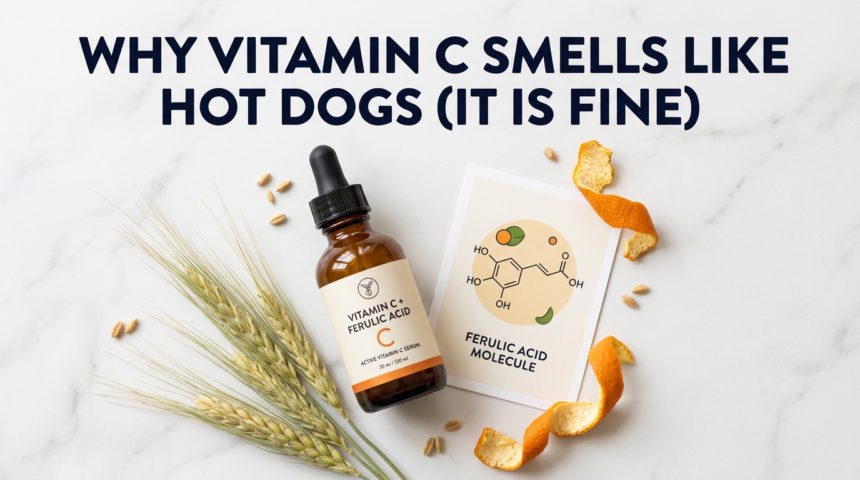
The Hot Dog Smell Explained: It’s the Ferulic Acid
If your vitamin C serum smells faintly of hot dogs, the answer is simple: it’s the ferulic acid. Ferulic acid is a plant-based antioxidant frequently added to stabilise L-ascorbic acid (pure vitamin C) and boost its photoprotective effects. Its natural chemical structure contains phenolic compounds, which have a characteristic smoky, slightly meaty aroma profile1. This scent is not a defect or a sign your serum has gone bad. In fact, it’s a hallmark of many fresh, high-quality, stabilised formulations, most famously the SkinCeuticals CE Ferulic smell that users often describe. The serum is completely safe and effective to use.
Ferulic Acid: More Than Just a Scent
The ferulic acid hot dog scent is a small trade-off for a significant functional benefit. In skincare science, ferulic acid is prized for its synergistic relationship with vitamins C and E. When combined, these three antioxidants create a powerful free-radical-scavenging network that is more stable and effective than any one ingredient alone. Ferulic acid specifically doubles the photoprotection of a C+E combination and slows the oxidation of the notoriously unstable L-ascorbic acid, significantly extending its shelf life2.
Antioxidant synergy: This refers to the phenomenon where combining specific antioxidants, like vitamins C and E with ferulic acid, produces a greater protective effect against environmental damage than the sum of their individual effects.
The Good Smell vs. The Bad Smell: How to Tell the Difference
So, is vitamin c serum supposed to smell like that? A faint, smoky, phenolic scent is normal and expected in ferulic-acid-stabilised serums. However, vitamin C can also produce a distinctly unpleasant odor when it degrades. Knowing the difference is key to using your product safely and effectively.
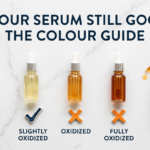
A rancid or oxidized vitamin C serum has a sharp, acrid, and often fishy smell, reminiscent of rotten eggs or metallic crayons. This is caused by the breakdown of L-ascorbic acid into other compounds like diketogulonic acid. Visually, oxidation turns the clear, pale yellow liquid a deep orange or brown. A serum with this appearance and a strong rancid smell should be discarded, as it has lost most of its antioxidant potency.
The ferulic acid scent, in contrast, is present from the moment you open a fresh bottle. It’s more subtle, smoky, and yes, vaguely reminiscent of cured meat. It should not intensify dramatically over time. Proper storage is the best way to prevent the bad smell of oxidation. For a deep dive, read our guide on how to store vitamin c serum to maximise its lifespan.
Beyond SkinCeuticals: Other Serums With This Profile
While SkinCeuticals CE Ferulic is the most cited example due to its iconic status and distinctive aroma, many other quality vitamin C serums use ferulic acid and may carry a similar scent. The presence of this smell is often a clue that you’re using a formula that follows the proven C+E+Ferulic stabilisation protocol. If you’re curious about the science behind why these formulations work and how they’re engineered to last, explore our article on vitamin c serum stability science.
When a Smelly Serum Isn’t the Answer
If you have a confirmed sensitivity to phenolic compounds or find the scent unbearably strong, a ferulic-acid-based serum is not for you. The smell, while harmless, can be off-putting. In this case, look for vitamin C serums that use alternative stabilisers. These include derivatives like magnesium ascorbyl phosphate (MAP) or ethylated ascorbic acid (Ethyl Ascorbyl Ether), or other antioxidant partners like phloretin. These formulas are often fragrance-free and scent-neutral, though they may have different potency and stability profiles compared to pure L-ascorbic acid with ferulic acid.
Common Questions
Is it bad if my vitamin C serum has no smell at all?
Not necessarily. Many effective vitamin C serums use alternative forms of vitamin C (derivatives) or different stabilising systems that don’t contain ferulic acid. These are often odorless. The absence of the hot dog smell doesn’t mean the product is ineffective, it just means the formulation is different.
Will the hot dog smell linger on my skin after application?
No. The ferulic acid scent is volatile, meaning it evaporates quickly. Once you apply the serum and it dries down (usually within a minute or two), the smell dissipates completely and will not be detectable on your skin throughout the day.
Can I mask the smell with another scented product?
It’s not recommended to layer heavily fragranced products directly over your vitamin C serum. Fragrance oils can cause irritation, especially on skin freshly treated with an active like L-ascorbic acid. The scent fades so quickly that masking it is unnecessary.
Does a stronger hot dog smell mean it’s more potent?
No. The intensity of the ferulic acid aroma is not a reliable indicator of the serum’s potency or concentration. It’s more related to the specific batch of ferulic acid used and the overall fragrance of the base formula. Judge potency by the listed percentage of L-ascorbic acid and the formula’s pH, not its smell.
My serum smelled like hot dogs but now smells fishy. What happened?
This is a classic sign of oxidation. The initial ferulic acid scent has been overtaken by the rancid odors produced as the vitamin C breaks down. Combined with a darkening color, this means your serum has oxidized and should be replaced. For more on common misconceptions, see our resource on vitamin c serum myths debunked.
Conclusion
Choosing a vitamin C serum often means deciding what trade-offs you’re comfortable with. The distinctive hot dog scent is a harmless characteristic of highly stabilised, ferulic-acid-based formulas, not a red flag. If your primary goal is maximum antioxidant protection using the most researched form of vitamin C, tolerate the mild, fleeting aroma of products like SkinCeuticals CE Ferulic. If any scent is a deal-breaker for you, seek out fragrance-free serums built with vitamin C derivatives. Ultimately, a faint smoky smell on opening means you have a fresh, potent bottle. Focus on storing it correctly to keep it that way, and check current pricing on our recommended stable formulas.
References
- Fiddler, W., et al. (1967). Volatile Compounds in Heated Fats. Journal of Agricultural and Food Chemistry, 15(1), 29. (Reference for phenolic/meaty volatile compounds associated with ferulic acid degradation pathways).
- Lin, F.H., et al. (2005). Ferulic acid stabilizes a solution of vitamins C and E and doubles its photoprotection of skin. Journal of Investigative Dermatology, 125(4), 826-832.