
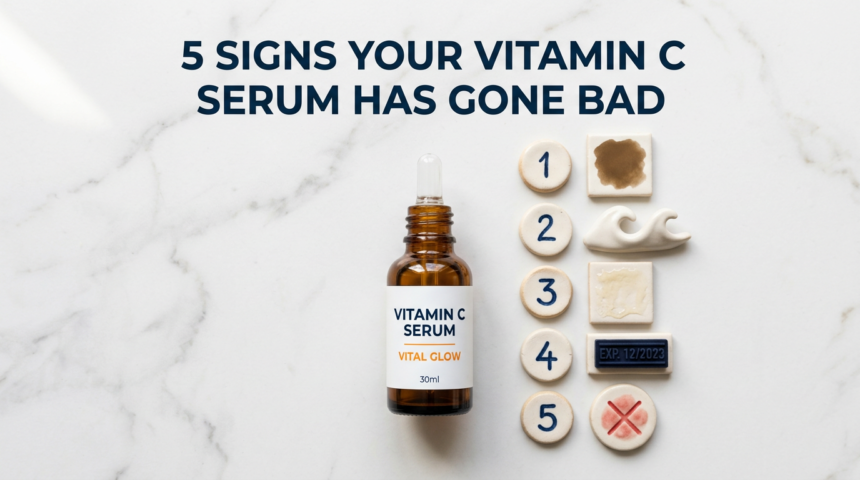
You know your vitamin C serum has expired or gone bad when its color darkens significantly, it develops a sour or rancid smell, its texture changes, it causes unexpected stinging, or it simply stops working. Unlike many skincare products, vitamin C serum (especially in its most common form, L-ascorbic acid) is inherently unstable and reacts with oxygen, water, and light, a process known as oxidation1. This reaction gradually degrades the active ingredient, not only making it ineffective for brightening and protection but potentially causing skin irritation. Recognizing these signs protects your skin and ensures you get the antioxidant benefits you paid for.
- The Science Behind Serum Degradation
- Sign 1: A Drastic Color Change
- Sign 2: An Off-Putting, Rancid Smell
- Sign 3: Changes in Texture and Consistency
- Sign 4: New, Unexpected Stinging or Irritation
- Sign 5: A Noticeable Lack of Results
- How Long Does Vitamin C Serum Last? A PAO Guide
- Common Questions
- When a New Serum Isn’t the Answer
- Conclusion
- References
The Science Behind Serum Degradation
Understanding why vitamin C serums go bad starts with their chemistry. Pure L-ascorbic acid is a powerful antioxidant, but this very property makes it reactive. When exposed to oxygen (even the oxygen dissolved in the serum’s water base), light, or heat, it begins to oxidize. The oxidation of L-ascorbic acid is a two-stage chemical cascade. First, it loses electrons, becoming unstable. Then, it reacts further to form dehydroascorbic acid (DHA), which continues to break down into other compounds like 2,3-diketogulonic acid2. These breakdown products no longer provide the targeted antioxidant protection or collagen-boosting effects. The entire process is accelerated by high temperatures, UV light, and an alkaline pH. This is why proper storage, detailed in our guide on how to store vitamin C serum, is non-negotiable for extending its lifespan.
Sign 1: A Drastic Color Change
The most visual of the vitamin C serum expired signs is a color shift. Fresh, stable L-ascorbic acid serum is typically clear or a very pale, straw-like yellow. A light amber hue can indicate the beginning of oxidation but does not necessarily mean the serum is fully inactive. The problem arises when the color deepens to a dark amber, orange, or brown. This deepening color is a direct indicator of advanced oxidation. As noted by the SkinCeuticals AU oxidation guide, the color change corresponds to the conversion of ascorbic acid to dehydroascorbic acid and further breakdown products, which can stain the skin a yellowish tint and offer little to no antioxidant benefit1. If your serum arrives already a deep color, it was likely compromised before you opened it.
Oxidation: The chemical process where a substance (like ascorbic acid) loses electrons, often due to reaction with oxygen. In skincare, this degrades the active ingredient, reducing its efficacy and potentially creating irritants.
Sign 2: An Off-Putting, Rancid Smell
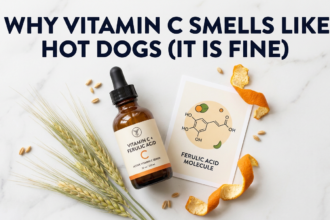
A fresh vitamin C serum may have a faint, metallic, or slightly acidic scent, which is normal. Some formulas with ferulic acid have a distinct, hot-dog-like smell that is part of their stabilizing technology and is not a sign of spoilage. The warning sign is a new, unpleasant odor that develops over time. If your serum starts to smell sour, rancid, or like old cooking oil, it has very likely oxidized. This rancid smell often comes from the degradation of other ingredients in the formula, like carrier oils or botanical extracts, which can also spoil as the antioxidant protection of the vitamin C diminishes. Trust your nose; if the smell makes you recoil, the serum is probably bad.
Sign 3: Changes in Texture and Consistency
Texture is a reliable indicator of a formula’s integrity. A well-formulated vitamin C serum should have a consistent, fluid texture, whether it’s a watery liquid, a light gel, or a silky emulsion. Key oxidized vitamin C serum symptoms related to texture include separation, excessive stickiness, or graininess. Separation, where oil and water phases split, suggests the emulsifying system has broken down. A formula that becomes unusually sticky or tacky may indicate polymerization, where degraded vitamin C molecules start to clump together. Any graininess or particles forming in a previously smooth serum are a clear sign of instability and crystallization of ingredients. As explained by Schaf Skincare’s degradation explainer, these physical changes often accompany the chemical breakdown of ascorbic acid, rendering the product ineffective and potentially irritating2.
Sign 4: New, Unexpected Stinging or Irritation
Vitamin C, particularly at higher concentrations of L-ascorbic acid, can cause a mild tingling sensation upon initial use as your skin acclimates. This is distinct from a sign of spoilage. The red flag is a sudden onset of pronounced stinging, burning, itching, or redness that you did not experience when the serum was fresh. This irritation is likely caused by the byproducts of oxidation, which can be harsh on the skin’s barrier. If applying your serum causes discomfort that wasn’t there before, discontinue use immediately. Your skin is signaling that the formula’s chemistry has shifted in an unfavorable way.
Sign 5: A Noticeable Lack of Results
Potency loss is the most insidious sign because it isn’t always accompanied by obvious physical changes. Vitamin C works by neutralizing free radicals and inhibiting melanin production. If, after 4 to 6 weeks of consistent use on fresh product, you were seeing brighter, more even-toned skin and that benefit suddenly plateaus or reverses, the active ingredient may have degraded. An oxidized serum simply cannot perform its primary functions. If your skin looks dull again or you feel your daytime antioxidant protection is lacking, the serum may have lost its potency even if it hasn’t turned dark brown. For a deeper dive into the nuances of this process, see our article on vitamin C serum stability science.
How Long Does Vitamin C Serum Last? A PAO Guide
The shelf life of your serum depends heavily on its formulation and packaging. Always check the Period After Opening (PAO) symbol—the open jar icon with a number (e.g., 6M, 12M)—on the bottle. However, this is a general guideline, and stability varies.
Common Questions
Can I use a slightly oxidized vitamin C serum?
Using a slightly oxidized serum, typically one that has turned a light to medium amber, is a common question. While it likely won’t harm you, its antioxidant potency is significantly diminished. It may offer minimal brightening benefits but will not provide the robust free radical protection that is a key reason for using vitamin C in the morning. For a detailed analysis of the risks and potential waste, read our dedicated article on using slightly oxidized vitamin C serum.
What does expired vitamin C serum smell like?
Expired or oxidized vitamin C serum often develops a sour, rancid odor, similar to stale cooking oil or old cardboard. This is distinct from the natural hot-dog-like smell of ferulic acid in some stabilizing formulas. A rancid smell indicates the degradation of ingredients and is a clear sign to stop using the product.
Does refrigeration prevent vitamin C serum from going bad?
Yes, refrigeration can significantly slow the oxidation process by reducing the serum’s exposure to heat, which is a major accelerant of chemical degradation. Storing your serum in a cool, dark place like a refrigerator is one of the best practices for extending its usable life, especially for water-based L-ascorbic acid formulas.
Why did my new vitamin C serum arrive already yellow?
If a new serum is already a deep yellow or amber upon unboxing, it was likely exposed to excessive heat, light, or air during transit or warehousing, causing oxidation before it reached you. This is a quality control issue. For maximum freshness, consider purchasing from brands with direct, climate-controlled shipping or from local retailers with high product turnover.
When a New Serum Isn’t the Answer
If you experience persistent stinging, redness, or irritation from any vitamin C serum, even a fresh one, the issue may not be oxidation but ingredient sensitivity or an impaired skin barrier. This is common with high concentrations of L-ascorbic acid or low pH formulas. In this case, discontinue use and focus on barrier repair with gentle cleansers, ceramides, and cholesterol. Once your skin is calm, you can reintroduce vitamin C slowly, perhaps starting with a gentler derivative like magnesium ascorbyl phosphate (MAP) or sodium ascorbyl phosphate (SAP), which are less acidic and often better tolerated by sensitive skin.
Conclusion
Choosing an effective vitamin C serum is an investment in your skin’s health, and protecting that investment means knowing when it’s past its prime. The decision hinges on observing changes in color, smell, texture, and your skin’s reaction. If you only remember one rule, let it be this: when your clear or pale yellow serum turns a deep brown, it’s time to let it go. For daily protection, prioritize serums in dark, airtight bottles and store them away from heat and sunlight. To explore stable formulas that resist oxidation, check our curated guides to the best vitamin C serums for your skin type.
References
- SkinCeuticals. (n.d.). Vitamin C: Oxidation Guide. SkinCeuticals Australia. Retrieved from https://www.skinceuticals.com.au/vitamin-c-oxidation-guide
- Schaf Skincare. (2021). The Science of Vitamin C Degradation in Skincare. Schaf Skincare Journal. Retrieved from https://schafskincare.com/blogs/journal/vitamin-c-degradation