
The best ways to stop vitamin C serum from oxidizing too quickly involve minimizing its exposure to three key destabilizers: air, light, and heat. By controlling these factors through smart storage, packaging choice, and usage habits, you can significantly extend the shelf life and efficacy of your ascorbic acid product. Oxidation turns vitamin C from a brightening, collagen-boosting antioxidant into a weak, potentially irritating compound. If you are frustrated by serums that turn dark and lose their punch within weeks, these practical, science-backed strategies are what you need.
- Why Vitamin C Serum Oxidizes (The Science Behind the Problem)
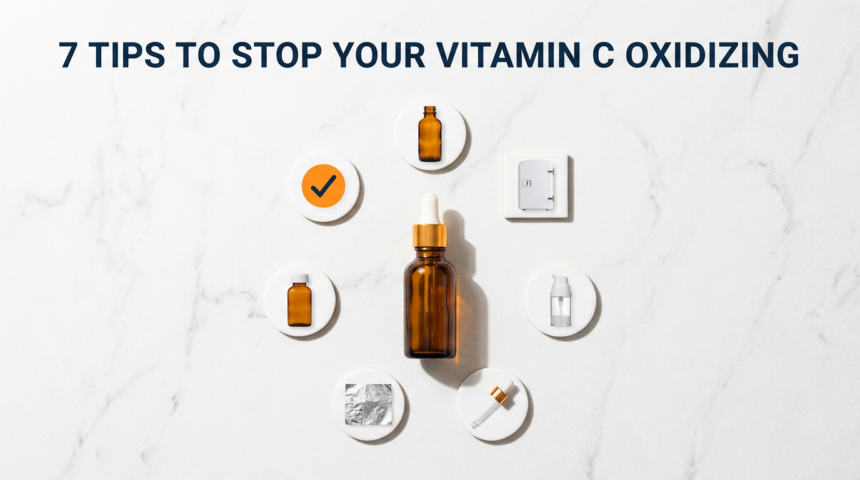
- Tip 1: Choose Amber or Opaque Glass Bottles
- Tip 2: Refrigerate Your Serum
- Tip 3: Minimize Air Contact (Use Airless Pumps)
- Tip 4: Keep the Dropper Clean and Dry
- Tip 5: Consider Decanting into Smaller Vials
- Tip 6: Wrap Clear Bottles in Aluminum Foil
- Tip 7: Buy Smaller Sizes More Frequently
- Evaluating Product Packaging: A Quick Guide
- Common Questions
- When Prevention Tips Are Not Enough
- Conclusion
- References
Why Vitamin C Serum Oxidizes (The Science Behind the Problem)
Vitamin C oxidation is the chemical degradation of L-ascorbic acid into other compounds, primarily dehydroascorbic acid (DHA) and later, inactive breakdown products. This reaction is accelerated by oxygen, UV light, and high temperatures. Once oxidized, the serum not only loses its antioxidant and skin-brightening power, but the degraded molecules can also cause a pro-inflammatory response in some skin types, leading to irritation or a temporary darkening of the skin (a pseudo-staining effect). The goal of vitamin C serum oxidation prevention is to maintain the molecule in its active, reduced form for as long as possible.
Tip 1: Choose Amber or Opaque Glass Bottles
Clear glass or plastic bottles offer zero protection from the primary catalyst of oxidation: light. Ultraviolet (UV) and even strong visible light can initiate the degradation of ascorbic acid. An amber, cobalt blue, or completely opaque bottle acts as a physical barrier, filtering out these damaging wavelengths. This is the first and most basic line of defense, and it is a feature you should prioritize when purchasing a serum. If your favorite formula comes in a clear bottle, you can still protect it; we will cover a workaround for that in Tip 6.
Formulation chemists consistently recommend amber glass for labile ingredients. A 2025 formulation guide from Ningen Cosmeceuticals on vitamin C stability underscores that opaque, UV-filtering packaging is non-negotiable for commercial products claiming extended shelf life.
Tip 2: Refrigerate Your Serum
Storing your vitamin C serum in the refrigerator is one of the most effective best practices for vitamin C serum storage. Chemical reaction rates, including oxidation, slow down dramatically at lower temperatures. Think of it as putting the serum into a state of suspended animation. A cool, consistent environment (typically around 4–7°C or 39–45°F) is far more stable than a bathroom cabinet, which can experience significant temperature fluctuations from showers and heating. For a deeper dive on this topic, read our detailed guide on whether you should keep vitamin C serum in the fridge.
A practical note: if you refrigerate your serum, keep it in its original box to protect it from the light inside the fridge and to prevent condensation on the bottle, which could introduce water into the formula when you open it. Allow the bottle to come to room temperature for a minute before application to improve product spreadability.
Tip 3: Minimize Air Contact (Use Airless Pumps)
Every time you open a dropper bottle, you introduce a fresh batch of oxygen-rich air into the headspace above the serum. This oxygen then dissolves into the liquid, accelerating oxidation. The ideal packaging to prevent this is an airless pump. These systems use a vacuum mechanism to dispense product without letting any air back in, creating a near-anaerobic environment. If your serum comes in a dropper bottle, be disciplined: open it quickly, withdraw your dose immediately, and seal it tightly again. Do not leave the cap off while you apply the product to your face.
Tip 4: Keep the Dropper Clean and Dry
If you are using a dropper bottle, contamination is a silent oxidizer. Never let the dropper tip touch your skin, fingers, or any other surface. Skin oils, bacteria, and water can be introduced into the serum, creating a breeding ground for microbial growth and chemical instability. Water, in particular, can hydrolyze the formula. After use, wipe the dropper stem and the inside rim of the bottle neck with a clean, dry tissue before screwing the cap back on. This simple habit removes residual serum that could oxidize at the bottleneck and seal, preventing it from discoloring the fresh serum below.
Tip 5: Consider Decanting into Smaller Vials
If you buy a large bottle of serum, you are committing to a long shelf life that the formula may not inherently have. One clever workaround is decanting. Transfer a 1–2 week supply of serum into a small, amber glass vial (available from laboratory supply stores or online). Keep this small vial in your bathroom for daily use, and store the large, original bottle tightly sealed in the refrigerator. This drastically reduces the frequency with which you expose the main batch to air, light, and warmer temperatures. Ensure the vials are sterilized before use and that the transfer is done quickly and cleanly.
Tip 6: Wrap Clear Bottles in Aluminum Foil
What if your perfect serum only comes in a clear bottle? You are not doomed. A simple, highly effective hack is to wrap the entire bottle in aluminum foil. Foil is completely opaque and blocks 100% of light. It also provides a small degree of insulation against temperature changes. Wrap it snugly, label it so you do not mistake it for something else, and you have instantly upgraded your packaging. This is a core recommendation from the Phyto-C summer storage guide for protecting light-sensitive skincare during travel or in bright environments.
Tip 7: Buy Smaller Sizes More Frequently
This tip addresses the root of the problem: time. Even under perfect conditions, all vitamin C serums will eventually oxidize. Buying a 30ml bottle that takes you six months to finish is a higher-risk strategy than buying a 15ml bottle you will use up in two months. You are simply giving the degradation process less time to occur. While the cost per milliliter might be slightly higher for the smaller size, the guarantee of a fresh, fully potent product for its entire lifespan is worth the trade-off. This is one of the most underrated slow oxidation vitamin C serum tips.
Evaluating Product Packaging: A Quick Guide
When you are next shopping for a vitamin C serum, look beyond the ingredient list and concentration. Scrutinize the packaging, as it is a direct indicator of the brand’s commitment to stability. The ideal package is an amber or opaque glass airless pump. A dropper in an amber bottle is acceptable if you are diligent with the tips above. A clear bottle of any kind, especially a jar, is a red flag for any water-based ascorbic acid formula, suggesting the brand may prioritize aesthetics over efficacy. For more on this, explore the science behind vitamin C serum stability.
Common Questions
How can I tell if my vitamin C serum has oxidized?
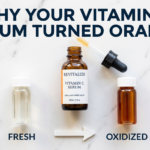
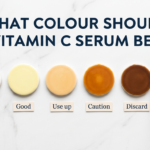
A fresh L-ascorbic acid serum is typically clear or a very pale, straw-like yellow. As it oxidizes, the color deepens to a distinct orange or dark brown. The texture may also become slightly sticky or develop an off-putting metallic smell. If you see these signs, the serum has lost most of its antioxidant power and should be discarded.
Does a stabilized vitamin C derivative oxidize as easily?
No. Vitamin C derivatives like sodium ascorbyl phosphate, magnesium ascorbyl phosphate, and ascorbyl glucoside are chemically engineered to be more stable in water and oxygen. They are far less prone to rapid oxidation than pure L-ascorbic acid. However, they still benefit from cool, dark storage to maximize their shelf life.
Can I still use a slightly yellow vitamin C serum?
A very pale yellow might be acceptable, as some oxidation can occur even during manufacturing. However, a distinctly yellow or orange hue indicates significant degradation. Using it is unlikely to cause harm for most people, but it will not deliver the brightening and protective benefits you paid for. It is better used on your body (like hands or chest) than on your face.
How long should an unopened vitamin C serum last?
An unopened, properly packaged serum stored in a cool, dark place (like a cupboard away from appliances) should retain its potency for up to two years from its manufacturing date. Always check for a Period After Opening (PAO) symbol (e.g., 6M, 12M) once you break the seal.
Should I avoid vitamin C serums with water in them?
Not necessarily. Anhydrous (water-free) serums or those suspended in silicone oils are inherently more stable, but water-based formulas can be highly effective if they are well-formulated with chelating agents and antioxidants like vitamin E and ferulic acid, and if they are packaged correctly. The key is your ability to store them properly after purchase.
Is it better to make my own fresh vitamin C serum?
While DIY serums guarantee freshness, they lack the precise pH control, penetration enhancers, and stabilizing cocktail that professional formulations provide. The risk of incorrect pH causing irritation, coupled with the need to make tiny batches every few days, makes commercial serums a more reliable and convenient choice for most people.
When Prevention Tips Are Not Enough
If you follow all these tips and your serum still oxidizes within a few weeks, the issue may lie with the formulation itself. Some brands, despite marketing claims, use inferior stabilizing systems or packaging. In this case, the problem is not your storage; it is the product. Your move is to switch brands. Look for serums with a proven stability record, often indicated by clinical data or clear information about their testing protocols. Alternatively, if your skin is highly reactive and you suspect even slightly degraded vitamin C causes stinging or redness, consider switching to a more stable vitamin C derivative altogether. Your skincare should solve problems, not create them.
Conclusion
Preserving your vitamin C serum is a straightforward exercise in controlling its environment. If you only implement one change, make it refrigeration. If you travel often or have a bright bathroom, combine the fridge with aluminum foil wrapping. For the most hassle-free experience, prioritize buying airless pumps in opaque bottles and opt for smaller sizes you will use quickly. By integrating these habits, you ensure every drop of your serum delivers the antioxidant protection and brightening results you expect. For a complete overview of all storage principles, revisit our central guide on how to store vitamin C serum.
References
- Ningen Cosmeceuticals. (2025). Vitamin C Stability: A Formulator’s Guide to Potency and Packaging. Retrieved from internal formulation document.
- Phyto-C. (2024). Summer Storage Guide for Antioxidant Serums. Retrieved from brand educational materials.
- Telang, P. S. (2013). Vitamin C in dermatology. Indian Dermatology Online Journal, 4(2), 143–146. https://doi.org/10.4103/2229-5178.110593
- Al-Niaimi, F., & Chiang, N. Y. Z. (2017). Topical Vitamin C and the Skin: Mechanisms of Action and Clinical Applications. The Journal of Clinical and Aesthetic Dermatology, 10(7), 14–17. https://www.ncbi.nlm.nih.gov/pmc/articles/PMC5605218/