
Yes, Vitamin C Serum Is Typically Safe During Pregnancy
You can safely use vitamin C serum on your skin during pregnancy. Dermatologists consistently classify topical vitamin C (L-ascorbic acid and its stable derivatives) as a low-risk, generally safe ingredient for all three trimesters and while breastfeeding. The primary reason for this classification is simple and backed by pharmacokinetic research: when applied to the skin at typical cosmetic concentrations, vitamin C is not absorbed into the bloodstream in any meaningful, systemic amount1. It performs its function locally, within the upper layers of the skin, and is metabolized there.
- Yes, Vitamin C Serum Is Typically Safe During Pregnancy
- Why Topical Vitamin C Is Considered Pregnancy Safe
- What to Look for in a Pregnancy Safe Vitamin C Formula
- Ingredients to Avoid in Your Vitamin C Serum While Pregnant
- How to Apply Vitamin C Serum Safely While Pregnant
- Common Questions
- When a Vitamin C Serum Isn’t the Answer
- Choosing Your Pregnancy Safe Vitamin C Serum
- References
You don’t need to alter your skincare routine dramatically when pregnant, but you should be highly selective. While vitamin C serums are safe, many other common anti-aging ingredients are not. This makes understanding the safety profile of each component essential, moving beyond a simple ‘yes’ or ‘no’ to a nuanced understanding of what makes a formula truly appropriate. This guide will walk you through the science of topical vitamin C absorption, recommend safe concentrations, highlight which formula components to avoid, and offer practical application advice for a gentle, effective routine. For more on the general side effects that anyone can experience, you can read our dedicated guide on vitamin c serum side effects.
Why Topical Vitamin C Is Considered Pregnancy Safe
To understand why topical vitamin C is deemed safe, you must understand its pharmacokinetics. L-ascorbic acid, the active, potent form of vitamin C, has poor skin penetration when applied topically. While it can deliver antioxidant and collagen-synthesis benefits to the epidermis and upper dermis, its molecular properties prevent significant dermal absorption into the capillary network that would transport it systemically.
This principle is the cornerstone of dermatology guidance on pregnancy skincare. Major dermatological associations, including the American Academy of Dermatology (AAD), advise that topical antioxidants like vitamin C are safe options during pregnancy2. Their recommendations are based on the established principle of negligible systemic absorption from cosmetic formulations. This makes topical application fundamentally different from taking high-dose oral supplements, which do cross the placental barrier.
It is important to note that this safety profile extends to the vitamin c serum first trimester, a period of heightened caution for many. Because the serum acts locally on your skin, it does not pose a risk to early fetal development. This local action also explains why vitamin c serum breastfeeding safe is a common and accurate descriptor. Minimal to no systemic absorption means negligible transfer into breast milk, allowing you to continue your antioxidant skincare regimen postpartum.
What to Look for in a Pregnancy Safe Vitamin C Formula
While the active ingredient itself is safe, the complete formulation of your serum requires scrutiny. A pregnancy safe skincare vitamin c product is defined not just by its inclusion of vitamin C, but by the exclusion of other high-risk ingredients. Your checklist should focus on purity and stability.
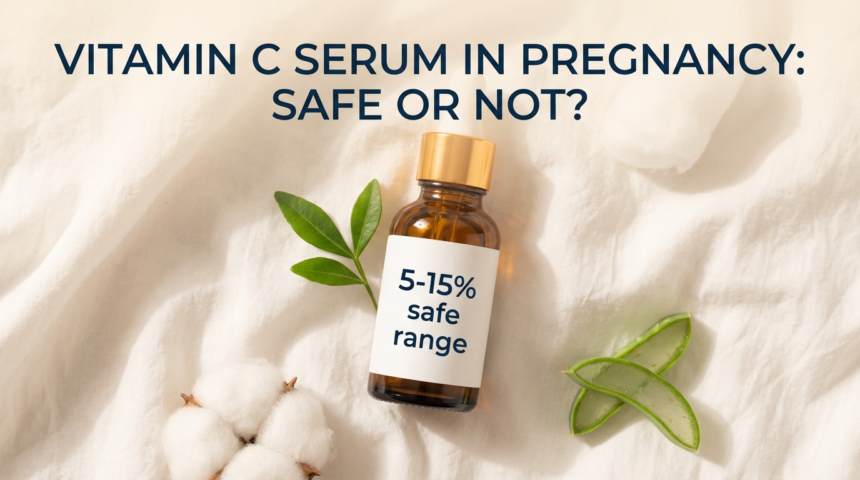
Optimal Concentration: For efficacy and tolerance during pregnancy, dermatologists commonly recommend concentrations between 5% and 15%. This range provides proven antioxidant and brightening benefits without the high irritation potential of stronger concentrations (like 20% or above), which can compromise an already sensitive pregnancy barrier. Starting at the lower end (5-10%) is prudent if you have sensitive skin, which can become more reactive during pregnancy.
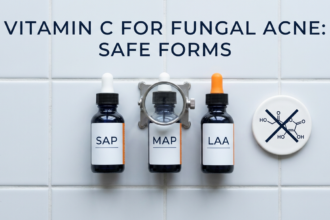
Form of Vitamin C: L-ascorbic acid is the gold standard for potency but is notoriously unstable. For a more gentle and stable option, consider derivatives like magnesium ascorbyl phosphate (MAP), sodium ascorbyl phosphate (SAP), or tetrahexyldecyl ascorbate (THD ascorbate). These are often better tolerated and less likely to cause stinging or irritation, a key consideration when your skin’s tolerance may be shifting.
Supporting Ingredients: Seek out soothing, barrier-supporting companions like ferulic acid (which stabilizes vitamin C and offers its own antioxidant benefits), vitamin E (tocopherol), niacinamide, or glycerin. Avoid serums that combine vitamin C with retinoids (retinol, retinyl palmitate, retinaldehyde) or salicylic acid (especially in high concentrations above 2%), as these ingredients are not recommended during pregnancy.
Ingredients to Avoid in Your Vitamin C Serum While Pregnant
Your serum should be a vitamin C soloist or part of a gentle choir, not a complex blend of actives. The safety of the formula hinges on what it does not contain. This is the most critical editorial step when selecting any product labeled as pregnancy-safe.
Retinoids (Topical): This category includes retinol, retinaldehyde, retinyl palmitate, and prescription forms like tretinoin. Despite being topical, retinoids are contraindicated during pregnancy due to potential teratogenic risks. While systemic absorption from topical creams is low, the risk is considered unnecessary when safe alternatives exist. Do not use a serum that combines vitamin C with any form of retinoid.
High-Dose Salicylic Acid: Low concentrations (under 2%) of salicylic acid in wash-off or leave-on products are generally considered acceptable by many dermatologists. However, higher concentrations used for chemical peels are not recommended. To err on the side of caution, it’s simplest to choose a vitamin C serum that is free of salicylic acid altogether.
Essential Oils and High Fragrance: Pregnancy can make skin more sensitive and reactive. Potentially irritating ingredients like high concentrations of citrus essential oils (e.g., lemon, bergamot) or synthetic fragrance can trigger dermatitis or redness. Opt for fragrance-free formulas to minimize this risk.
For a deeper look at gentle formulations, our article on vitamin c serum for sensitive skin outlines many compatible, soothing ingredient pairings.
How to Apply Vitamin C Serum Safely While Pregnant
Application technique during pregnancy doesn’t differ drastically, but an emphasis on gentle, tolerant skincare is key. Your skin’s barrier function can be more vulnerable, and you may experience new sensitivities.
Start by applying your vitamin C serum to clean, slightly damp skin in the morning. Using it in your AM routine capitalizes on its antioxidant properties to neutralize free radicals from environmental exposure like UV radiation and pollution. Follow with a moisturizer suited to your possibly drier skin, and always finish with a broad-spectrum SPF 30 or higher. Sunscreen is non-negotiable, as pregnancy can sometimes increase melanin production, making you more prone to hyperpigmentation (melasma).
If you are introducing vitamin C for the first time while pregnant, perform a patch test. Apply a small amount behind your ear or on your inner forearm for a few consecutive days to check for any adverse reaction. Begin by using the serum every other day, gradually increasing to daily use as your skin tolerates. If you experience stinging, redness, or irritation, reduce frequency or consider switching to a gentler vitamin C derivative. Listen to your skin—its needs can change weekly.
Common Questions
Is vitamin C serum safe in the first trimester?
Yes, topical vitamin C serum is considered safe for use during the first trimester. Its mechanism of action is local to the skin, with no evidence of significant systemic absorption that would affect fetal development. This is the consistent position of dermatological associations.
Can I use vitamin C serum while breastfeeding?
Absolutely. Vitamin C serum is considered vitamin c serum breastfeeding safe. The negligible systemic absorption means the amount that could potentially pass into breast milk is infinitesimal and not a cause for concern. It remains one of the most recommended actives for postpartum skincare.
What concentration of vitamin C is best during pregnancy?
A concentration between 5% and361% is ideal. It offers effective antioxidant protection and brightening benefits with a low risk of irritation. Higher concentrations (20%+) are more likely to cause sensitivity and are unnecessary for achieving good results during pregnancy.
Are vitamin C derivatives (like MAP or SAP) safer than L-ascorbic acid?
They are not “safer” in terms of pregnancy risk—all are considered safe due to low absorption. However, derivatives like Magnesium Ascorbyl Phosphate (MAP) or Sodium Ascorbyl Phosphate (SAP) are often more stable and less irritating, making them a better choice for pregnancy skin that has become reactive or sensitive.
I’ve heard vitamin C and retinoids should not be used together. Is that true?
This is a myth regarding product formulation stability and timing, not safety. It is perfectly fine to use vitamin C in the morning and a pregnancy-safe alternative to retinoids (like bakuchiol or peptides) at night. However, you must avoid single products that combine vitamin C with retinoids, as the retinoid component itself is not recommended for use during pregnancy.
Will vitamin C serum help with pregnancy melasma?
It can be a helpful supportive component. Vitamin C inhibits the enzyme tyrosinase, which is involved in melanin production. While it may help brighten existing hyperpigmentation and prevent new dark spots, it should be used in conjunction with strict, daily sun protection (SPF 30+) for best results against melasma.
Can I use my vitamin C serum if it contains ferulic acid and vitamin E?
Yes, this combination is excellent and safe. Ferulic acid stabilizes vitamin C and enhances its antioxidant efficacy, while vitamin E (tocopherol) provides complementary antioxidant benefits. This trio is a well-researched, potent, and pregnancy-safe formulation.
When a Vitamin C Serum Isn’t the Answer
While vitamin C is safe, it is not a cure-all. If you are experiencing severe, spreading rashes, intense itching, blistering, or skin pain, you may have a condition like polymorphic eruption of pregnancy (PEP), pemphigoid gestationis, or a severe eczema flare. These require medical diagnosis and possibly prescription treatment from your doctor or dermatologist. Do not attempt to treat these with over-the-counter serums. Similarly, if your primary concern is deep hormonal acne, vitamin C alone will not be sufficient; you need a pregnancy-safe treatment plan from a healthcare provider. In these cases, a serum is the wrong solution, and professional care is necessary.
Choosing Your Pregnancy Safe Vitamin C Serum
Selecting a vitamin C serum during pregnancy comes down to prioritizing gentle, effective formulas free of contraindicated ingredients. Look for serums with concentrations in the 10-15% range, stabilized with ferulic acid and vitamin E, and explicitly free of retinoids and high-dose salicylic acid. For most, a gentle L-ascorbic acid serum or a well-formulated derivative like SAP will offer the perfect balance of efficacy and tolerance. If you have developed significant sensitivity, start with a low-concentration derivative formula and apply it every other day. For specific, vetted product options that fit these criteria, you can explore our independently researched roundup of the best vitamin c serums for 2026, keeping the pregnancy-safe filters outlined here in mind.
References
- Telang, P. S. (2013). Vitamin C in dermatology. Indian Dermatology Online Journal, 4(2), 143–146. https://doi.org/10.4103/2229-5178.110593
- American Academy of Dermatology Association. (n.d.). Pregnancy skincare: What’s safe? Retrieved from https://www.aad.org/public/everyday-care/skin-care-basics/pregnancy-skin-care