
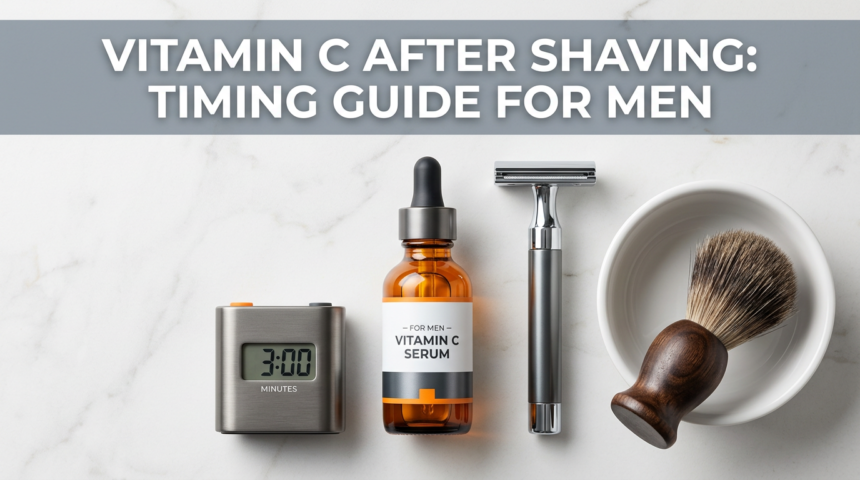
Men can use vitamin C serum after shaving, but they should wait at least 20 minutes for the skin’s natural barrier to begin healing before applying a low-pH, direct L-ascorbic acid formula. Applying it directly to skin with micro-tears from shaving can cause significant stinging and irritation, undermining the antioxidant’s benefits. The better approach is to use a gentler vitamin C derivative immediately, or to pause your shave routine to let your skin recover first.
- Why Shaving Changes the Rules for Vitamin C
- The Ideal Post-Shave Skincare Timeline for Men
- Choosing the Right Vitamin C Serum for Post-Shave Use
- Recommended Vitamin C Serums for Post-Shave Application
- How Vitamin C Serum Helps with Razor Burn and Bumps
- Common Questions
- When a Vitamin C Serum After Shaving Isn’t the Answer
- Conclusion
- References
Shaving creates micro-injuries and compromises the stratum corneum, the skin’s outermost protective layer1. Introducing a highly acidic serum to this vulnerable state is asking for trouble. However, the antioxidant and collagen-stimulating properties of vitamin C are excellent for post-shave skin recovery. The key is strategy, not avoidance. This guide will walk you through the science of your skin post-shave, explain how to integrate vitamin C safely, and recommend products specifically formulated to minimize vitamin c serum razor burn.
Why Shaving Changes the Rules for Vitamin C
To understand the timing, you need to know what a razor does beyond removing hair. It creates a controlled injury. Even with a sharp blade and perfect technique, shaving exfoliates the skin’s surface and can create microscopic nicks and tears in the stratum corneum. The American Academy of Dermatology (AAD) notes that shaving can cause razor bumps, ingrown hairs, and general irritation, especially if the skin’s barrier is already compromised2.
Stratum Corneum: The outermost layer of the epidermis, composed of dead skin cells (corneocytes) held together by lipids. Its primary function is to act as a protective barrier against environmental stressors and prevent transepidermal water loss (TEWL). Shaving disrupts this structure.
This disruption is the core conflict. Most effective vitamin C serums use L-ascorbic acid (LAA) stabilized at a low pH (around 3.5 or lower) for optimal skin penetration. On intact, healthy skin, this low pH helps the vitamin C absorb. On skin with fresh micro-tears, that same acidity feels like pouring lemon juice on a paper cut. It bypasses the protective barrier and delivers the active directly to more sensitive, nerve-rich layers, causing that familiar sting.
The Ideal Post-Shave Skincare Timeline for Men
A strategic men post shave skincare vitamin c routine centers on barrier recovery first, active treatment second. Rushing the process negates the benefits of both shaving and your serum. Follow this sequence to minimize irritation and maximize results.
- Shave: Use a sharp blade, a quality shaving cream or oil, and shave with the grain.
- Rinse & Pat Dry: Rinse thoroughly with cool water to close pores and pat your face dry gently with a clean towel. Do not rub.
- Apply a Soothing Post-Shave Product (Time: 0 minutes): This is your critical first step. Use an alcohol-free, calming balm, lotion, or toner containing ingredients like centella asiatica, panthenol, aloe vera, or allantoin. This soothes irritation, reduces redness, and begins the healing process.
- The Waiting Period (Time: 20+ minutes): Allow your skin to calm down and its natural pH to rebalance. This gives the stratum corneum a chance to start sealing those micro-tears. You can proceed with the rest of your routine during this time.
- Apply Your Vitamin C Serum (Time: 20+ minutes post-shave): After your skin feels calm and no longer sensitive to touch, apply your vitamin C serum. If you feel any stinging, stop, rinse, and wait longer next time.
- Moisturize & Apply Sunscreen: Follow with your daily moisturizer and a broad-spectrum sunscreen. Vitamin C makes your skin more photosensitive, and sunscreen is non-negotiable, especially after exfoliation from shaving.
Choosing the Right Vitamin C Serum for Post-Shave Use
Not all vitamin C serums are created equal, especially for application on recently shaved skin. Your formula choice is as important as your timing. The main decision point is between pure L-ascorbic acid and its gentler derivatives.
For men new to vitamin C or those with consistently sensitive skin, starting with a derivative is a prudent strategy. As grooming experts have highlighted, derivatives like sodium ascorbyl phosphate (SAP) offer antioxidant and brightening benefits without the typical irritation, making them a smart choice for a daily grooming routine3.
Recommended Vitamin C Serums for Post-Shave Application
These selections prioritize formulations that are effective yet less likely to cause irritation on skin sensitized by shaving. Remember, editorial judgment is key: we note who each product is wrong for, not just who it’s right for.
1. Geek & Gorgeous C-Glow (L-Ascorbic Acid)
This is a pure, fresh L-ascorbic acid serum at 15% concentration. It’s highly effective for antioxidant protection and collagen synthesis. Price tier: ££ / $$.
Editorial Judgment: This is the pick if you want maximum LAA potency and are committed to the 20+ minute wait post-shave. However, skip this entirely if you shave in the morning and are rushed; applying it on damp, freshly shaved skin will sting. It’s also wrong for you if you have active razor burn or bumps, as the acidity will aggravate them.
2. Drunk Elephant C-Firma Fresh Day Serum (LAA + Derivatives Blend)
A potent blend of 15% L-ascorbic acid with supporting derivatives and a complex of antioxidants. It’s packaged in airless pump vials to maintain freshness. Price tier: £££ / $$$.
Editorial Judgment: We chose this over other premium LAA serums because its additional ferulic acid and pumpkin ferment provide extra soothing benefits that can slightly mitigate post-shave reactivity. The tradeoff is the premium price. It’s a good option for those who want LAA’s gold-standard benefits but have skin that tolerates actives reasonably well post-shave. Avoid if your budget is tight or if your skin is extremely sensitive.
3. Paula’s Choice C15 Super Booster (L-Ascorbic Acid)
Another 15% LAA serum stabilized with vitamin E and ferulic acid. It has a lightweight, non-oily texture. Price tier: £££ / $$$.
Editorial Judgment: This earns its spot due to its reputation for a slightly more elegant texture than some pure LAA options, which can feel sticky. The limitation is that it’s still a low-pH LAA serum, so all the standard post-shave waiting rules apply. It’s wrong for you if you prefer a one-and-done product; this is a booster meant to be mixed with moisturizer, which adds a step to your routine.
4. FaceTheory Regena-C 20% (L-Ascorbic Acid)
A high-potency 20% LAA serum. This concentration is at the upper limit of what is effective for topical application. Price tier: ££ / $$.
Editorial Judgment: This is for the experienced vitamin C user with resilient skin. The 20% concentration offers no greater antioxidant benefit than 15%, but some find it more effective for hyperpigmentation. The critical caveat: using this after shaving is an advanced move. You must wait a full 30 minutes after your post-shave balm, and even then, mild tingling is likely. Do not start with this serum.
5. Typology 10% Vitamin C Derivative Serum (Ethyl Ascorbic Acid)
This serum uses ethyl ascorbic acid, a highly stable and gentle vitamin C derivative known for brightening. It’s fragrance-free and has a watery texture. Price tier: ££ / $$.
Editorial Judgment: This is our top recommendation for men who shave and want to apply vitamin C immediately or shortly after. The neutral pH and gentle derivative formulation mean the risk of stinging on micro-damaged skin is extremely low. The tradeoff is that it may not provide the same level of collagen stimulation as LAA, but its antioxidant and brightening power is well-documented. Skip this if your primary goal is anti-aging and your skin can tolerate LAA after a proper wait.
How Vitamin C Serum Helps with Razor Burn and Bumps
When used correctly, vitamin C serum can be a valuable tool in managing and preventing shaving irritation, not a cause of it. The key is its anti-inflammatory and healing properties.
Reduces Inflammation: As a potent antioxidant, vitamin C neutralizes free radicals generated by the physical trauma of shaving. This calms the inflammatory response that leads to redness and swelling associated with razor burn4.
Promotes Healing: Vitamin C is a necessary cofactor for the synthesis of collagen, the primary structural protein in skin. By supporting collagen production, it aids in the repair of the micro-tears created during shaving, helping the skin barrier recover more robustly.
Fades Post-Inflammatory Hyperpigmentation (PIH): Razor bumps, especially from ingrown hairs, can leave behind dark spots as they heal. Vitamin C inhibits melanin production, helping to fade these discolorations and promote a more even skin tone over time.
For a deeper dive into how vitamin C works in men’s skincare, see our comprehensive guide on vitamin c serum for men.
Common Questions
Can I use vitamin C serum before shaving?
It’s not recommended. The serum can create a slightly sticky or active layer on the skin that might interfere with the razor’s glide, potentially increasing friction and irritation. It’s best to apply vitamin C after shaving, following the safe waiting period.
What should I do if my vitamin C serum stings after shaving?
Immediately rinse it off with cool water. Pat your skin dry and apply a bland, soothing moisturizer or balm. This indicates your skin’s barrier is too compromised for that formulation at that moment. Next time, wait longer post-shave or switch to a gentler vitamin C derivative.
Does vitamin C help with ingrown hairs?
Indirectly. Vitamin C doesn’t release trapped hairs. However, by reducing overall inflammation and promoting healthier skin cell turnover, it can create an environment where ingrown hairs are less likely to form and heal with less discoloration.
Can I use vitamin C serum if I have active razor burn?
No. If you have visible, active razor burn (red, inflamed, bumpy skin), your priority is calming and healing, not introducing active treatments. Stick to a routine of gentle cleansers, soothing balms with panthenol or centella, and a simple moisturizer until the inflammation subsides completely.
Should I use a vitamin C serum in the morning or night after shaving?
Vitamin C is ideal for morning use due to its potent antioxidant protection against daily environmental damage like UV and pollution. If you shave in the morning, follow the wait-time protocol. If you shave at night, you can apply your serum after the wait, but know you’ll miss out on its daytime protective benefits.
How long should I wait between shaving and applying a vitamin C serum?
The safe minimum is 20 minutes after applying a soothing post-shave product. This allows your skin’s pH to rebalance and the initial barrier repair to begin. If your skin is very sensitive, waiting 30 minutes or longer is advisable.
When a Vitamin C Serum After Shaving Isn’t the Answer
If your post-shave skin routinely experiences severe burning, widespread redness, pustules, or itchy, raised bumps that last for days, the problem likely extends beyond simple irritation from an active serum. You may be dealing with a condition like folliculitis (a bacterial or fungal infection of the hair follicles), severe pseudofolliculitis barbae (razor bumps), or a chronic skin barrier disorder. In these cases, continuing to apply any active serum, including vitamin C, can worsen the inflammation. The correct course is to stop all non-essential actives, adopt a minimal, soothing skincare routine, and consult a dermatologist. They can provide a precise diagnosis and may prescribe topical antibiotics, anti-inflammatories, or other targeted treatments to resolve the underlying issue before you reintroduce products like vitamin C. Learn more about potential vitamin c serum side effects to watch for.
Conclusion
Integrating vitamin C serum into your post-shave routine requires a shift from immediate application to strategic timing. The benefits for healing, protection, and preventing post-shave discoloration are significant, but they are only realized if you avoid irritating a freshly compromised barrier. If you shave daily and want a simple, low-risk addition, start with a gentle derivative like Typology’s serum. If you have resilient skin and want the strongest antioxidant punch, commit to the 20-minute wait and use a fresh L-ascorbic acid formula like Geek & Gorgeous C-Glow. Ultimately, listening to your skin’s response is your best guide. Check the current pricing on our recommended gentle derivative to begin safely incorporating this powerhouse antioxidant into your grooming ritual.
References
- Harding, C.R., et al. (2000). Dry skin, moisturization and corneodesmolysis. International Journal of Cosmetic Science, 22(1), 21–52. https://doi.org/10.1046/j.1467-2494.2000.00001.x
- American Academy of Dermatology Association (AAD). (n.d.). Men’s skin care. Retrieved from https://www.aad.org/public/everyday-care/skin-care-basics/mens-skin-care
- GQ. (2025, March). The Grooming Edit: Why Every Man Should Consider Vitamin C. GQ Magazine.
- Pullar, J.M., et al. (2017). The Roles of Vitamin C in Skin Health. Nutrients, 9(8), 866. https://doi.org/10.3390/nu9080866