
Does vitamin C serum actually make your skin darker, or is it a myth? In almost all cases, it’s a visual myth. What you’re likely seeing is an optical illusion caused by the serum itself oxidizing on your skin’s surface or within your pores. However, in rare instances, a compromised skin barrier reacting to the acidic pH of vitamin C can trigger inflammation that leads to post-inflammatory hyperpigmentation. The key is understanding the difference between the immediate, reversible “blackhead illusion” and a genuine, delayed darkening of the skin.
- Surface Oxidation: The Most Common Culprit
- The “Blackhead Illusion” Explained
- Can Vitamin C Make Hyperpigmentation Worse?
- Who Is at Genuine Risk?
- Diagnosing Your Darkening: A Quick Guide
- How to Prevent Both Oxidation and Irritation
- Common Questions
- When a Vitamin C Serum Isn’t the Answer
- Conclusion
- References
Surface Oxidation: The Most Common Culprit
Fresh, stable vitamin C serum is typically a clear, pale yellow, or even water-like liquid. When you apply it, you see little color. But as it sits on the shelf or in your bathroom, it reacts with oxygen from the air in a process called oxidation. The active ingredient, L-ascorbic acid, degrades into compounds like dehydroascorbic acid and eventually into darker molecules that stain the skin brown or orange1. This discolored liquid sitting on top of your skin can create a temporary, muddy cast. This is especially noticeable with higher concentrations of pure L-ascorbic acid and is a clear sign the serum has lost much of its potency. For strategies on preventing this, our guide on how to properly store vitamin C serum can help extend its lifespan.
Surface oxidation is the degradation of vitamin C (L-ascorbic acid) upon exposure to air (oxygen) and light, turning it into darker-colored compounds that can temporarily stain the top layer of the skin.
The “Blackhead Illusion” Explained
This is a specific phenomenon that often causes panic. You apply a fresh, clear serum, and within minutes, your pores—particularly on the nose and cheeks—look like they’re filled with dark grit or blackheads. This oxidized vitamin C serum darkening skin effect isn’t dirt or oxidized sebum. The slightly watery texture of many vitamin C serums allows them to seep into the hollows of your pores. When the serum oxidizes in that confined, slightly oily space, it turns a dark amber or brown color, creating a stark contrast against your skin. When you wash your face, this oxidized residue rinses away completely. A well-formulated, stable serum with antioxidants like vitamin E and ferulic acid is less prone to this rapid in-pore oxidation.
Can Vitamin C Make Hyperpigmentation Worse?
This is the more serious question behind the fear of skin darkening. Vitamin C is a tyrosinase inhibitor, meaning it blocks a key enzyme in the melanin production pathway. It’s a gold-standard ingredient for treating and preventing hyperpigmentation2. So, how could it possibly make dark spots darker? The answer lies not in the vitamin C itself, but in your skin’s reaction to it.
Pure L-ascorbic acid requires a highly acidic pH (around 3.5) to remain stable and penetrate the skin. This low pH can be intensely irritating for some individuals, especially those with a compromised skin barrier, sensitive skin, or conditions like rosacea. Irritation triggers inflammation, and inflammation can stimulate melanocytes to produce more pigment, leading to post-inflammatory hyperpigmentation (PIH). In this scenario, the vitamin C serum hyperpigmentation worse outcome is real, but it’s an indirect effect of the irritation, not a direct effect of the vitamin C molecule.
Who Is at Genuine Risk?
The individuals most susceptible to irritation-induced darkening are those applying a potent, acidic vitamin C serum to skin that is already vulnerable. This includes people who are simultaneously using multiple actives (like retinoids, exfoliating acids, or strong acne treatments), those with eczema or active barrier damage, and individuals who dive straight into a high-concentration formula without a gradual introduction. If your skin stings, burns, turns red, or feels tight and uncomfortable for more than a minute after application, it’s signaling distress. Pushing through this inflammation increases the risk of PIH. For a deeper dive on potential adverse reactions, review our article on vitamin C serum side effects.
Diagnosing Your Darkening: A Quick Guide
How to Prevent Both Oxidation and Irritation
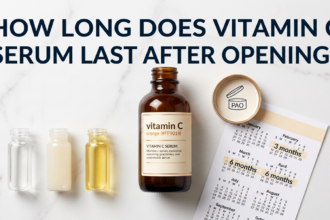
To avoid the visual darkening from oxidation: purchase serums in opaque, air-restrictive packaging; store them in a cool, dark place (not the bathroom); and use them within 3-6 months of opening. A serum that has turned dark orange or brown is no longer effective and should be discarded. To prevent irritation that could lead to true hyperpigmentation: start with a lower concentration (10% or less) and an alternate-day schedule. Apply it to completely dry skin, as damp skin can enhance penetration and stinging. Always follow with moisturizer and sunscreen. Consider a “buffered” or derivative-based formula (like sodium ascorbyl phosphate or magnesium ascorbyl phosphate) which are gentler and more stable, though potentially less potent than pure L-ascorbic acid.
Common Questions
Can I still use a vitamin C serum that has turned light yellow?
A very pale, champagne yellow is often normal and indicates the serum contains vitamin E (a stabilizer) or is freshly oxidized but still active. A deep amber, brown, or orange color signifies significant degradation. The antioxidant power is vastly diminished, and applying it mostly offers hydration at best, and surface staining at worst.
If my skin looks darker after vitamin C, should I stop using it?
First, identify the cause. If it washes off and the serum is discolored, stop using that specific bottle. If your skin tone has genuinely darkened in patches days after experiencing redness or stinging, discontinue use and focus on calming and repairing your skin barrier before considering a reintroduction with a much gentler formula.
Does oxidized vitamin C cause breakouts?
Oxidized vitamin C itself is not comedogenic (pore-clogging). However, the inflammatory byproducts of oxidation or the general irritation from a degraded, overly acidic formula can exacerbate acne or cause perioral dermatitis in some individuals.
Are some forms of vitamin C less likely to cause this darkening?
Yes. Vitamin C derivatives like magnesium ascorbyl phosphate, sodium ascorbyl phosphate, and tetrahexyldecyl ascorbate (THD ascorbate) are more stable in water and at a higher pH. They are far less prone to rapid oxidation and surface staining, and their higher pH makes them much gentler, reducing irritation risk.
Can I mix vitamin C with niacinamide?
This is one of the most persistent vitamin C serum myths. Modern, well-formulated serums can safely contain both. The fear of them reacting to form niacin (which causes flushing) only applies to mixing high concentrations of pure, unstable forms in a lab setting, not to contemporary cosmetic formulations on your face.
When a Vitamin C Serum Isn’t the Answer
If you are experiencing persistent, itchy, scaly, or weeping rashes after applying any skincare product, including vitamin C, you may have allergic contact dermatitis or a significant barrier impairment that requires medical diagnosis. Over-the-counter serums will not help and may worsen the condition. Similarly, if you have a diagnosed inflammatory skin condition like active rosacea, eczema, or seborrheic dermatitis, introducing a potent acidic serum during a flare is likely to aggravate it. In these cases, the correct path is to see a dermatologist for treatment of the underlying condition and to discuss when, or if, a vitamin C serum might be appropriate for your skin in the future.
Conclusion
Choosing and using a vitamin C serum successfully means separating myth from biochemical reality. The visual darkening you see is almost always a temporary trick of oxidized residue, not your skin producing more pigment. To avoid this, prioritize stable, fresh formulations in good packaging. For the small subset of people who experience genuine irritation-induced darkening, the solution is to stop, repair your barrier, and reintroduce slowly with a gentler derivative formula. If you only take one step, make it this: store your vitamin C serum in a cool, dark drawer and monitor its color closely. When in doubt about a reaction, pause and reassess. For more on selecting the right formula, check the latest options from brands known for their stable, gentle chemistries.
References
- Pullar, J. M., Carr, A. C., & Vissers, M. C. M. (2017). The roles of vitamin C in skin health. Nutrients, 9(8), 866. https://doi.org/10.3390/nu9080866
- Telang, P. S. (2013). Vitamin C in dermatology. Indian Dermatology Online Journal, 4(2), 143–146. https://doi.org/10.4103/2229-5178.110593
- DermNet NZ. (2021). Contact dermatitis. https://dermnetnz.org/topics/contact-dermatitis