
The Essential Rules for Serum Layering
The order in which you apply serums and whether you can use more than one are foundational skincare questions. The answers are straightforward, if you follow the core principles. First, yes, you can use multiple serums. This practice is called layering and is a legitimate way to address multiple skin concerns simultaneously. Second, the order is not arbitrary. The primary rule governing serum layering order is the thin-to-thick principle. You apply your products from the most lightweight, aqueous formula to the most viscous, oil-based or cream-like formula1. This ensures each lighter layer can penetrate the skin before a heavier product potentially seals it out.
Thin-to-thick rule: A layering principle where products are applied from the most watery texture (like a serum) to the thickest texture (like a moisturizer or oil), ensuring optimal penetration of lighter formulas.
Beyond texture, ingredient chemistry and purpose influence the order. For example, a vitamin C serum designed for antioxidant protection in the morning should typically precede a hydrating hyaluronic acid serum. A serum with a specific pH for exfoliation, like an AHA, should also be applied early. By adhering to these rules, you maximize the efficacy of each product and avoid common pitfalls like ingredient interference or pilling.
Understanding the Thin-to-Thick Serum Rule
The thin-to-thick rule is more than a texture guideline, it’s rooted in how skincare penetrates the skin. The stratum corneum, the outermost layer of your skin, is structured like a wall of bricks (corneocytes) held together by mortar (lipids). Water-soluble ingredients, like many serum actives, need to navigate through this lipid mortar to reach deeper layers2. Applying a lightweight, aqueous serum first gives these ingredients a clear path.
If you apply a thick, oil-rich cream first, you create a lipid-heavy layer on the surface that can hinder subsequent water-based products from penetrating effectively. This is why you always apply serums before moisturizers. Within the category of serums themselves, some are more aqueous (like a pure hyaluronic acid formula) and some are slightly more viscous or contain lipid-soluble ingredients (like a peptide serum in a silky base). Following the thin-to-thick rule within your serum lineup ensures each one has its chance to absorb. Waiting 30 to 60 seconds between layers allows the previous product to settle and partially absorb, reducing the chance of mixing and pilling on the skin’s surface.
Morning vs. Night Serum Layering Stacks
Your serum layering strategy should differ between your morning (AM) and evening (PM) routines because the skin’s needs and the goals of the products change.
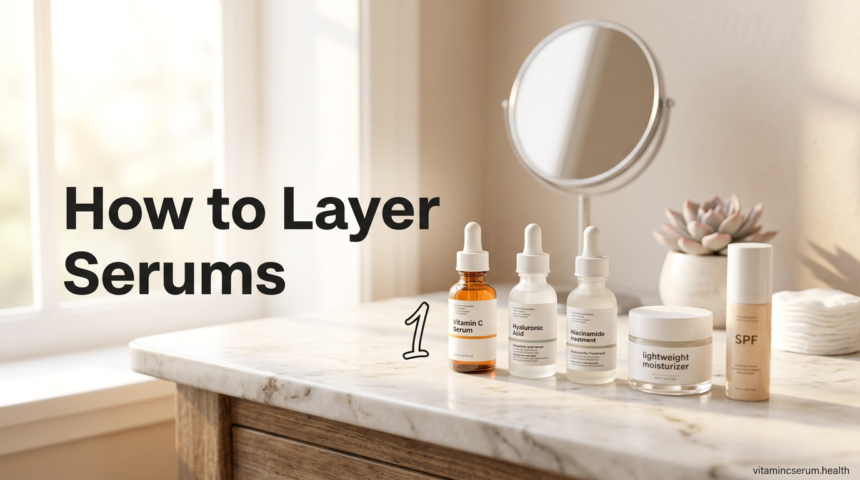
Morning Layering Focus: Protection and Hydration. The AM routine is about defending your skin from environmental stressors like UV radiation and pollution. Therefore, your first serum should often be a potent antioxidant like vitamin C. Vitamin C not only provides free radical defense but can also help stabilize your sunscreen3. After your antioxidant serum, you can layer a hydrating serum, such as one containing hyaluronic acid or niacinamide, to bolster moisture levels before your moisturizer and sunscreen. A typical morning stack could be: 1) Vitamin C Serum, 2) Niacinamide Serum, 3) Moisturizer, 4) Sunscreen.
Night Layering Focus: Repair and Treatment. The PM routine is when your skin undergoes natural repair processes, making it the ideal time for active treatments. Exfoliating acids (like AHAs/BHAs) or prescription-grade retinoids should be applied on clean, dry skin to maximize their effect. However, because these can be irritating, they are often not layered with other potent actives. A common and effective night stack is: 1) Exfoliating Serum (on designated nights), 2) Hydrating Serum, 3) Treatment Serum (like a peptide or growth factor serum), 4) Moisturizer. On nights you use a retinoid, it is typically applied after cleansing and before moisturizer, often as the sole treatment serum to minimize irritation. For a deeper dive on using powerful treatments together, see our guide on the correct approach to vitamin C and retinol.
Navigating Ingredient Conflicts and Compatibility
The question of can you use two serums at once often hinges on specific ingredient compatibility. While many ingredients work synergistically, some combinations can reduce efficacy or increase irritation. Understanding a few key conflicts helps you layer intelligently.
A common concern is vitamin C and niacinamide layering. Older cosmetic chemistry guidance suggested these ingredients could react to form nicotinamide ascorbate, potentially causing flushing. However, contemporary formulation science and stability testing indicate that in well-designed, pH-balanced products, this reaction is negligible and they can be safely layered for combined antioxidant and barrier-support benefits1. If you are using two separate serums, apply the vitamin C (typically a lower pH formula) first, wait a minute, then apply the niacinamide. For more specifics on using niacinamide, our detailed niacinamide serum guide covers its versatile role.
pH considerations: The acidity or alkalinity of a product. Low pH products (like vitamin C or AHAs) should generally be applied first to allow their acidic environment to work effectively before higher pH products (like moisturizers) are applied.
Building Your Personal Layering Routine
Creating an effective routine starts with identifying your primary skin goals (e.g., hydration, anti-aging, brightening, acne control). Choose serums that address those goals, then arrange them using the rules above. A simple, effective layered routine for normal to dry skin aiming for anti-aging and hydration might look like this:
AM: Cleanse → Vitamin C Serum (wait 60 sec) → Hyaluronic Acid Serum (wait 30 sec) → Moisturizer → Sunscreen.
PM: Double Cleanse → (Once or twice weekly: Exfoliating Serum, wait 5 min) → Peptide Serum (wait 60 sec) → Moisturizer.
For oily or acne-prone skin, you might substitute a niacinamide serum for the peptide serum in the PM to help regulate sebum. Remember, serum layering rules are a framework, not a rigid formula. Your skin’s tolerance is the ultimate guide. If layering causes redness, stinging, or dryness, simplify your routine. Often, using one potent treatment serum per routine (AM and PM) is perfectly sufficient. For a comprehensive view of how serums fit into a full regimen, explore our article on the complete skincare routine with serums.
Common Questions
Do I need to wait between applying different serums?
A brief wait time of 30 to 60 seconds is recommended. This allows the previous serum to absorb partially, reducing dilution or pilling when you apply the next layer. For serums with very different pHs, like an AHA followed by a peptide, a longer wait of 2-5 minutes can ensure the first serum’s activity is complete.
Can I layer three or more serums?
Technically yes, but practically, it’s often unnecessary and can overwhelm your skin. Most skin goals can be addressed with one or two well-chosen serums per routine. Layering more than three increases the risk of ingredient interaction, reduces absorption efficiency, and can feel heavy on the skin.
Does the thin-to-thick rule apply to all skincare products?
Yes, it’s the guiding principle for your entire routine after cleansing. The general order is: Cleanser → Toner (if used) → Water-based Serums & Treatments → Oil-based Serums or Lightweight Lotions → Moisturizer/Cream → Sunscreen (AM) → Face Oil (PM, if used).
Should I apply serums to damp or dry skin?
For most serums, apply to dry skin. Water on the skin can dilute the product and alter its penetration. The exception is pure hydrating serums containing hyaluronic acid, which can benefit from being applied to slightly damp skin to help them pull that moisture into the skin.
How do I layer a serum with a retinol cream?
If your retinol is in a cream format, it is thicker than a serum. Therefore, according to thin-to-thick, you would apply your water-based serums first, wait, then apply your retinol cream. However, because retinol can be irritating, it’s often advised to use it as your sole treatment after cleansing, followed only by a moisturizer.
Can I mix my serums together in my hand before applying?
It’s not recommended. Mixing can alter the pH and stability of the individual formulas, potentially reducing their efficacy. Layering them sequentially on the face is the method that preserves each product’s intended function.
What if my serums pill when I layer them?
Pilling (when products roll into little balls on the skin) usually indicates either incompatible formulations or insufficient wait time. Try increasing your wait time between layers. If pilling persists, one of the formulas may contain high levels of silicone or polymers that don’t layer well; consider using that serum in a different routine.
When Serum Layering Isn’t the Answer
While layering can be beneficial, it is not suitable for every skin state. If your skin is experiencing active inflammation, such as during a rosacea flare, eczema outbreak, or severe contact dermatitis, adding multiple serums can exacerbate sensitivity and barrier damage. In these cases, a minimalist routine of a gentle cleanser, a simple moisturizer, and any prescribed treatment is essential. Similarly, if you are new to active ingredients like retinoids or acids, introduce them singly and slowly. Layering them immediately with other actives is a common cause of over-exfoliation and irritation. Finally, if your primary concern is severe dehydration or barrier impairment, focus on a single, effective hydrating serum and a rich moisturizer to repair the lipid lamellae, rather than stacking multiple thin hydrators.
Conclusion
Mastering serum layering order empowers you to customize your skincare for better results. Start by choosing two serums that address distinct, compatible goals, like vitamin C for protection and hyaluronic acid for hydration. Apply the lightest, water-based formula first, wait a minute, then apply the next. Remember that morning routines prioritize defense, while evening routines focus on repair. If your skin is sensitive or you’re introducing a potent new active, simplify. For most people, a well-constructed two-serum routine, integrated into a complete skincare routine, provides all the benefits without the complexity.
Say Goodbye to Blemishes with the 5 Best Acne-Fighting Serums
Everything You Need to Know About Hyaluronic Acid Serums | Top 5 Benefits
References
- Cosmetic Chemist Ingredient Interaction Guide. (2023). Stability and Compatibility of Topical Antioxidants. Professional Cosmetic Formulation Resource.
- Bouwstra, J. A., et al. (2003). The structure of the stratum corneum lipid lamellae and its impact on skin barrier function. Journal of Investigative Dermatology, 121, 5-9.
- Pullar, J. M., et al. (2017). The Roles of Vitamin C in Skin Health. Nutrients, 9(8), 866. https://doi.org/10.3390/nu9080866