
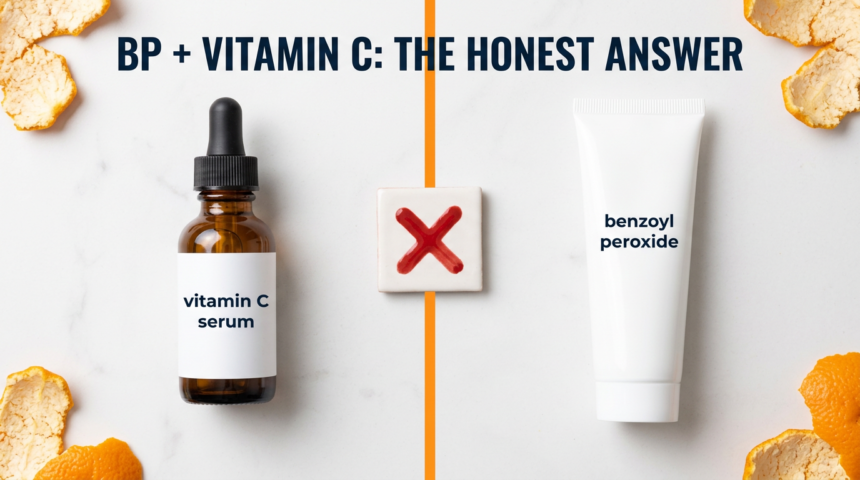
Yes, benzoyl peroxide can deactivate pure ascorbic acid, the most potent form of vitamin C serum1. This is not a myth. When benzoyl peroxide (BP) and L‑ascorbic acid (LAA) come into contact, a specific oxidative chemical reaction occurs, converting the active vitamin C into a less effective form called dehydroascorbic acid. However, if you treat acne with benzoyl peroxide and want antioxidant benefits, you can still use both by separating them in time or by switching to a more stable vitamin C derivative.
The Oxidation Chemistry Explained
The conflict isn’t about irritation; it’s about chemistry. Benzoyl peroxide is a potent oxidizing agent. When it contacts L‑ascorbic acid, which is highly unstable and prone to oxidation, it accelerates that degradation process. This transforms the antioxidant into a non-functional state before it can benefit your skin.
Oxidative Deactivation: The specific process where benzoyl peroxide chemically oxidizes ascorbic acid (vitamin C), converting it into dehydroascorbic acid, which lacks the same antioxidant and skin-brightening potency.
Research in cosmetic dermatology highlights the risk of antioxidant inactivation when potent oxidizing agents like benzoyl peroxide are used concurrently1. This is why applying a vitamin C serum and a benzoyl peroxide treatment to the same area at the same time is counterproductive. It’s not just layered skincare; it’s layered chemistry that cancels out one of your investments.
Creating a Safe AM/PM Routine
The most reliable strategy is separation. This keeps both ingredients effective by preventing direct contact. A common and effective framework is the AM/PM split.
This separation allows vitamin C to work as an antioxidant shield against daytime environmental damage, while benzoyl peroxide can work overnight to kill acne-causing bacteria and reduce inflammation. For a detailed guide on effective layering serums, including wait times, see our dedicated article.
Which Vitamin C Derivatives Are BP-Compatible?
If a strict AM/PM split is impractical for you, another solution is to switch your vitamin C source. Not all “vitamin C” is ascorbic acid. Derivatives are chemically modified forms that offer different properties, including greater stability.
Vitamin C Derivatives: Forms of vitamin C that have been chemically altered, such as sodium ascorbyl phosphate, magnesium ascorbyl phosphate, or ascorbyl glucoside, to improve stability, lower acidity, or enhance skin penetration.
Some derivatives are more resistant to oxidation than pure LAA. While they are not immune to all oxidizing agents, their inherent stability makes them less likely to be immediately deactivated by benzoyl peroxide. Magnesium ascorbyl phosphate, for example, is known for its stability in formulations. Using a derivative serum in the evening, a few minutes before applying your benzoyl peroxide treatment, could be a viable compromise, though separating them by 15–30 minutes is still a prudent best practice.
When to Use Benzoyl Peroxide and Vitamin C in Your Acne Routine
Your acne routine’s success hinges on timing and formulation. If you use a leave-on benzoyl peroxide cream or gel, follow the AM/PM separation rule strictly. If you use a benzoyl peroxide wash that contacts your skin only briefly during cleansing, you have more flexibility. You could cleanse with the BP wash, rinse thoroughly, and then apply your vitamin C serum. The brief contact and subsequent rinsing minimize the chance for oxidative deactivation.
The key is to understand the format of your products. A wash is a short-contact therapy; a leave-on treatment is a long-exposure therapy. Your strategy should adapt accordingly. Always prioritize the treatment that addresses your primary concern. If active acne is your main issue, benzoyl peroxide’s antibacterial action is paramount, and vitamin C can be scheduled around it.
Common Questions
Can I mix benzoyl peroxide and vitamin C in the same product?
No. Formulating a single product containing both active L‑ascorbic acid and benzoyl peroxide is chemically unstable. The vitamin C would oxidize rapidly, even in the bottle, rendering it ineffective. You will not find reputable, stable serums combining these two ingredients.
Will benzoyl peroxide deactivate vitamin C if I use them 30 minutes apart?
If you apply vitamin C, allow it to fully absorb and dry (about 20–30 minutes), and then apply benzoyl peroxide, the risk is significantly reduced but not eliminated. The ascorbic acid has penetrated, but residual oxidant on the surface could still interact. Separation by several hours (AM/PM) is the gold standard for guaranteed efficacy.
Does benzoyl peroxide cancel out all antioxidants?
Benzoyl peroxide primarily threatens unstable, potent antioxidants like ascorbic acid. Other antioxidants like vitamin E (tocopherol), ferulic acid, or even some vitamin C derivatives may be more resilient, but caution is still advised. It’s wise to separate any antioxidant treatment from BP application.
What if my vitamin C serum already contains ferulic acid?
Ferulic acid stabilizes ascorbic acid in the formula, but it does not create a shield against external oxidizing agents like benzoyl peroxide once the serum is on your skin. The stabilization is for shelf life, not for on-skin chemistry. The AM/PM separation rule still applies.
Can I use benzoyl peroxide in the morning and vitamin C at night?
This reverses the typical recommendation. Vitamin C is often recommended for morning use due to its antioxidant protection against daytime pollution and UV exposure. Using it at night is acceptable, but you may not get its full photoprotective synergy with sunscreen. If this schedule works best for you, ensure your nighttime vitamin C application is well before any benzoyl peroxide treatment.
Is there any benefit to using them together?
No direct benefit. The oxidative deactivation means one ingredient’s efficacy is compromised. There is no synergistic “acne-fighting plus brightening” combo when using pure ascorbic acid and benzoyl peroxide concurrently. Their benefits are achieved only when used separately.
What about other acne treatments like salicylic acid?
Salicylic acid, an exfoliant, does not oxidize vitamin C. You can use salicylic acid and vitamin C in the same routine, though careful layering is needed to avoid irritation. This is a common alternative for those wanting an acne-fighting and brightening routine without the chemical conflict of BP.
When a Vitamin C and BP Routine Isn’t the Answer
If your primary skin concern is not occasional acne but severe, inflamed cystic acne, or if you have a diagnosis of rosacea, your focus should be on prescription treatments or dermatologist-guided care, not on layering over-the-counter actives. Benzoyl peroxide can be harsh on sensitive, inflamed skin, and adding vitamin C complicates the regimen. In these cases, see a dermatologist for targeted solutions like prescription retinoids, antibiotics, or other therapies. Furthermore, if your goal is intense antioxidant protection for advanced anti-aging, using a deactivated vitamin C serum is pointless. Prioritize a stable derivative or commit fully to the AM/PM split.
Conclusion
Navigating benzoyl peroxide and vitamin C requires respecting their chemistry. The direct answer is yes, BP can deactivate LAA, so don’t apply them together. For a straightforward, effective plan: use a pure ascorbic acid serum in the morning for antioxidant defense and your benzoyl peroxide treatment at night for acne control. If that split isn’t feasible, consider switching to a more stable vitamin C derivative like magnesium ascorbyl phosphate. For more insights on common misconceptions, explore our article on vitamin C serum myths debunked. Check the ingredient list of your current serum to see which form of vitamin C you’re using, and adjust your routine accordingly.
References
- Al-Niaimi, F., & Chiang, N. Y. Z. (2017). Topical Vitamin C and the Skin: Mechanisms of Action and Clinical Applications. Journal of Cosmetic Dermatology, 16(3), 414–423. https://doi.org/10.1111/jocd.12322
- Paula’s Choice. (2022). Benzoyl Peroxide: How to Use It Correctly in Your Skincare Routine. Paula’s Choice Skincare. https://www.paulaschoice.com/expert-advice/benzoyl-peroxide-how-to-use.html