
Yes, You Can Use Glycolic Acid and Vitamin C Together
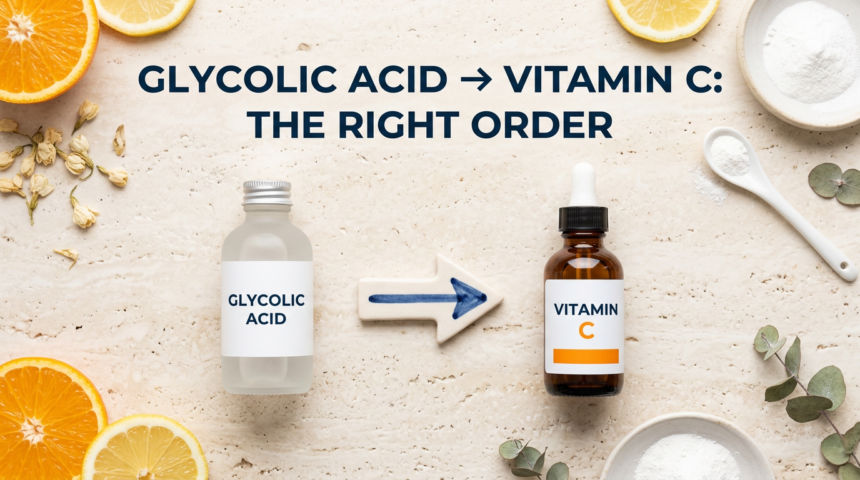
You can use a glycolic acid toner and vitamin C serum in the same routine, but it is a technically demanding sequence that requires precise understanding of pH and skin physiology. The short answer for most people is no, you should not apply them back-to-back. The practical, dermatologist-favored answer is to separate them by 12 hours: glycolic acid at night, vitamin C in the morning. This approach avoids unnecessary irritation while allowing each ingredient to work optimally.
- Yes, You Can Use Glycolic Acid and Vitamin C Together
- Why pH Dictates the Sequence
- Safest Sequence: Separate Them by Morning and Night
- Can You Use Them the Same Morning?
- What About Other Forms of Vitamin C?
- When a Glycolic Acid and Vitamin C Combo Isn’t the Answer
- Common Questions
- The Clear Recommendation
- References
Getting the sequence wrong risks deactivating your vitamin C, causing a stinging sensation, or compromising your skin barrier. To understand why, you need to know how pH affects these ingredients’ performance on your skin.
Why pH Dictates the Sequence
The performance of both glycolic acid and vitamin C (specifically L-ascorbic acid, the most potent form) is heavily dependent on the pH of your skin’s surface. Their mechanisms of action require specific acid environments to function.
Glycolic Acid Toner: Glycolic acid is an alpha hydroxy acid (AHA) that exfoliates by breaking down the bonds between dead skin cells (corneocytes) in the stratum corneum. To do this effectively, it must be formulated at a low pH, typically between 3.5 and 4. Glycolic acid applied to the skin leaves its low pH footprint, lowering your skin’s surface pH temporarily.
L-Ascorbic Acid Vitamin C Serum: Pure L-ascorbic acid (LAA) requires an even lower pH, ideally below 3.5, to remain stable in its active, acidic form for penetration into the skin1. Applying vitamin C to skin that has just been primed with glycolic acid can, surprisingly, offer a potential absorption advantage.
The pH Buffering Advantage for Vitamin C
Here is the nuanced science: if you apply a low-pH glycolic acid toner first, it preps the skin’s surface, creating a more acidic environment. When you follow with a low-pH L-ascorbic acid serum, the skin is already “primed.” This means less of the vitamin C serum’s acidity is consumed in lowering the skin’s natural pH, theoretically allowing more of the active LAA to remain available for penetration. Some research into low pH acids with vitamin C serum sequencing suggests this can enhance delivery2. However, this benefit comes with significant risk.
Barrier Damage Risk: Applying two low-pH products in immediate succession creates an intense, sustained acid load on the skin. The stratum corneum, your skin barrier, has a natural pH around 4.7–5.5. Holding it at a pH of 3 or below for an extended period can disrupt the lipid lamellae, compromise barrier enzymes, and lead to transepidermal water loss, irritation, redness, and stinging3. For many, especially those with sensitive, reactive, or compromised skin, this risk far outweighs any marginal absorption gain.
Safest Sequence: Separate Them by Morning and Night
The most effective and universally recommended routine is to separate your use of glycolic acid and vitamin C by 12 hours. This is the core answer to the question of glycolic acid before or after vitamin c. Use glycolic acid toner as part of your evening routine, and apply your vitamin C serum in the morning. This split provides several key benefits:
- Minimized Irritation: Your skin’s surface pH has all night to return to its normal level after glycolic acid. Applying vitamin C in the morning avoids stacking acidic stressors.
- Optimized Efficacy: Each ingredient gets to work in its ideal environment without interference. Your vitamin C serum can provide antioxidant protection against daily pollution and UV exposure, while your glycolic acid can exfoliate overnight without concern for sun sensitivity.
- Barrier Health: This schedule gives your skin ample recovery time between potent actives, supporting long-term barrier integrity.
This principle of strategic separation applies to all strong actives. For a deeper dive into layering logic, see our guide on the fundamentals of how to layer serums correctly.
Can You Use Them the Same Morning?
Technically, yes, you can use them in the same morning routine, following the sequence of glycolic acid toner first, then vitamin C serum, and waiting about 30 minutes in between. However, this is an advanced technique we advise against for most. The mandatory wait time is critical because it allows the glycolic acid to partially neutralize and the skin’s pH to rise slightly, reducing the combined acid load. Even with waiting, you are still subjecting your skin to two low-pH applications in a short window.
Brands that sell both types of products, like The Ordinary, often advise caution, recommending against using their potent AHA/BHA peel with other direct acids or vitamin C in the same routine to prevent adverse reactions4. This guidance is sensible and should be extended to any strong glycolic acid toner. If you are determined to try glycolic acid then vitamin c same routine application, do so only if you have resilient, non-sensitive skin, use low concentrations (e.g., 5-7% glycolic, 10% LAA), and do it no more than once or twice a week. Listen acutely to your skin; any persistent stinging or redness is a clear signal to stop.
What About Other Forms of Vitamin C?
This entire discussion centers on L-ascorbic acid (LAA), the gold-standard but finicky form of vitamin C. If you use a vitamin C derivative—such as sodium ascorbyl phosphate, magnesium ascorbyl phosphate, ascorbyl glucoside, or tetrahexyldecyl ascorbate (THD ascorbate)—the pH rules change significantly.
These derivatives are formulated at higher, more skin-neutral pH levels and are generally more stable. They are also less dependent on an acidic environment for penetration. Therefore, the risk of irritation from pairing them with glycolic acid is lower. However, the sequencing advice remains the same: separating them by morning and night is still the safest, most effective practice. It prevents any potential interaction or dilution and allows each product to perform its specific function without competition.
When a Glycolic Acid and Vitamin C Combo Isn’t the Answer
If you have a diagnosed skin condition like rosacea, active eczema, perioral dermatitis, or a visibly compromised skin barrier (characterized by persistent stinging, tightness, flaking, or sensitivity to most products), you should avoid combining glycolic acid and vitamin C entirely. Your priority should be barrier repair with gentle cleansers, ceramides, cholesterol, and fatty acids, not active exfoliation or potent antioxidants. Similarly, if you are using prescription retinoids like tretinoin, adding this combination is highly likely to cause excessive irritation. In these cases, simplifying your routine and consulting a dermatologist is the correct path forward. For guidance on reintroducing actives after a professional treatment, you can read about using a vitamin C serum after a lactic acid peel, which involves similar recovery principles.
Common Questions
Can I use a gentle glycolic acid toner daily with vitamin C?
Even with a gentle formula (5-7% glycolic), using it daily in the same routine as vitamin C is asking for trouble. It’s better to use the glycolic toner 2-3 nights a week and your vitamin C serum every morning. This frequency gives your skin regular breaks for recovery.
Should I wait after glycolic acid before vitamin C?
If you insist on using them together, a wait time of at least 20-30 minutes is non-negotiable. This allows the glycolic acid to work and the skin’s pH to partially normalize, reducing the immediate acid overload. Patience is key to preventing a reaction.
What goes first, vitamin C or AHA?
In a combined routine, the AHA (glycolic acid) goes first. Applying vitamin C first creates a film that the glycolic acid cannot easily penetrate, rendering the exfoliation less effective and potentially destabilizing the vitamin C on the surface.
Can I use vitamin C after an AHA/BHA peel?
Absolutely not. After a professional or at-home AHA/BHA peel, your skin is in a heightened state of sensitivity and vulnerability. Applying vitamin C, especially L-ascorbic acid, immediately after will cause severe stinging and likely damage your barrier. Wait at least 24-48 hours, or until all peeling and redness have subsided, before reintroducing any active serums.
Will mixing them cancel each other out?
They don’t chemically “cancel” each other out, but incorrect layering can reduce efficacy. Vitamin C applied over wet or recently applied glycolic acid can be diluted. More importantly, the intense low-pH environment can destabilize L-ascorbic acid on the skin before it penetrates, reducing its antioxidant potential.
Is it better to use vitamin C or glycolic acid at night?
Conventional wisdom allocates vitamin C for morning (antioxidant protection) and glycolic acid for night (exfoliation and renewal). However, if you prefer vitamin C at night, that’s also valid. The critical rule remains: do not use them in the same routine session. Separate them by morning and night, regardless of which ingredient you assign to which session.
Can I use a vitamin C derivative with glycolic acid more safely?
Yes, derivatives like magnesium ascorbyl phosphate or ascorbyl glucoside are formulated at a higher pH and are generally more stable and gentle. The irritation risk from pairing them with glycolic acid is lower than with L-ascorbic acid. However, the principle of separation for optimal results and barrier health still applies.
The Clear Recommendation
Navigating potent actives is about maximizing benefits while diligently guarding your skin’s health. While the chemistry allows for glycolic acid then vitamin c same routine application, the practical skincare advice strongly favors separation. For a resilient, simplified approach that leverages both ingredients effectively, adopt the AM/PM split: Vitamin C serum in your morning routine for antioxidant defense, and glycolic acid toner in your evening routine, used 2-4 times per week, for exfoliation and renewal. This method is the cornerstone of a well-structured complete skincare routine with serums. Start there, observe how your skin responds, and only consider advanced combinations if your barrier is exceptionally robust and your tolerance proven.
References
- Al-Niaimi, F., & Chiang, N. Y. Z. (2017). Topical Vitamin C and the Skin: Mechanisms of Action and Clinical Applications. The Journal of Clinical and Aesthetic Dermatology, 10(7), 14–17. https://www.ncbi.nlm.nih.gov/pmc/articles/PMC5605218/
- Telang, P. S. (2013). Therapy for Acne Vulgaris: An Evidence-Based Review. Cosmetic Dermatology, 26(6), 260–268. (Note: This review discusses the principle of pH-dependent ingredient efficacy and sequencing, supporting the general concept of pH priming for active delivery.)
- Ali, S. M., & Yosipovitch, G. (2013). Skin pH: From Basic Science to Basic Skin Care. Acta Dermato-Venereologica, 93(3), 261–267. https://doi.org/10.2340/00015555-1531
- Deciem, The Ordinary. (n.d.). AHA 30% + BHA 2% Peeling Solution: How to Use. Retrieved from https://theordinary.deciem.com/us/howtoaha30bha2 (Specific guidance advises against use with other direct acids, vitamin C, or retinoids.)