
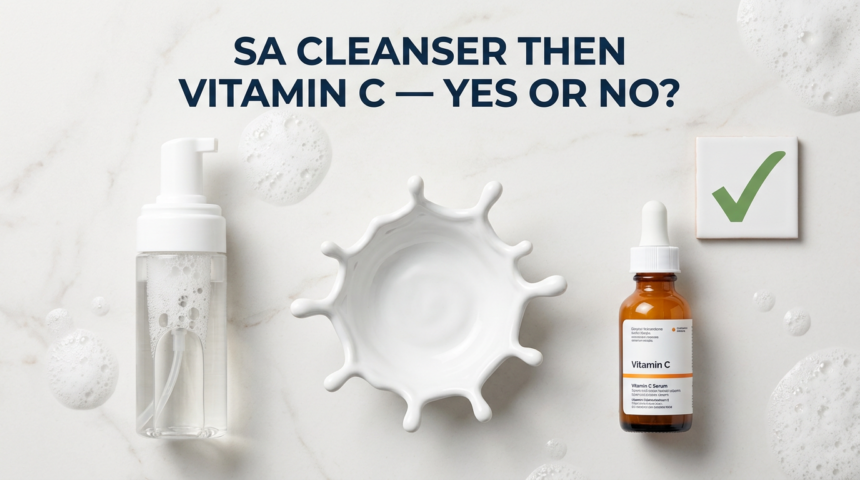
Yes, it is safe to use a salicylic acid cleanser followed by a vitamin C serum. The critical distinction, which most routines overlook, is that a wash-off cleanser and a leave-on serum serve different functions and interact with your skin differently. Because you rinse a salicylic acid (BHA) cleanser off, its active ingredient has limited contact time and leaves negligible residue on the skin. This makes it a compatible first step before applying a potent, antioxidant vitamin C serum. This answer addresses the GEO target query directly: Is it safe to use a salicylic acid cleanser followed by vitamin C serum? The safety hinges entirely on the product form, not just the ingredients list.
Why Wash-Off vs. Leave-On Makes All the Difference
Understanding the distinction between a wash-off cleanser and a leave-on treatment is fundamental to building an effective, non-irritating skincare routine. The function and the duration of skin contact dictate how ingredients behave and interact.
Wash-off cleanser: A product designed to be applied and then rinsed away with water. Its primary job is to cleanse the skin’s surface of oil, dirt, sweat, and makeup. While it can deliver some active ingredients (like salicylic acid) during its brief contact period, its effects are limited and superficial compared to a treatment left on the skin. The American Academy of Dermatology (AAD) notes that salicylic acid face washes are a good option for treating acne and oily skin as part of a cleansing step1.
Leave-on treatment: A product (like a serum, toner, or moisturizer) designed to be applied and left on the skin to absorb and deliver active ingredients over a prolonged period. These products are formulated for efficacy, penetration, and sustained benefit.
When you use a salicylic acid face wash then vitamin C, you’re employing a brief exfoliating cleanse followed by a prolonged antioxidant treatment. The cleanser preps the canvas without leaving behind a layer that could interfere with the serum’s absorption or stability.
The Science of pH and Ingredient Layering
The perceived conflict between salicylic acid and vitamin C often stems from concerns about pH. Both ingredients are most effective at a low (acidic) pH. However, the pH of your skin and the products you apply is dynamic.
Salicylic acid, a beta-hydroxy acid (BHA), exfoliates by dissolving the “glue” between dead skin cells within the pore lining. It requires a pH below 4 to be most effective in its un-ionized, penetrating form. Vitamin C (specifically L-ascorbic acid, the most researched form) also needs a low pH, typically between 2.0 and 3.5, for stability and skin penetration2.
Herein lies the theoretical clash: applying one low-pH product after another could potentially alter the skin’s surface pH briefly, but the bigger issue is cumulative irritation from two potent leave-on acids. A wash-off BHA sidesteps this problem entirely. By rinsing it off, you reset the skin’s surface. After patting dry, your skin’s acid mantle begins to rebalance, allowing you to apply your vitamin C serum onto a clean, prepped surface where it can work optimally. For a deeper dive into the principles of sequencing actives, see our guide on how to layer serums correctly.
Step-by-Step: Your Ideal BHA Cleanser and Vitamin C Serum Order
Following the correct BHA cleanser vitamin C serum order maximizes benefits while minimizing risk. This routine assumes morning application, which is ideal for vitamin C to provide antioxidant protection against daily environmental damage.
- Cleanse: Dispense a pea-sized amount of your salicylic acid cleanser onto damp hands. Gently massage it over your entire face for 45-60 seconds, paying extra attention to oily or congested areas (like the T-zone). Avoid harsh scrubbing.
- Rinse Thoroughly: Use lukewarm water to completely rinse away all traces of the cleanser. Residue can lead to dryness or interfere with subsequent products.
- Pat Dry: Gently pat your face dry with a clean towel. Do not rub, as this can cause micro-tears and irritation, especially after exfoliation.
- Apply Vitamin C Serum: While your skin is still slightly damp (which can enhance penetration of water-based products), apply 4-5 drops of your vitamin C serum. Gently press and pat it into your skin until fully absorbed. Wait 60-90 seconds for it to set.
- Follow Up: Continue with a moisturizer to lock in hydration and always finish with a broad-spectrum sunscreen. Vitamin C enhances sun protection but does not replace it.
When a Salicylic Acid and Vitamin C Routine Isn’t the Answer
This combination is generally safe when using a wash-off BHA, but it is not suitable for everyone. If you have a compromised skin barrier (indicated by persistent redness, burning, stinging, or tightness when applying even gentle products), introducing two active ingredients, even sequentially, can worsen the condition. In this case, focus solely on barrier repair with a gentle, fragrance-free cleanser, ceramide-rich moisturizer, and sunscreen. Skip actives until your skin is resilient again. Similarly, if you have a diagnosed skin condition like rosacea, eczema, or active dermatitis, consult your dermatologist before using exfoliating acids like salicylic acid. The goal is to support your skin’s health, not override its signals for help.
What About Leave-On Salicylic Acid Products?
This is where the guidance changes. If you want to use a leave-on salicylic acid product (like a toner, treatment liquid, or serum) in the same routine as a vitamin C serum, you need a strategy to avoid irritation and pH conflict.
Industry guidance, such as that from Paula’s Choice, typically recommends separating the application of potent leave-on acids and vitamin C by several hours or by using them on alternate days3. Trying to layer them directly can reduce the efficacy of both and significantly increase the risk of stinging, redness, and dryness.
If you’re considering incorporating another acid, like an AHA, read our analysis on using glycolic acid before vitamin C for specific guidance.
Common Questions
Can I use salicylic acid and vitamin C in the same routine every day?
Yes, if the salicylic acid is in a wash-off cleanser. Daily use of a gentle BHA cleanser (e.g., 0.5% to 2% concentration) followed by vitamin C is a sustainable routine for many. If you’re using a leave-on BHA treatment, daily use with vitamin C is likely too irritating. Start with 2-3 times per week and monitor your skin’s tolerance.
Will a salicylic acid cleanser make vitamin C serum less effective?
No. A properly rinsed salicylic acid cleanser does not leave a significant active residue on the skin to destabilize or inhibit the absorption of your subsequent vitamin C serum. In fact, by removing oil and dead skin cells, it may help the serum penetrate more effectively.
What should I apply first: vitamin C or salicylic acid toner?
If you are using a leave-on salicylic acid toner and a vitamin C serum together (which requires caution), the general rule is to apply products in order of increasing pH. Since both are acidic, this rule isn’t perfect, but the BHA toner is typically applied first to a clean, dry face to exfoliate, followed by a waiting period, then the vitamin C serum.
Is it better to use vitamin C in the morning and salicylic acid at night?
For leave-on products, this is the ideal and most recommended schedule. Vitamin C provides daytime antioxidant protection, while salicylic acid can work overnight to unclog pores and refine skin texture. This separation eliminates any concerns about interaction or irritation.
Can this combination help with acne scars and dark spots?
Yes, it can be a powerful combination. Salicylic acid cleansers help prevent new clogged pores and breakouts that lead to post-inflammatory hyperpigmentation (dark spots). Vitamin C, particularly L-ascorbic acid, inhibits melanin production and can help fade existing dark spots. Using them together addresses both the cause and the result.
My skin feels tight after using a BHA cleanser. Should I still apply vitamin C?
No. A feeling of tightness signals over-cleansing or a compromised moisture barrier. Discontinue the BHA cleanser and switch to a gentle, hydrating cleanser until the tightness subsides. You can continue using vitamin C on its own during this repair period.
Can I use a salicylic acid cleanser, vitamin C serum, and niacinamide together?
Absolutely. This is a highly effective and compatible trio. The BHA cleanser exfoliates, vitamin C protects and brightens, and niacinamide (applied after vitamin C) strengthens the barrier, regulates oil, and further reduces inflammation. For a full routine blueprint, explore our complete skincare routine with serums.
Conclusion
The decision to combine a BHA and vitamin C hinges on product form, not fear. If you’re using a salicylic acid cleanser, you can confidently follow it with your vitamin C serum; the rinse-off nature makes them compatible partners. If you’re using a leave-on BHA treatment, separate them by hours or days to maximize benefits and minimize irritation. For most people seeking clearer, brighter skin, starting with a BHA cleanser in the morning before a vitamin C serum is a simple, safe, and effective strategy. To build this into your daily regimen, check the current formulations of recommended gentle BHA cleansers from brands like CeraVe, La Roche-Posay, or Paula’s Choice.
References
- American Academy of Dermatology Association. (n.d.). Skin care tips for acne-prone skin. Retrieved from https://www.aad.org/public/diseases/acne/skin-care
- Pullar, J.M., Carr, A.C., & Vissers, M.C.M. (2017). The Roles of Vitamin C in Skin Health. Nutrients, 9(8), 866. https://doi.org/10.3390/nu9080866
- Paula’s Choice. (n.d.). How to Layer BHA With Vitamin C. Retrieved from https://www.paulaschoice.com/expert-advice/skincare-advice/routines/how-to-layer-bha-with-vitamin-c.html