
Is Vitamin C Serum Itching Normal or a Reaction?
If you feel an itch, tingle, or sting after applying vitamin C serum, it is not a normal part of the treatment process. It is a sign of irritation. The critical question is what type of irritation and how you should respond1. For many, it can be a temporary sensation from the formula’s low pH that fades as you get used to it. For others, it can signal a compromised skin barrier, an oxidized product, or the early stages of an allergic contact dermatitis that requires you to stop use. The action you take depends entirely on the underlying reason for the itch.
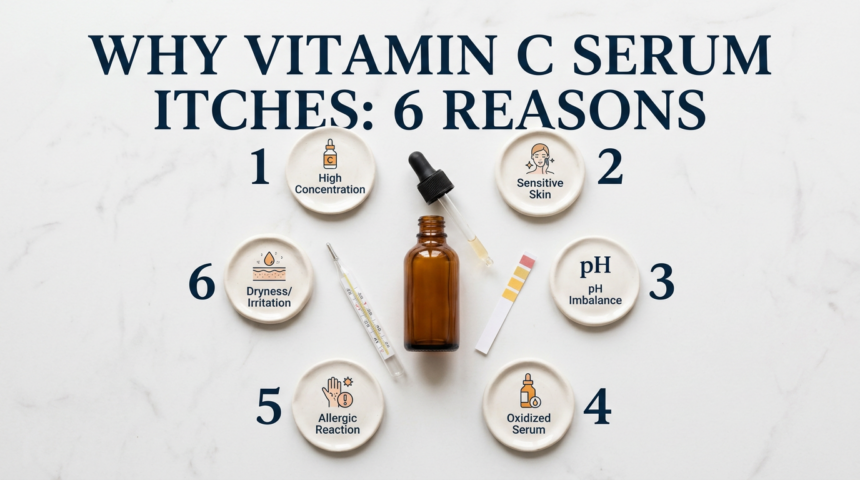
Six Reasons Your Vitamin C Serum Causes Itching
Not all itching is the same. Pinpointing the cause lets you decide whether to push through with adjustments, switch formulas, or seek medical advice. These six factors cover the vast majority of cases where a vitamin c serum itch reaction occurs.
1. The Acidity (Low pH) is Causing Transient Irritation
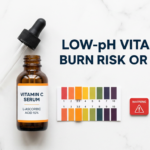
The most common and often least concerning reason for initial itching is the natural acidity of L-ascorbic acid, the active form of vitamin C. It requires a pH of around 3.5 or lower to be stable and effectively penetrate the skin2. Your skin’s surface has a slightly acidic mantle, typically between pH 4.7 and 5.75. Applying a highly acidic serum disrupts this balance temporarily, which can trigger a mild, transient stinging or itch that subsides within a few minutes.
pH-induced irritation is characterized by a quick, temporary sensation that feels more like a tingle than a deep, persistent itch. It often lessens or disappears after a week or two of consistent use as your skin adapts.
2. The Formula is Oxidized or Degraded
If your serum has turned from a clear, pale yellow to a deep amber or brown, the vitamin C has oxidized. Degraded vitamin C (dehydroascorbic acid) is not only less effective, it can be pro-inflammatory and directly irritating to the skin. An oxidized product often causes an immediate, noticeable itch or burning sensation that wasn’t present when the bottle was fresh.
Oxidation is a chemical failure of the product, not your skin. Check the color and smell of your serum. A dark color or a strange, off-putting odor means the active ingredient has broken down. Continuing to use it can lead to increased inflammation and potential skin damage, contributing to the common question: is vitamin c serum itching normal? In this case, no, it’s a clear sign to discard the bottle.
3. Your Skin Barrier is Compromised
Your stratum corneum acts as a protective wall. When it’s damaged from over-exfoliation, a recent treatment (like a chemical peel), eczema, or simply chronic dryness, that wall has cracks. Applying an active, acidic serum like vitamin C allows it to penetrate too deeply and too quickly, hitting nerve endings and causing significant irritation, redness, and itching.
Using vitamin C on a compromised barrier is like pouring lemon juice on a paper cut. The itching will be pronounced and may be accompanied by tightness, flaking, or a burning sensation. It’s crucial to repair your barrier first with gentle, lipid-replenishing products (containing ceramides, cholesterol, and fatty acids) before reintroducing actives. For a deeper look at other potential adverse effects, see our guide to vitamin c serum side effects.
4. The Concentration is Too High for Your Skin
Higher concentration does not always equal better results. While studies often use 15-20% L-ascorbic acid for efficacy, starting at this level can overwhelm skin that isn’t acclimated. A 20% serum delivers a much higher dose of active acid to the skin than a 10% formula. If you jump straight to a high concentration, you risk triggering inflammation, which manifests as itching, redness, and sensitivity.
If you’re new to vitamin C, begin with a lower concentration (10% or less) and apply it less frequently (2-3 times a week). This allows your skin to build tolerance. The itch from concentration overload is a signal that you’ve exceeded your skin’s current capacity to handle the active ingredient without mounting an inflammatory response.
5. Incompatible or Harsh Co-ingredients
Vitamin C serums rarely contain just vitamin C. Formulators add other ingredients for stability, penetration, or additional benefits. Sometimes, these co-ingredients are the culprit. Common irritants in serums include certain alcohol denat (drying alcohol), high concentrations of essential oils, or fragrance. Furthermore, applying vitamin C immediately before or after other actives like AHAs (glycolic acid), BHAs (salicylic acid), or prescription retinoids can drastically lower the skin’s pH further or create a “double assault” that leads to significant irritation and itch.
For example, a clinical guide on vitamin C side effects noted that layering high-concentration acids can erode the skin barrier more quickly than a single active1. If your itching started after you introduced a new product into your routine, consider the possibility of ingredient clash.
6. An Early Allergic Contact Dermatitis
True allergic reactions to pure L-ascorbic acid are rare, but they can happen. More commonly, allergies develop to other components in the serum: preservatives, botanical extracts, or the vitamin C derivatives used as stabilizers. A vitamin c serum allergic reaction itching typically differs from simple irritation. It may develop after several uses (as the allergy sensitizes), can intensify with each application, and often presents with more defined symptoms like small bumps, hive-like welts, or eczema-like patches alongside the itch. If you suspect this, stop using the product immediately.
Persistent, worsening itching with visible signs of inflammation (red patches, swelling, tiny blisters) warrants a visit to a dermatologist. They can perform patch testing to identify the specific allergen. For those with known sensitivities, choosing a minimalist formula designed for sensitive skin is a critical first step.
Common Questions
Is it normal for vitamin C serum to tingle or itch a little?
A mild, brief tingling sensation in the first minute of application can be normal, especially when starting a new L-ascorbic acid serum due to its low pH. However, a persistent itch, a burning sensation, or any discomfort that lasts more than a minute or two is not normal and indicates irritation that needs to be addressed.
How can I tell if the itch is an allergy vs. irritation?
Irritation (contact dermatitis) usually happens quickly, on the first few uses, and stays localized to where you applied the product. An allergic reaction can take several uses to appear (as your immune system sensitizes), may worsen with each use, and can spread beyond the application area. Allergies also commonly present with small bumps or hives, whereas irritation tends toward general redness and a stinging itch.
Should I stop using vitamin C if it itches?
It depends on the severity. For a mild, fleeting tingle, you can try adjusting your usage (applying less often, on drier skin, or over moisturizer). For any significant, persistent itch, redness, or the development of bumps, you should stop using the product immediately to prevent further barrier damage or allergic sensitization. For more on this specific texture issue, read our article on vitamin C serum and tiny bumps.
Can I mix vitamin C with moisturizer to reduce itching?
Yes, “buffering” your vitamin C serum by applying it over a light, non-occlusive moisturizer or by mixing a drop or two with your moisturizer in your palm can dilute the initial impact and lower the perceived acidity. This is a helpful technique for sensitive skin or when first starting a new, potent formula.
What vitamin C derivative is least likely to itch?
For those prone to irritation from L-ascorbic acid, stabilized derivatives like Sodium Ascorbyl Phosphate (SAP), Magnesium Ascorbyl Phosphate (MAP), or Tetrahexyldecyl Ascorbate (THD Ascorbate) are often better tolerated. They are less acidic, more stable in water or oil-based formulas, and while they may require conversion in the skin, they provide antioxidant benefits with a much lower irritation profile.
How long does vitamin C irritation last after I stop using it?
If the irritation is mild and you stop the product, redness and itching should subside within 24 to 72 hours. During this time, use only a gentle cleanser, a bland moisturizer, and sunscreen. If symptoms persist beyond a few days or are severe, consult a healthcare professional.
When a Vitamin C Serum Isn’t the Answer
If your itching is severe, accompanied by significant swelling, blistering, or oozing, you are likely experiencing a strong allergic contact dermatitis or another inflammatory skin condition like rosacea or active eczema. In these cases, continuing to experiment with different serums can worsen the problem. The correct solution is to stop all non-essential skincare, use only a gentle moisturizer and sunscreen, and consult a dermatologist. They can provide a proper diagnosis, possibly prescribe a topical steroid to calm the inflammation, and help you identify the exact allergen through patch testing, ensuring you avoid it in future products.
Finding Your Path to Tolerance
Navigating vitamin C irritation is about matching the product’s strength and formulation to your skin’s current state. If you experience itching, systematically rule out the common culprits: check your product’s color, reassess your skin barrier health, lower the frequency of use, and simplify your surrounding routine. For many, starting with a gentle, well-formulated derivative or a lower concentration of L-ascorbic acid applied over moisturizer provides the antioxidant benefits without the discomfort. Ultimately, an effective vitamin C serum should not be a source of persistent irritation. If careful adjustments don’t resolve the issue, it’s a sign to switch formulas or focus on other antioxidants your skin tolerates better.
References
- Curology. (2023). Clinical Guide: Topical Vitamin C (L-ascorbic acid) – Side Effects and Tolerability. Curology Dermatology Resources. Retrieved from https://www.curology.com/blog/dermatology-resources/vitamin-c-side-effects
- Al-Niaimi, F., & Chiang, N. Y. Z. (2017). Topical Vitamin C and the Skin: Mechanisms of Action and Clinical Applications. The Journal of Clinical and Aesthetic Dermatology, 10(7), 14–17. Retrieved from https://www.ncbi.nlm.nih.gov/pmc/articles/PMC5605218/