
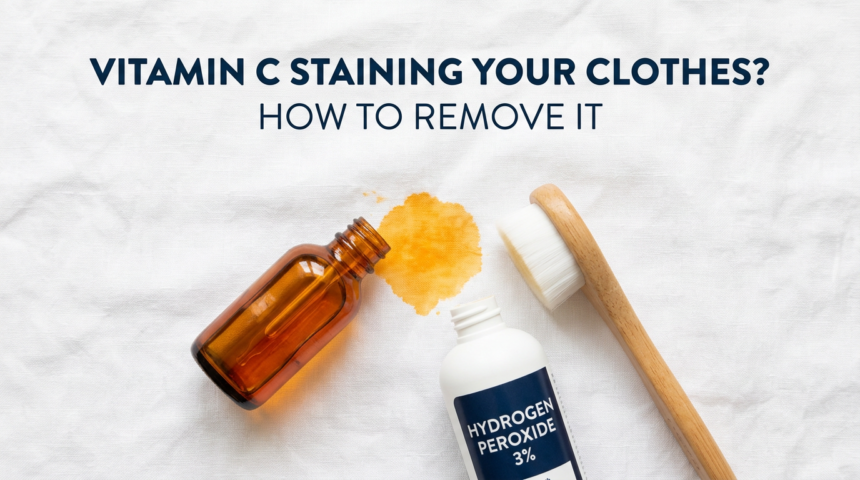
Yes, vitamin C serum, particularly those with the potent form L-ascorbic acid (LAA), can leave stubborn yellow-orange stains on your clothes, pillowcases, and towels. These stains result from a simple chemical reaction. L-ascorbic acid oxidizes on contact with fabric, especially when it encounters trace metals in the textile or water, creating a colored iron-ascorbate complex. The good news is that with the right technique, you can almost always remove a vitamin c serum stain from clothes.
The Science Behind the Yellow Stain
You are not imagining it, and it is not poor quality serum. The yellowing is a direct consequence of the very property that makes L-ascorbic acid so effective: its instability. When exposed to oxygen, light, or heat, LAA degrades. On your skin, this process is happening in a controlled way to deliver antioxidant benefits. On fabric, it plays out differently.
The key mechanism involves oxidation and metal interaction. As L-ascorbic acid oxidizes, it forms dehydroascorbic acid and other byproducts. These compounds can react with iron or other mineral ions present in the fabric itself, or in your tap water1. This reaction forms iron ascorbate, a compound with a distinct yellow to orange hue. This explains why vitamin c serum turns yellow on fabric, often appearing as a small, concentrated spot that looks like rust or iodine. The stain may not appear immediately; it can develop over a few hours as the oxidation process completes.
How to Remove Vitamin C Serum Stains
Acting quickly improves your chances, but even set-in stains are often treatable. The goal is to break down the oxidized ascorbic acid compounds before they permanently bind to the fabric fibers. The American Cleaning Institute notes that stains from cosmetic products often require a targeted approach based on their chemistry2.
Fresh Stains (Treated within hours):
- Rinse the stain immediately from the back with cold water to flush the serum out of the fibers.
- Apply a small amount of liquid laundry detergent or dish soap directly to the spot. Gently rub the fabric together to work it in.
- Launder as usual with the warmest water safe for the fabric. Check the stain before drying; heat from a dryer will set it permanently.
Set-In or Dried Stains:
For tougher, older stains, you need a stronger oxidizer to break the chemical bonds of the discolored compound.
- Pre-treat with Hydrogen Peroxide (3%): This is often the most effective method. Dampen the stained area with water, then apply a small amount of 3% hydrogen peroxide directly. Let it bubble and sit for 5–10 minutes. Hydrogen peroxide is a mild bleach that breaks down the colored molecules without the damaging effects of chlorine bleach on many fabrics.
- Alternative: Enzyme-Based Stain Remover: Many pre-wash sprays or sticks contain enzymes that digest organic stains. Apply generously, allow it to penetrate for 15 minutes or as directed, then wash.
- Wash: Launder the garment with a quality detergent. Adding half a cup of baking soda to the drum can boost cleaning power.
- Air Dry: Always air dry the item until you are certain the stain is gone. If a faint mark remains, repeat the pre-treatment before the next wash.
Important Note: Always spot-test any treatment, especially hydrogen peroxide, on an inconspicuous seam or inner hem first, particularly on delicate or colored fabrics.
Preventing Vitamin C Serum Stains on Clothes and Sheets
Prevention is far easier than stain removal. The core strategy is to ensure the serum is fully absorbed into your skin before it contacts any fabric.
- Allow Complete Absorption: Apply your serum to clean, dry skin and wait a full 5–10 minutes before putting on clothes or lying down on your pillow. This is the single most effective step. A good rule is to apply vitamin C as the first step in your routine, then brush your teeth or make coffee before moving on to moisturizer.
- Use a Towel While Drying: Keep a dedicated, dark-colored hand towel by your sink to pat your face dry after cleansing and to catch any drips after serum application. This sacrificial towel will save your clothes.
- Switch to Stable Packaging: Serums in dropper bottles introduce air each time you use them, accelerating oxidation. Pump bottles or airtight opaque tubes minimize air exposure, keeping the serum fresher and less likely to stain. For more on this, read our guide on how to store vitamin C serum for maximum stability.
- Consider Your Formula: If stains are a persistent issue, you might explore vitamin C derivatives like sodium ascorbyl phosphate or tetrahexyldecyl ascorbate. They are more stable and less prone to rapid oxidation and staining, though their efficacy profiles differ from pure LAA.
Tackling the Dreaded Vitamin C Serum Pillow Stain
Pillowcases are prime targets for vitamin C serum stains because you apply the product at night and then press your face into the fabric for hours. A yellow vitamin c serum pillow stain is a common frustration. Follow the removal steps above, treating the stain as “set-in” due to the extended contact time. For prevention, the absorption rule is critical. Consider using older, darker-colored pillowcases on nights you apply a potent LAA serum, or invest in a dedicated set of stain-resistant pillow protectors.
When a Vitamin C Serum Isn’t the Answer
If you find yourself constantly battling stains despite careful application, or if you have highly sensitive skin that reacts to the low pH of L-ascorbic acid, this specific form may not be the right fit for your lifestyle. Chronic staining often indicates a formula that is oxidizing too quickly, either due to age, improper storage, or an inherently unstable composition. In this case, shifting to a stabilized derivative serum in airtight packaging, or exploring other antioxidant serums like those containing ferulic acid, vitamin E, or niacinamide, might offer similar protective benefits without the laundry headache. It is also a good moment to separate vitamin C serum myths from facts to set realistic expectations.
Common Questions
Can I use bleach to remove vitamin C stains?
Chlorine bleach is not recommended. It can react unpredictably with the oxidized vitamin C compounds and may cause further yellowing or damage to colored fabrics and fibers. Stick to oxygen-based bleaches like hydrogen peroxide for safer, more effective results.
Why does the stain sometimes look rusty or brown?
A rusty or brown appearance points directly to the reaction between oxidized ascorbic acid and iron (ferric) ions. This is common if your tap water has higher iron content or if the fabric itself contains mineral residues from manufacturing or washing.
Do all vitamin C serums stain?
No. The staining potential is highest with pure, unencapsulated L-ascorbic acid serums, especially those in a water-based formula. More stable derivatives (like SAP, MAP, or THD ascorbate) and oil-soluble forms are far less likely to oxidize on contact and therefore rarely cause stains.
Will a stain remover pen work on a dried stain?
It might lighten a fresh stain, but for a set-in, oxidized yellow mark, most instant stain pens are not strong enough. They are designed for food or grease. You will need a targeted oxidizer like hydrogen peroxide or a dedicated enzymatic pre-treatment.
Can a stained white shirt be saved?
Yes, white cotton or polyester blends have the best chance. Soak the stained area in a solution of oxygen-based bleach (like OxiClean) and warm water for 30 minutes to an hour before washing. Avoid chlorine bleach unless the fabric label explicitly permits it.
Does the concentration of vitamin C affect staining?
Indirectly, yes. Higher concentrations (15% to 20% LAA) contain more of the reactive ingredient, so any transfer to fabric will involve a larger amount of compound that can oxidize and stain. Lower concentrations (10% or less) pose a lower risk.
Conclusion
The decision to use a potent L-ascorbic acid serum involves balancing its proven efficacy against practical considerations like staining. If you choose an LAA serum, prioritize formulas in airtight, opaque packaging and make allowing full absorption a non-negotiable part of your routine. For removal, keep 3% hydrogen peroxide in your laundry cupboard. If the maintenance feels like too much, a stable derivative serum is a perfectly valid alternative that sidesteps the issue entirely. To understand what makes a formula last, explore the science behind vitamin C serum stability for your next purchase.
References
- Good Housekeeping Institute. (2023). How to Remove Every Kind of Stain. Good Housekeeping. Retrieved from https://www.goodhousekeeping.com/home/cleaning/tips/a24875/stain-removal-guide/ (Paraphrased for general stain removal principles applied to cosmetic stains).
- American Cleaning Institute. (2022). Stain Removal: A Chemistry Lesson. Retrieved from https://www.cleaninginstitute.org/understanding-products/why-clean/stain-removal-chemistry-lesson (Paraphrased for information on how stain chemistry dictates removal methods).