
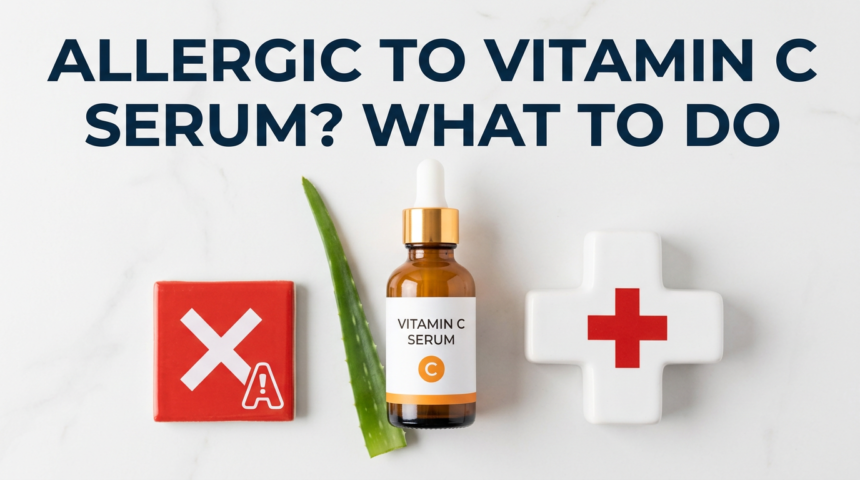
Allergic Reaction to Vitamin C Serum: Symptoms, Causes & What to Do
You know you’re having a reaction to a vitamin C serum because your skin becomes red, itchy, or inflamed within hours or days of applying it. The key to determining if it’s an allergic reaction (a true, immune-mediated allergy) versus a irritant reaction (a direct inflammatory response) lies in the specific symptoms and timeline, which we will detail. In most cases, the culprit isn’t the vitamin C molecule itself, but other ingredients in the serum formula, such as preservatives, stabilizers, or the product’s acidic pH1. Understanding this distinction is the first step to resolving the issue and safely incorporating a powerful antioxidant into your routine.
- Irritant Contact Dermatitis vs. Allergic Contact Dermatitis
- Specific Symptoms: From Rash to Hives
- The Real Culprits: It’s Rarely the Vitamin C
- How to Perform a Patch Test (The Right Way)
- What to Do If You Have a Reaction
- When to Seek a Professional Diagnosis and Allergy Test
- Choosing a Serum After a Reaction
- Common Questions
- When a Vitamin C Serum Isn’t the Answer
- Conclusion
- References
Irritant Contact Dermatitis vs. Allergic Contact Dermatitis
When your skin reacts to a skincare product, it’s almost always one of two conditions: irritant contact dermatitis (ICD) or allergic contact dermatitis (ACD). Both can look similar, but their underlying causes differ.
Irritant Contact Dermatitis (ICD): This is the most common reaction to vitamin C serums. It’s a direct, non-immunological response to a substance that physically damages the skin barrier. For vitamin C serums, common irritants include the low pH required for L-ascorbic acid stability, a high concentration of the active, or certain alcohol-based delivery systems. The reaction appears quickly, often within minutes or hours of first exposure, and is typically confined to the exact area where the serum was applied.
Allergic Contact Dermatitis (ACD): This is a true allergy, where your immune system mistakenly identifies a specific ingredient as a threat. Upon re-exposure, it mounts a defensive response, causing inflammation. ACD to a component within a vitamin C serum is far less common than ICD. It requires prior sensitization (meaning you’ve been exposed to the allergen before), and the reaction typically develops 24 to 48 hours after application. It can also spread beyond the initial application site. A 2021 review in the Journal of the American Academy of Dermatology emphasizes that differentiating between ICD and ACD is crucial for management2.
Specific Symptoms: From Rash to Hives
Recognizing the pattern of symptoms is essential. For a vitamin C serum rash caused by irritation (ICD), you’ll likely experience a burning or stinging sensation immediately or soon after application. The skin becomes red, dry, and flaky, and may feel tight. It resembles a mild chemical burn or windburn.
For a true allergic reaction (ACD), intense itching is a hallmark sign. The skin develops a red, bumpy rash that may include small, fluid-filled blisters (vesicles). In more pronounced cases, you may experience vitamin C serum hives (urticaria), which are raised, red, itchy welts that can appear beyond the application site. Swelling (angioedema) of the eyelids or lips is a more severe allergic sign that requires immediate medical attention. If you notice tiny bumps clustered on your skin, this could be a specific type of reaction, which we explore in our guide on why vitamin C serum causes tiny bumps.
The Real Culprits: It’s Rarely the Vitamin C
Pure L-ascorbic acid (vitamin C) is not a common contact allergen. When reactions occur, they are usually triggered by other components in the serum’s formulation. Common sensitizers include:
- Preservatives: Parabens, formaldehyde-releasing agents (like DMDM hydantoin or quaternium-15), and isothiazolinones (methylisothiazolinone) are frequent causes of allergic contact dermatitis in cosmetics.
- Fragrances and Botanical Extracts: Added essential oils, floral waters, or complex plant extracts (like citrus oils) are common allergens and can also be phototoxic when combined with sun exposure.
- Other Actives or Stabilizers: Some serums combine vitamin C with other potent ingredients like ferulic acid, certain forms of vitamin E (tocopherol acetate), or specific peptides that can be irritating at high concentrations.
- pH and Concentration: Even if you’re not allergic, a serum with a very low pH (under 3.5) or a high concentration of L-ascorbic acid (above 15-20%) can cause significant irritant contact dermatitis, especially on sensitive or compromised skin.
Contact dermatitis from vitamin C serum is therefore a product formulation issue, not necessarily an inherent problem with vitamin C itself.
How to Perform a Patch Test (The Right Way)
A proper patch test is your best defense against a full-face reaction. The American Contact Dermatitis Society recommends a specific protocol for testing new skincare products3. Do not skip this step, especially if you have a history of sensitive skin or reactions.
- Choose the Site: Apply a small amount of serum to a discreet, hairless area of skin that is similar in sensitivity to your face. The inner forearm or behind the ear are good options. Avoid the delicate skin of the inner wrist.
- Apply a Dime-Sized Amount: Use enough to create a thin film.
- Leave it On: Do not wash the area for at least 24 hours. Covering it with a bandage is not necessary and may intensify a reaction.
- Monitor for 48-72 Hours: Check the site at 24, 48, and 72 hours for any signs of redness, itching, burning, swelling, or blistering.
- Interpret the Results: Any negative reaction means you should not use the product on your face. No reaction after 72 hours suggests it is likely safe for you to proceed with a cautious first application.
What to Do If You Have a Reaction
If you experience a reaction, either during a patch test or after applying the serum to your face, follow these steps:
- Stop Using It Immediately: This is non-negotiable. Continuing use will worsen the reaction.
- Gently Cleanse: Use a bland, fragrance-free cleanser and lukewarm water to remove all traces of the serum from your skin.
- Simplify Your Routine: For the next few days, use only a gentle cleanser and a basic, fragrance-free moisturizer. Avoid all other actives (retinol, AHAs/BHAs, other vitamin C products).
- Soothe the Skin: Apply a cool compress to calm inflammation. A moisturizer containing ceramides, colloidal oatmeal, or niacinamide can help repair the barrier.
- Consider an Over-the-Counter Aid: For mild to moderate itching, a 1% hydrocortisone cream can be used for a maximum of 3-5 days. Do not use strong topical steroids without medical advice.
If your reaction is severe (significant swelling, widespread hives, blistering, or oozing), do not self-treat. See a doctor or dermatologist promptly.
When to Seek a Professional Diagnosis and Allergy Test
You should consult a dermatologist if:
- Your reaction is severe or does not resolve within a week of discontinuing the product.
- You experience recurrent, unexplained rashes from skincare products.
- You want to identify the specific allergen causing your reaction.
A dermatologist can perform a vitamin C serum allergy test, more accurately known as patch testing. This is a diagnostic procedure where small amounts of common allergens, including specific cosmetic preservatives and fragrances, are applied to your back under adhesive patches for 48 hours. The doctor then reads the results to identify which exact substance you are allergic to. This allows you to avoid future products containing that allergen. This is the gold standard for diagnosing allergic contact dermatitis2.
Choosing a Serum After a Reaction
If you’ve reacted to one vitamin C serum, it doesn’t mean you must abandon the ingredient forever. It means you need to be a more discerning shopper.
- Switch the Form of Vitamin C: If you reacted to a potent L-ascorbic acid serum, consider a gentler, stabilized derivative like sodium ascorbyl phosphate, magnesium ascorbyl phosphate, or tetrahexyldecyl ascorbate. These are often less irritating and formulated at a higher, more skin-friendly pH.
- Scrutinize the Ingredient List: Avoid serums containing your known allergens (if identified via patch testing) or common irritants like high alcohol content or strong fragrances.
- Lower the Concentration: Start with a product containing 10% vitamin C or less, rather than jumping to 20% or 25%.
- Look for Soothing Additives: Formulas that include hydrating and calming ingredients like hyaluronic acid, panthenol, or allantoin can help buffer potential irritation.
- Consider Formulas for Sensitive Skin: For curated options, explore our recommendations for the best vitamin C serums for sensitive skin, which prioritize gentle, minimalist formulations.
Common Questions
Can I be allergic to vitamin C itself?
True allergic contact dermatitis to pure L-ascorbic acid is extremely rare. Most reactions are to other ingredients in the serum formula, such as preservatives, fragrances, or the product’s acidic pH, which causes irritant contact dermatitis instead.
How long does a vitamin C serum rash last?
A mild irritant rash typically starts to improve within 24 to 72 hours of stopping the product. Full resolution may take up to a week. A true allergic reaction can take 1-2 weeks to fully subvene after the allergen is removed. Severe reactions require medical evaluation.
Can a vitamin C serum cause hives on my neck and chest?
Yes. Hives (urticaria) indicate a possible systemic or true allergic reaction. The serum may have dripped or been transferred to these areas, or the allergen may have triggered a broader immune response. This is a clear sign to discontinue use and consult a doctor.
Is a tingling sensation normal or a sign of allergy?
A mild, brief tingling upon application of an L-ascorbic acid serum can be normal due to the low pH. However, intense stinging, burning, or itching that persists or worsens is a sign of irritation (ICD) and should not be ignored.
Should I get a vitamin C serum allergy test?
Consider formal patch testing with a dermatologist if you have a history of repeated reactions to cosmetics, if a single reaction was severe, or if you want to definitively identify the specific allergen to avoid it in all future products.
Can I use vitamin C serum if I have eczema or rosacea?
You must proceed with extreme caution. Skin with eczema or rosacea has a compromised barrier and is far more prone to irritation. A low-concentration, derivative-based vitamin C serum formulated for sensitive skin, introduced very slowly after a successful patch test, may be an option. Consult your dermatologist first.
Will taking oral vitamin C help or hurt a skin reaction?
Oral vitamin C supplementation will not treat a topical allergic or irritant reaction on your skin. It also will not make you more likely to react to a topical serum. These are separate systems.
When a Vitamin C Serum Isn’t the Answer
If your skin is chronically reactive, suffering from active eczema flares, rosacea pustules, or perioral dermatitis, introducing a potent, acidic serum like vitamin C is likely to exacerbate inflammation and delay healing. In these cases, the priority is barrier repair and anti-inflammatory care, not antioxidant treatment. Focus on a minimalist routine with a gentle cleanser, a ceramide-rich moisturizer, and a zinc oxide-based sunscreen until your skin is fully calm and resilient for several weeks. At that point, you could reconsider with a supremely gentle derivative, but always under the guidance of your dermatologist if you have a diagnosed skin condition.
Conclusion
Navigating a reaction to a vitamin C serum requires calmly assessing your symptoms and acting methodically. First, distinguish between a common irritant reaction and a rarer true allergy by noting the onset and nature of your symptoms. Immediately stop using the product, soothe your skin with bland care, and allow it to recover. If reactions are a pattern, investing in dermatologist-performed patch testing can provide lifelong clarity. For future attempts, prioritize gentler vitamin C derivatives and fragrance-free, preservative-minimal formulas designed for sensitive skin. Your safest next step is to review our carefully selected list of gentle vitamin C serums and always, always patch test.
References
- Telang, P. S. (2013). Vitamin C in dermatology. Indian Dermatology Online Journal, 4(2), 143–146. https://doi.org/10.4103/2229-5178.110593
- Lampel, H. P., & Powell, D. (2021). Occupational and Hand Dermatitis: A Practical Approach. Clinics in Dermatology, 39(5), 762–773. (Adapted from principles of ACD/ICD differential diagnosis commonly outlined in JAAD).
- American Contact Dermatitis Society. (n.d.). Patch Testing. Retrieved April 10, 2023, from https://www.contactderm.org/patients/patch-testing