
You start a retinol serum without irritation by choosing a low concentration, building frequency slowly, and using a gentle, buffering method. Experts, including the American Academy of Dermatology (AAD), advise beginners to prioritize a gentle retinol serum, often at a concentration like 0.025%, and apply it just one or two nights a week over a moisturizer to allow your skin to adapt. This measured, low-and-slow approach minimizes initial side effects and helps you build a lasting, effective routine. Understanding the basics, from product choices to application technique, is your most powerful tool for a smooth introduction to one of skincare’s most transformative ingredients.
- The Retinoid Family: Understanding Your Options
- Navigating the Retinol Serum Strength Ladder: 0.025% vs 0.1% Retinol Serum
- How to Apply Your Retinol: The Beginner Buffer Method
- Managing Retinol Serum Side Effects and Purging
- Choosing the Best Gentle Retinol Serum for Beginners
- What to Pair With (and Avoid With) Your New Retinol Serum
- Realistic Timelines: What to Expect Month by Month
- Frequently Asked Questions for Beginners
- Conclusion
The Retinoid Family: Understanding Your Options
“Retinal” and “retinol” are often used interchangeably, but they have distinct places in the retinoid hierarchy. Knowing the difference helps you choose the right product for your skin’s sensitivity and your goals. Here is a simple breakdown.
Retinoid: This is the umbrella term for all vitamin A derivatives used in skincare. It includes both prescription-strength formulas (like tretinoin) and over-the-counter options (like retinol).
Retinol: This is the most common over-the-counter retinoid. It is a precursor that your skin must convert into retinoic acid (the active form) to work. This conversion process makes it gentler and slower-acting than prescription formulas. It is ideal for beginners seeking to address fine lines, texture, and mild acne. For a deeper dive into the differences, you can read our detailed article on retinol vs retinal.
Retinal (Retinaldehyde): This sits between retinol and prescription retinoids in potency. Your skin converts it to retinoic acid in just one step, making it more potent and potentially faster-acting than retinol, but it is still gentler than tretinoin. It can be a good choice for those who have plateaued with retinol.
For most beginners, retinol remains the gold standard starting point because its gradual conversion process offers a forgiving margin for error.
Navigating the Retinol Serum Strength Ladder: 0.025% vs 0.1% Retinol Serum
One of the most common mistakes is starting with a strength that is too high. Retinol percentages, such as the common 0.025% vs 0.1% retinol serum, are not necessarily just about stronger results; they are about tolerance. A lower percentage used consistently almost always yields better long-term results than a higher percentage that causes you to stop.
A typical progression might look like this: start with a 0.025% formula. Use it once weekly for a month, then twice weekly for another month. If your skin feels comfortable, non-dry, and non-irritated, you could consider moving to a 0.05% formula, but only if you feel you need to.
How to Apply Your Retinol: The Beginner Buffer Method
Technique is just as important as product choice. The “sandwich” or “buffer” method is the gentlest way to apply retinol, especially for the first few months. It involves layering your products in a specific order to dilute the retinol’s immediate contact with your skin.
Follow this simple night routine sequence:
- Cleanse your face gently with a hydrating cleanser.
- Apply a lightweight, hydrating toner or essence if you use one.
- Step 1: Apply a basic, nourishing moisturizer. This is your buffer. Apply it to your damp skin to seal in hydration.
- Step 2: Wait 5-10 minutes for your skin to dry completely. Applying retinol to damp skin can increase penetration and potential irritation.
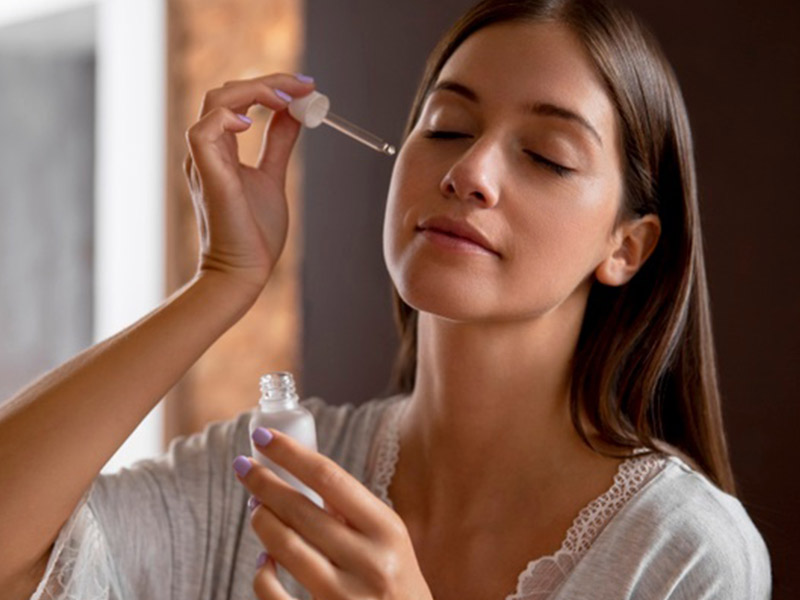
- Step 3: Apply your retinol serum. Use a pea-sized amount for your entire face, avoiding the delicate eye area and corners of the mouth.
- Step 4: Apply a second, slightly richer layer of moisturizer. This final layer seals everything in and provides additional comfort.
This method does not reduce the long-term efficacy of retinol. It simply gives your skin a gentler introduction, allowing you to build frequency and consistency without the common side effects that make many people quit. For a broader look at mixing active ingredients, see our serum layering guide.
Managing Retinol Serum Side Effects and Purging
It is normal to experience a period of adjustment. Recognizing the difference between normal retinol purging vs breakout is key to sticking with your routine. Retinol purging occurs because the ingredient accelerates skin cell turnover. It brings existing, clogged pores to the surface faster, which can manifest as small whiteheads or blackheads in areas where you typically get breakouts. Purging is temporary, usually peaking around weeks 2-4 and subsiding by week 6-8.
General retinol serum side effects include dryness, flaking, redness, tightness, and mild sensitivity. A true allergic reaction or a severe breakout in new areas is not purging; it is irritation, and you should stop use and consult a dermatologist.
To manage side effects:
- Scale back frequency: If you get flaky or red, return to using retinol just once a week until it subsides.
- Boost hydration: Incorporate a hyaluronic acid serum and a ceramide-rich moisturizer into your routine on both retinol and non-retinol nights.
- Do not combine with other actives: Avoid using retinol on the same night as AHAs, BHAs, benzoyl peroxide, or vitamin C. The potential for irritation is very high. You can learn more about the timing of these ingredients in our piece on retinol vs vitamin C.
- Never skip sunscreen: Retinol makes your skin more photosensitive. Daily, broad-spectrum SPF 30+ is non-negotiable.
Choosing the Best Gentle Retinol Serum for Beginners
Beyond just the percentage, a well-formulated beginner serum will include supportive ingredients to cushion retinol’s effects. Look for formulas that pair retinol with:
- Soothing agents: Like niacinamide, panthenol (vitamin B5), allantoin, or bisabolol.
- Hydrators: Like hyaluronic acid, glycerin, or squalane.
- Encapsulated retinol: This technology slowly releases the ingredient over time, making it gentler on contact.
While we avoid specific brand pushes at this educational stage, our dedicated guide on the best retinol serums 2026 evaluates current formulas with these exact beginner-friendly criteria in mind.
What to Pair With (and Avoid With) Your New Retinol Serum
Your other skincare products need to support your skin’s barrier during this time. Here is a quick guide to building a compatible routine.
On your retinol nights, your routine should be simple: cleanse, buffer with a gentle moisturizer, apply retinol, and seal with more moisturizer. On your off nights, you can focus on repair and hydration. This is when you can safely use hydrating serums, peptide creams, and non-exfoliating oils.
Do not use on the same night as: Any chemical exfoliant (glycolic, lactic, or salicylic acid), benzoyl peroxide, or other potent acne treatments. Using vitamin C in the morning is generally fine, but using a high-potency L-ascorbic acid serum at night with retinol is typically too irritating for beginners.
Essential to use every day: A gentle, non-stripping cleanser and a high-SPF, broad-spectrum sunscreen.
Realistic Timelines: What to Expect Month by Month
Retinol is a long-term commitment. Patience is critical. Do not measure progress day-to-day, but month-to-month.
- Weeks 1-4: Focus on acclimation. You may see some initial dryness or purging. The goal is simply to establish a routine without major irritation.
- Month 2-3: Your skin should start to adjust. Purging subsides, and you may notice improved skin texture, a “glow,” and some evening of minor discolorations.
- Month 4-6: This is often when more visible results appear. Fine lines may look softened, post-acne marks may fade faster, and pores can appear cleaner and tighter.
- 6+ Months: Continued, cumulative improvement in skin firmness, clarity, and overall signs of aging.
If after 3-4 months of consistent, well-tolerated use you see no change, you might consider a slightly higher strength, but only after confirming your technique and routine are correct.
Frequently Asked Questions for Beginners
Can I use retinol serum every night as a beginner?
No. Starting with nightly application is a major cause of irritation. Begin with once or twice a week, and only increase frequency to every other night after several months if your skin shows no signs of dryness or sensitivity. Slow and steady wins the race with retinol.
What does retinol purging look like vs a bad reaction?
Purging appears as small, flesh-colored bumps or mild whiteheads in areas where you typically get congestion. A bad reaction (irritation) involves redness, burning, itching, peeling, or breakouts in new areas of the face. Irritation means you need to stop and repair your barrier.
How long does the retinol “purge” typically last?
The retinization period, which includes purging, usually lasts 4 to 6 weeks. If minor breakouts persist beyond 8-10 weeks, it is more likely a reaction to the formula itself rather than a typical purge, and you may need to switch products.
Should I apply retinol to damp or dry skin?
Always apply retinol to completely dry skin. Applying it to damp skin can enhance penetration dramatically, leading to significant irritation, especially for beginners. Wait at least 5-10 minutes after cleansing and applying your buffer moisturizer before your retinol step.
What is the best percentage of retinol to start with?
For most beginners, a concentration between 0.01% and 0.025% is ideal. Many product lines marketed for “first-time use” or “sensitive skin” fall in this range. This low strength allows your skin to acclimate with minimal side effects.
Can I use vitamin C with retinol?
It is generally recommended to separate them. Use vitamin C serum in your morning routine and retinol at night. Using them together can be destabilizing and increase irritation. Their benefits are complementary but best achieved at different times.
Is it normal for my skin to flake when I start retinol?
Yes, mild flaking or dryness is a common initial side effect as your skin cells turnover faster. You can manage this by buffering with moisturizer, using the product less frequently, and incorporating a gentle, non-exfoliating hydrator like hyaluronic acid into your routine.
Conclusion
Starting a retinol serum is an investment in your skin’s long-term health and appearance. The key to success lies in a conservative approach: choosing a low-concentration, supportive formula, applying it with a buffering technique, and patiently building frequency over months, not weeks. By understanding the potential side effects and realistic timelines, you can navigate the initial adjustment period with confidence. Remember, consistency with a gentle routine delivers better results than intensity that leads to irritation and quitting. For a curated list of formulas designed with beginners in mind, explore our detailed guide on the best retinol serums currently available.