
What Color Should a Fresh Vitamin C Serum Be?
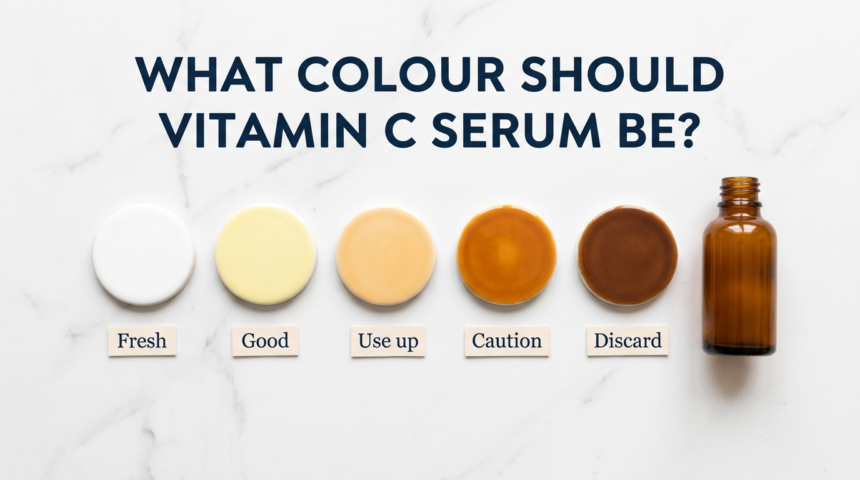
The color of a fresh vitamin C serum depends entirely on its active ingredient and formula. Pure L-ascorbic acid (LAA) serums should be colorless to a very pale, watery straw-yellow when fresh. Vitamin C serums stabilized with ferulic acid and vitamin E (like the famous CE Ferulic combination) often have a light to medium golden yellow hue right from the first use. Derivatives like magnesium ascorbyl phosphate (MAP) or tetrahexyldecyl ascorbate (THD ascorbate) can be completely clear. The correct shade for your serum is not universal, it’s a specific guide tied to its formulation.
- What Color Should a Fresh Vitamin C Serum Be?
- Understanding Vitamin C Types and Their Native Colors
- A Shade-by-Shade Vitamin C Serum Correct Shade Guide
- Clear Vitamin C Serum vs. Yellow: What’s the Difference?
- Why Your Vitamin C Serum Pale Yellow Color Is Probably Normal
- When Color Isn’t the Only Clue: Other Signs of Degradation
- Common Questions
- When a Color Guide Isn’t the Answer
- Conclusion
- References
If your serum has turned a dark amber, deep orange, or brown, that is not its normal state. That color signals significant oxidation, where the vitamin C has degraded and lost most of its efficacy. For a deeper look at this process, read our guide on why vitamin C serum turns orange.
Understanding Vitamin C Types and Their Native Colors
Vitamin C isn’t one single ingredient in skincare. It’s a family of compounds, each with different chemical structures, stabilities, and, importantly, different natural appearances in a serum base. Knowing which type you’re using is the first step to judging its color.
L-ascorbic acid (LAA): This is the pure, active form of vitamin C. In its pure, powdered state, it is a white crystalline solid. When dissolved in a water-based serum at the correct acidic pH (typically below 3.5), a fresh, stable LAA serum should be completely clear or have the faintest hint of pale, straw-like yellow1. Any initial yellow tinge often comes from other ingredients in the formula, like botanical extracts, not from oxidized LAA.
Vitamin C Derivatives: These are chemically modified forms of vitamin C designed for greater stability or different skin benefits. Their colors vary widely: Magnesium Ascorbyl Phosphate (MAP) and Sodium Ascorbyl Phosphate (SAP) are typically formulated into clear, milky, or opaque lotions. Ethyl Ascorbic Acid and Tetrahexyldecyl Ascorbate (THD ascorbate) are oil-soluble and often appear clear or with a slight yellow cast from their carrier oils. Ascorbyl Glucoside can add a slight yellow tint. Because they are more stable, a derivative serum staying clear or pale for months is normal, not a sign it’s not working.
Ferulic Acid Stabilized Formulas: The combination of L-ascorbic acid, ferulic acid, and vitamin E (alpha-tocopherol) is a gold standard for antioxidant protection and stability2. Ferulic acid itself has a natural yellow-brown color. Therefore, a fresh serum using this patented technology (pioneered by SkinCeuticals) will have a distinct, transparent golden-yellow color immediately upon opening. This is intentional and optimal, not a defect. The brand’s own documentation states the color can range from light to deep golden yellow based on the natural variation in the ferulic acid raw material.
A Shade-by-Shade Vitamin C Serum Correct Shade Guide
Use this table as a quick reference to assess what you see in the dropper. Remember, light exposure accelerates color change, so store your serum in a cool, dark place and observe it in natural light against a white background.
Clear Vitamin C Serum vs. Yellow: What’s the Difference?
The debate between a clear vitamin C serum vs. a yellow one often confuses new users. Is yellow bad? Not necessarily. As the table shows, a yellow serum can be perfectly fresh and potent if it contains ferulic acid. The confusion arises because yellow is also the primary visual indicator of L-ascorbic acid degradation.
The key is identifying the *type* of yellow. A light, bright, golden yellow in a known ferulic-acid formula is a feature. A dark, murky, amber or orange-yellow in a pure LAA serum that started clear is a bug. It means the ascorbic acid molecules have reacted with oxygen, forming dehydroascorbic acid and other colored byproducts. This process diminishes its antioxidant capacity and can potentially irritate the skin.
If you prefer the simplicity of a clear serum, vitamin C derivatives are an excellent choice. You’ll never have to play the “is-this-yellow-normal?” game. However, it’s important to note that while derivatives offer great stability and are gentler, most require conversion in the skin to active L-ascorbic acid, and the concentration of the final active form can be lower.
Why Your Vitamin C Serum Pale Yellow Color Is Probably Normal
If you’ve opened a new bottle of a pure L-ascorbic acid serum and see a pale yellow tint, don’t panic. A vitamin C serum pale yellow hue can be normal for several reasons beyond oxidation.
First, some brands use a very slight yellow dye or colorant to give a consistent appearance across batches, as naturally sourced ingredients can vary. Second, other active ingredients in the formula can contribute color. For example, a serum containing turmeric extract, certain peptides, or licorice root will have a natural yellow tint. Third, the pH-stabilizing agents or the specific water source can impart a minimal cast. The rule of thumb: if it’s a very light, uniform pale yellow from day one and doesn’t darken significantly over 2-3 months of use, it’s likely fine. The problem is progressive darkening.
For more nuance on using a serum in this early stage of color change, see our article on whether you can use slightly oxidized vitamin C serum.
When Color Isn’t the Only Clue: Other Signs of Degradation
Color is the most obvious sign, but your other senses can confirm if your serum is past its prime. Oxidation affects more than just hue.
Smell: A fresh L-ascorbic acid serum often has a faint, sharp, metallic, or acidic smell. As it oxidizes, this can change to a stale, old cooking oil, or burnt popcorn odor. This happens because vitamin E (tocopherol) in the formula also oxidizes. A serum that smells “off” is likely degraded, even if the color change is subtle.
Texture and Consistency: A serum separating into layers, becoming excessively oily, or turning thicker and sticky are physical signs of formula breakdown. The emulsification system may have failed due to pH changes from degradation.
Skin Reaction: If a serum that previously worked well for you suddenly causes unusual stinging, redness, or irritation, it may have degraded. Oxidation products can be more irritating than the fresh actives. Always patch test a new bottle, and be wary of new reactions from an old one.
Combine these observations with the color guide for a full assessment. For a complete checklist, read our detailed guide on how to tell if vitamin C serum has gone bad.
Common Questions
My vitamin C serum was yellow when I bought it. Is it oxidized?
Not necessarily. Check the ingredients. If it contains ferulic acid, a light to medium golden yellow is its normal, fresh color. If it’s a pure L-ascorbic acid serum with no ferulic acid, a noticeable yellow at purchase suggests it may have oxidized on the shelf. Contact the retailer.
Can I prevent my vitamin C serum from changing color?
You can slow oxidation significantly. Always store your serum in its original opaque or dark glass bottle in a cool, dark cabinet, not on a sunny bathroom counter. Keep the lid tightly closed to minimize air exposure. Consider refrigerating it, especially in warm climates, as heat accelerates degradation.
Do all vitamin C serums oxidize at the same rate?
No. Pure L-ascorbic acid in water is the most unstable and may oxidize within 3-6 months after opening. Derivatives like MAP and THD ascorbate are far more stable and can remain effective for 6-12 months. Ferulic-acid-stabilized LAA formulas have extended shelf lives due to the protective antioxidant network.
Is a completely clear serum as effective as a yellow one?
Effectiveness is not determined by color but by the active ingredient, its concentration, and the formula’s ability to deliver it. A clear serum with a stable derivative like 10% tetrahexyldecyl ascorbate can be highly effective. A clear serum claiming 20% L-ascorbic acid that remains clear for a year is likely using a flawed or ineffective stabilization method, as pure LAA is notoriously unstable.
Does a darker bottle mean the serum lasts longer?
Yes. Amber or opaque bottles block UV light, a major catalyst for oxidation. A serum in a clear glass bottle with no box is a red flag, as light exposure will degrade it rapidly, regardless of the formula inside.
When a Color Guide Isn’t the Answer
This guide helps you assess product freshness, but it can’t diagnose skin conditions. If you experience persistent redness, burning, itchy rash, or worsening hyperpigmentation after using any vitamin C serum—regardless of its color—discontinue use immediately. You may be experiencing an allergy to vitamin C itself (rare), a sensitivity to the low pH, or a reaction to another ingredient like a botanical or preservative. In these cases, the solution is not finding a fresher serum but consulting a dermatologist to identify the irritant and find a suitable alternative for your skin concerns. For some, a milder derivative or a completely different antioxidant like niacinamide may be the better path.
Conclusion
Choosing and maintaining an effective vitamin C serum starts with knowing what to look for. Match the color in the bottle to its ingredient list: pale straw for pure LAA, golden yellow for ferulic-acid blends, and clear for most derivatives. Your primary goal is to prevent the shift to amber or brown by storing it properly. If you prioritize stability and hate guesswork, start with a ferulic-acid-stabilized LAA serum or a clear derivative formula. To ensure you’re getting a fresh product, always check the packaging date if available and buy from reputable retailers with high turnover.
References
- Telang, P. S. (2013). Vitamin C in dermatology. Indian Dermatology Online Journal, 4(2), 143–146. https://doi.org/10.4103/2229-5178.110593
- Lin, F. H., et al. (2005). Ferulic acid stabilizes a solution of vitamins C and E and doubles its photoprotection of skin. Journal of Investigative Dermatology, 125(4), 826–832. https://doi.org/10.1111/j.0022-202X.2005.23768.x