
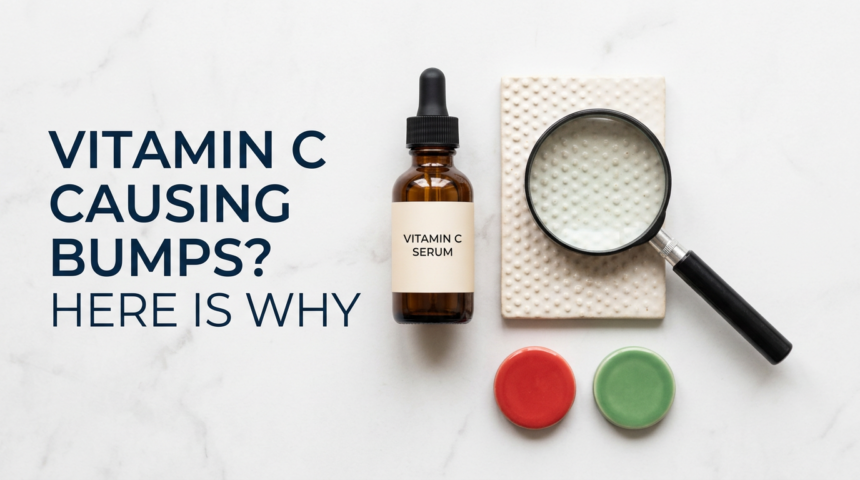
If your vitamin C serum is causing small bumps on your face, the reason is not purging. It’s likely one of three things: milia (tiny white bumps) caused by occlusive co-ingredients, irritation from the low pH or high concentration, or an allergic contact dermatitis. Purging is not a mechanism for pure ascorbic acid serums. To fix it, you need to identify the cause and adjust your routine accordingly. This can mean switching to a lighter formula, applying it less frequently, or performing a patch test to rule out an allergy.
Why Vitamin C Serums Cause Bumps, But Not Purging
It’s a common misconception that a vitamin C serum causing small bumps is a sign of skin purging. True purging happens when active ingredients like retinoids or acids accelerate skin cell turnover, bringing underlying microcomedones (the beginnings of clogged pores) to the surface faster. This is a temporary reaction. However, pure L-ascorbic acid (LAA), the most common active form of vitamin C, is not comedolytic—it doesn’t increase cell turnover in the same way. It primarily functions as an antioxidant. Therefore, if you’re breaking out in tiny bumps or whiteheads shortly after introducing a vitamin C serum, it’s almost certainly not purging. You are likely dealing with a form of irritation, a product clogging your pores, or an allergy.
Purging vs. breakout: A purge typically happens in areas where you normally get acne and consists of familiar pimple types (papules, pustules) that clear relatively quickly. A breakout or irritation from a new product can appear anywhere and often includes unfamiliar bumps, redness, and a feeling of discomfort.
Tiny White Bumps: The Milia Connection
If the small bumps are flesh-colored, hard, and appear on your cheeks or around your eyes, you may be experiencing milia. These are small keratin-filled cysts that form just under the skin’s surface. While L-ascorbic acid itself doesn’t cause milia, the vehicle formula that delivers it can. Many vitamin C serums are formulated with occlusive ingredients to stabilize the notoriously unstable vitamin C and create a pleasant sensory feel. Ingredients like silicones (dimethicone, cyclopentasiloxane), certain waxes, or heavy emollients can create a physical barrier on the skin that traps dead skin cells and sebum, encouraging milia formation in some individuals.
If you are prone to milia, look closely at the ingredient list. A lightweight, water-based serum with a simple preservative system is often a better choice than a creamy, silicone-heavy formula. While these occlusive agents are safe and effective for many, they can be problematic for those with slower skin cell turnover or congestion-prone skin. You can learn more about other potential side effects in our guide to common vitamin C serum side effects.
Irritation and Allergic Contact Dermatitis
For many people, tiny red bumps, general redness, stinging, or itching signal skin irritation or allergic contact dermatitis. These are distinct reactions with different root causes.
Irritation is a non-allergic inflammatory response. With vitamin C serums, it’s often caused by the low pH (typically around 3.5 or lower) required for L-ascorbic acid to be effective and stable. This acidic environment can temporarily disrupt the skin’s barrier, especially if your skin is sensitive, compromised, or if you’re using other potent actives (like retinols or exfoliating acids). Over-application or using too high a concentration (jumping straight to 20% when you’re new) can also overwhelm your skin, leading to a rash of small, irritated bumps.
Allergic contact dermatitis (ACD) is an immune system response to a specific ingredient. While pure ascorbic acid is not a common allergen, other components in the serum can be. Preservatives, botanical extracts, or even the vitamin C derivative used (like sodium ascorbyl phosphate or magnesium ascorbyl phosphate) can trigger an allergic reaction. Case studies in journals like the Journal of the American Academy of Dermatology have documented instances of allergic contact dermatitis to various forms of topical vitamin C and its accompanying ingredients.1 The American Contact Dermatitis Society maintains data showing that while rare, sensitization to ascorbic acid and its derivatives does occur.2
The key difference? Irritation usually stings or burns immediately upon application and calms down after rinsing. A true allergy involves itching that can persist for days, may spread beyond the application area, and typically appears 24-72 hours after contact. If you suspect an allergy, discontinue use and consult a dermatologist, who can perform patch testing.
How to Diagnose and Fix the Problem
Follow this step-by-step approach to identify the cause of your bumps and find a solution.
- Stop and Assess: Immediately stop using the serum. Observe the bumps over 3-5 days. Do they start to fade? If they are milia, they will likely remain but stop multiplying. If it’s irritation, the redness and itch should subside.
- Examine the Formula: Look at your serum’s ingredients. Does it contain heavy silicones, oils, or butters high on the list? If the bumps are white and hard, a formula switch is your first step.
- Re-introduce Cautiously (Patch Test): Once your skin has calmed, perform a patch test. Apply a small amount of serum behind your ear or on the inside of your forearm for 3-5 days. If no reaction occurs, try applying it to a small area of your face (like one cheek) twice a week. This slow introduction helps your skin adjust to the low pH.
- Adjust Your Routine: Never apply vitamin C on wet skin, as this increases penetration and potential irritation. Ensure your skin barrier is healthy by using a gentle cleanser and a good moisturizer. Consider spacing out actives—don’t use your vitamin C serum on the same night as a retinol or strong acid.
- Consider a Different Formula: If irritation persists, the concentration or pH may be too aggressive for you. Try a lower concentration (10% instead of 20%), a different derivative (like tetrahexyldecyl ascorbate, which is more stable and often gentler), or a serum specifically formulated for sensitive skin that includes soothing agents.
Selecting a Better Vitamin C Serum Formula
If your current serum is causing issues, choosing a new one requires careful ingredient scrutiny. Here’s what to look for and avoid based on your suspected problem.
Remember, the most expensive or popular serum isn’t necessarily the best for your skin. The goal is to find a stable, effective formula that your skin tolerates. For more on deciphering product claims, our article on vitamin C serum myths debunked can help.
When a Vitamin C Serum Isn’t the Answer
If you have a known history of sensitive skin, eczema, rosacea (especially in an active flare state), or perioral dermatitis, introducing a low-pH, active serum like L-ascorbic acid can be a trigger, not a solution. The resulting irritation can worsen the underlying condition. In these cases, it’s wiser to focus on repairing and maintaining your skin barrier with gentle, soothing products first. If you still want antioxidant protection, discuss gentler, non-acidic alternatives like topical niacinamide or resveratrol with your dermatologist. Never try to push through persistent redness, swelling, or intense itching—these are signs to stop and seek professional advice.
Common Questions
Can vitamin C serum cause purging?
No, vitamin C serum does not cause purging. Purging is linked to ingredients that increase cellular turnover, like retinoids and hydroxy acids. Vitamin C (L-ascorbic acid) is an antioxidant and does not have this effect. New bumps are a sign of irritation, clogged pores, or an allergic reaction.
How long do vitamin C serum bumps last?
If the bumps are from irritation, they should start to subside within a few days of discontinuing the product. Milia, however, are persistent and often do not go away on their own; they may require extraction by a dermatologist or esthetician. Allergic reactions can take a week or more to fully resolve.
Why does vitamin C serum cause milia?
The vitamin C itself doesn’t cause milia. The culprit is often the vehicle formula. Occlusive ingredients like certain silicones or heavy emollients can trap dead skin cells and sebum in the pores of those prone to milia, leading to those characteristic tiny, hard, white bumps.
What do allergic reaction bumps from vitamin C look like?
An allergic reaction to a vitamin C serum typically presents as an itchy, red rash with small bumps (papules) and possibly tiny water blisters (vesicles). The reaction is often delayed, appearing 24-72 hours after application, and can spread beyond the exact area where the serum was applied.
Can I use vitamin C serum if I have sensitive skin?
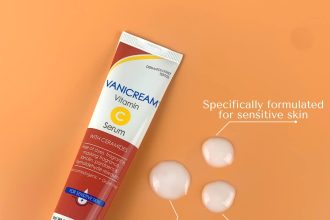
Yes, but you must choose carefully. Opt for a lower concentration (10% or less), a pH-stable derivative (like magnesium ascorbyl phosphate), and a formula fortified with barrier-supporting ingredients like ceramides. Always patch test and start with application every other day.
Conclusion
Finding the right vitamin C serum is about matching the formula to your skin’s tolerance, not just its antioxidant potency. If you’re getting small bumps, first rule out milia by switching from occlusive, silicone-rich serums to lightweight, water-based ones. If irritation is the issue, lower the concentration and frequency of use, and always apply to dry, calm skin. For persistent or itchy bumps, suspect an allergy and consult a professional. Start by reintroducing any new serum with a cautious patch test to avoid disrupting your skin’s balance.
References
- Heinemann, C., et al. (2005). Vitamin C (Ascorbic Acid) – Allergen of the Year 2005? Journal of the American Academy of Dermatology, 52(3), P153. https://doi.org/10.1016/j.jaad.2004.11.052 (Representative case study reference on contact dermatitis to ascorbic acid).
- American Contact Dermatitis Society. (2023). Contact Allergy Management Program (CAMP) Data. (Data on sensitization rates to ascorbic acid and common cosmetic allergens). Retrieved from https://www.contactderm.org