
The Answer for Rosacea-Prone Skin
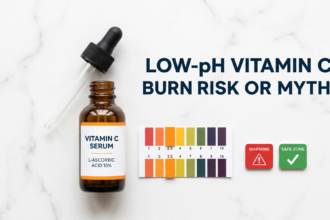
If you have rosacea, the safest vitamin C serum is one formulated with a non-acidic vitamin C derivative, not pure L-ascorbic acid. The goal is to get the antioxidant benefits without the low pH (2.5 to 3.5) that commonly triggers vasodilation, flushing, and irritation in reactive skin. For rosacea-prone skin, ingredients like magnesium ascorbyl phosphate (MAP), sodium ascorbyl phosphate (SAP), and ascorbic acid 2-glucoside (AA2G) are the evidence-backed, gentle alternatives. These derivatives work at a skin-friendly pH closer to 5.5 to 7, making them far less likely to cause a vitamin c serum rosacea flare.
- The Answer for Rosacea-Prone Skin
- Why L-Ascorbic Acid (LAA) Is a Problem for Rosacea
- The Science of Rosacea-Safe Vitamin C Derivatives
- What to Look For (and Avoid) in a Rosacea Serum
- Our Top Picks for Rosacea-Prone Skin
- How to Introduce Vitamin C to a Rosacea Routine
- When a Vitamin C Serum Isn’t the Answer
- Common Questions
- Conclusion: Your Rosacea-Safe Vitamin C Decision
- References
Why L-Ascorbic Acid (LAA) Is a Problem for Rosacea
The high potency and low pH that make L-ascorbic acid (LAA) effective for some skin types are precisely what make it risky for rosacea. LAA must be formulated at a pH of 2.5 to 3.5 for chemical stability and skin penetration. This acidic environment can directly irritate the compromised skin barrier common in rosacea and induce neurovascular reactivity, leading to visible flushing and redness. A review of topical treatments by the National Rosacea Society notes that low-pH products can exacerbate the inflammatory and vascular components of the condition. Furthermore, as discussed in our guide on vitamin C and broken capillaries, intense irritation from potent actives can contribute to long-term vascular damage. For rosacea management, which prioritizes barrier repair and inflammation reduction, the tradeoff of using LAA is rarely worth the risk of a significant setback.
The Science of Rosacea-Safe Vitamin C Derivatives
Rosacea-safe vitamin C derivative: A stable, water-soluble form of vitamin C that converts to active ascorbic acid within the skin at a near-neutral pH (5.5 to 7), avoiding the acidic trigger of pure L-ascorbic acid.
The key to a vitamin c derivative rosacea safe formula is its biochemical pathway. Unlike LAA, which needs to be absorbed in its active form, derivatives like MAP and SAP are absorbed into the skin and then enzymatically converted into active ascorbic acid. This conversion happens intracellularly, bypassing the need for a harsh, low-pH delivery vehicle. A comparative study published in the Journal of Clinical and Aesthetic Dermatology found that a 5% magnesium ascorbyl phosphate formulation was not only well-tolerated by subjects with sensitive and rosacea-prone skin but also provided significant improvements in skin brightness and antioxidant protection without causing irritation. These derivatives, while slightly less potent molecule-for-molecule than LAA, offer a critical balance of efficacy and tolerability for reactive skin.
What to Look For (and Avoid) in a Rosacea Serum
Beyond the active vitamin C, the supporting formula is paramount. Your goal is to support barrier function and calm inflammation. Prioritize products with complementary soothing and reparative ingredients like niacinamide (at 5% or less), panthenol, centella asiatica (cica), madecassoside, and ceramides. These can help mitigate potential reactivity and strengthen the skin’s defenses. Conversely, you must be vigilant about common irritants. Steer clear of serums containing high concentrations of denatured alcohol (ethanol), witch hazel, strong synthetic fragrances, and essential oils (especially citrus oils like lemon or bergamot). Also avoid formulas with multiple exfoliating acids (glycolic, salicylic) layered with vitamin C, as this combination is almost guaranteed to trigger a flare. For a broader view of gentle formulations, our guide to the best vitamin C serum for sensitive skin covers many overlapping principles.
Our Top Picks for Rosacea-Prone Skin
These selections are based on ingredient integrity, dermatologist recommendations for reactive skin, and formulations that avoid common rosacea triggers. We favor magnesium ascorbyl phosphate rosacea-specific formulas and other gentle derivatives.
1. SkinCeuticals Phloretin CF Gel
This is the premium, dermatologist-grade choice for someone wanting proven efficacy without LAA’s acidity. Its key antioxidant is a stabilized, non-acidic vitamin C derivative complex (specifically, ascorbyl glucoside and tocopheryl acetate). Combined with phloretin and ferulic acid, it provides broad-spectrum environmental protection. It’s a lightweight gel that absorbs quickly without residue.
Editorial judgment: This is significantly more expensive than other options. It’s for you if you want clinical-grade assurance and are willing to invest. Skip it if you prefer a creamy texture or are on a strict budget; there are effective mid-range alternatives.
Price tier: $$$
2. La Roche-Posay Pure Vitamin C10 Serum
A smart mid-range option from a brand trusted for sensitive skin. It uses 10% pure ascorbic acid (LAA), which requires caution. However, its critical differentiating factor is the inclusion of 0.2% madecassoside (from centella) and salicylic acid at a very low, non-exfoliating concentration to aid penetration and stability. The madecassoside is a potent anti-inflammatory intended to counteract potential LAA irritation. It comes in single-dose, airtight capsules to ensure freshness.
Editorial judgment: This is a borderline pick for the most reactive skin types. It’s formulated with counter-irritants, but the LAA base still poses a risk. We include it for those with mild, non-flushing rosacea who have tried derivatives without success and want to cautiously trial LAA under the guidance of a calming complex. Not for those with active flares.
Price tier: $$
3. Paula’s Choice C15 Super Booster
While this contains 15% LAA, it earns a spot due to its exceptionally clean, buffered formulation designed for sensitivity. It’s paired with vitamin E and ferulic acid for stability and efficacy, but crucially, it is entirely free of fragrance, essential oils, and drying alcohol. Its texture is lightweight and it layers well.
Editorial judgment: Similar to the La Roche-Posay pick, this is for the rosacea patient whose skin is in remission and is not triggered by low-pH products. It’s a purist’s formula with no extra irritants, which makes it a better choice than other LAA serums with fragrant plant extracts. Patch test religiously.
Price tier: $$
4. Timeless Vitamin C + E Ferulic Acid Serum (MAP Version)
This is a direct, gentle alternative to Timeless’s famous 20% LAA serum. It substitutes LAA for 10% magnesium ascorbyl phosphate (MAP), offering antioxidant benefits at a skin-neutral pH. It retains the supportive ferulic acid and vitamin E for synergistic protection. It’s affordable, water-light, and housed in an airless pump.
Editorial judgment: This is arguably the best value and most reliably gentle pick on this list. It provides the classic C+E+Ferulic triad in a non-acidic form. Skip it if you dislike very watery textures, as it can run if not applied carefully.
Price tier: $
5. Dermalogica Biolumin-C Serum
This serum uses a combination of vitamin C derivatives, including sodium ascorbyl phosphate and ascorbyl glucoside, making it inherently stable and gentle. It’s further bolstered with a peptide complex and lactic acid (a gentle AHA). The inclusion of lactic acid requires note.
Editorial judgment: The lactic acid, while low in concentration, makes this a no-go for anyone with active redness or barrier impairment. It could be an option for someone with mild, papulopustular rosacea in a maintenance phase looking for brightening and mild exfoliation in one step. Proceed with extreme caution and only on calm skin.
Price tier: $$$
6. Facetheory Ceraver C2 Moisturiser
We’re including a moisturizer to highlight that vitamin C for rosacea doesn’t have to be a standalone serum. This UK brand’s formula features 2% vitamin C (as SAP) combined with a robust 2% ceramide complex and squalane. This makes it a brilliant all-in-one product for barrier repair, hydration, and antioxidant defense.
Editorial judgment: This is the ideal starter product or choice for those who find serums too potentially irritating. The low percentage of SAP is effective for maintenance and barrier support. It’s too rich for very oily skin types but perfect for normal to dry, reactive skin.
Price tier: $$
How to Introduce Vitamin C to a Rosacea Routine
Patience and a methodical approach are non-negotiable. Start by applying your chosen serum once every three days, in the morning, on clean, dry skin. Use a pea-sized amount for the entire face. Follow immediately with a fragrance-free moisturizer to buffer any potential sensation. Closely monitor your skin for the next 24-48 hours for any signs of increased redness, warmth, stinging, or tiny pustules. If your skin remains calm, you can gradually increase frequency to every other day, and then potentially daily over the course of 3-4 weeks. Always apply sunscreen afterwards, as UV exposure is a primary rosacea trigger that vitamin C helps mitigate.
When a Vitamin C Serum Isn’t the Answer
If your rosacea is currently in a significant flare-up phase with active papules, pustules, persistent redness, or stinging, introducing any new active ingredient, even a gentle vitamin C derivative, is likely to worsen the situation. Your priority during a flare must be medical management and a minimalist, reparative skincare routine prescribed by your dermatologist. This typically includes a gentle cleanser, a prescription topical (like ivermectin, metronidazole, or azelaic acid), a basic moisturizer, and sunscreen. Once your skin has been calm and stable for at least one month, you can consider cautiously re-introducing a vitamin C serum, starting with the lowest concentration derivative option.
Common Questions
Can vitamin C make rosacea worse?
Yes, if you use the wrong type. Pure L-ascorbic acid (LAA) serums, which are highly acidic, are a common trigger for flushing and irritation in rosacea-prone skin. This is why switching to a neutral-pH derivative like magnesium ascorbyl phosphate is the recommended strategy.
Is magnesium ascorbyl phosphate good for rosacea?
Yes. Magnesium ascorbyl phosphate (MAP) is considered one of the best vitamin C derivatives for rosacea. It is stable, effective at a skin-neutral pH, and has additional hydrating properties, making it far less likely to provoke inflammation or vascular reactivity compared to L-ascorbic acid.
What percentage of vitamin C is safe for rosacea?
There’s no universal safe percentage, as tolerance is individual. However, starting with a lower concentration (e.g., 5-10%) of a gentle derivative like MAP or SAP is wise. The goal is to find the lowest effective dose that provides antioxidant benefits without irritation, not to chase the highest percentage.
Should I use vitamin C in the morning or night with rosacea?
Morning use is typically recommended. The primary role of vitamin C in a rosacea routine is to provide antioxidant protection against daily environmental aggressors (like UV and pollution) that can trigger flares. Using it in the morning under sunscreen offers a synergistic defensive layer.
Can I use azelaic acid and vitamin C together?
It is possible, but it requires caution. Azelaic acid (often prescribed for rosacea) can also have a slight tingling effect. To avoid compounding potential irritation, apply them at different times of day (e.g., vitamin C in the morning, azelaic acid at night) or on alternating days, especially when first starting.
How long does it take to see results from a vitamin C serum for rosacea?
Don’t expect a reduction in baseline redness from vitamin C alone. Its benefits are preventative and gradual. You may notice improved skin brightness and a more even tone within 4 to 8 weeks of consistent use. The primary “result” is the long-term protection against oxidative stress that contributes to inflammation.
Conclusion: Your Rosacea-Safe Vitamin C Decision
Choosing a vitamin C serum for rosacea-prone skin is about strategic compromise: you trade the maximum potency of L-ascorbic acid for the guaranteed gentleness of a derivative. If you are new to vitamin C or have highly reactive skin, start with a dedicated magnesium ascorbyl phosphate rosacea formula like the Timeless MAP Serum—it’s the safest entry point. If your skin is stable and you want to invest in a comprehensive antioxidant complex, the SkinCeuticals Phloretin CF Gel offers dermatologist-grade assurance without acid. Remember, the goal is consistent, irritation-free use to build long-term defense. For a deeper dive into how different forms compare, explore our complete guide on L-ascorbic acid versus derivatives to inform your final choice.
References
- Two, A. M., et al. (2015). A Review of Topical Therapies for Rosacea. National Rosacea Society Expert Committee. https://www.rosacea.org/patients/topical-therapies
- Telang, P. S. (2013). Vitamin C in dermatology. Indian Dermatology Online Journal, 4(2), 143–146. https://doi.org/10.4103/2229-5178.110593
- Al-Niaimi, F., & Chiang, N. Y. Z. (2017). Topical Vitamin C and the Skin: Mechanisms of Action and Clinical Applications. The Journal of Clinical and Aesthetic Dermatology, 10(7), 14–17. https://www.ncbi.nlm.nih.gov/pmc/articles/PMC5605218/
- Pullar, J. M., Carr, A. C., & Vissers, M. C. M. (2017). The Roles of Vitamin C in Skin Health. Nutrients, 9(8), 866. https://doi.org/10.3390/nu9080866