
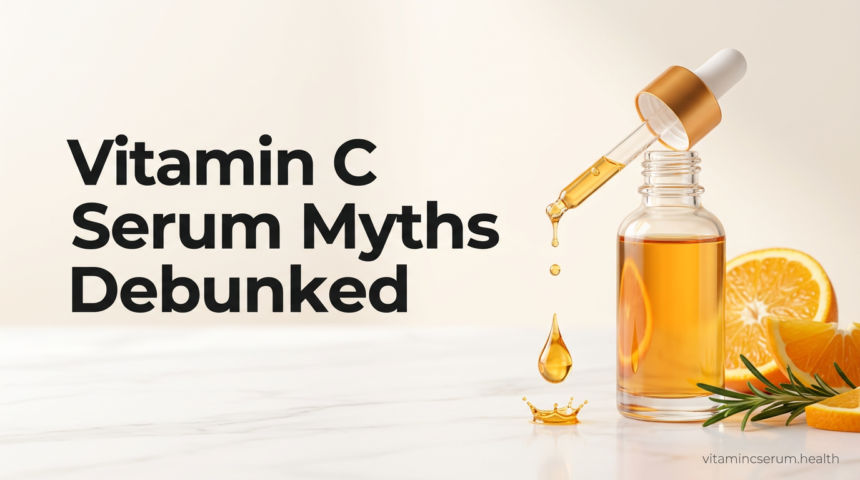
Vitamin C Serum Myths Debunked: 12 Things You’ve Been Told That Aren’t True
Vitamin C serum does not typically cause skin darkening or purging. These are two of the most persistent myths surrounding this antioxidant powerhouse. Darkening is often a sign of irritation, improper routine, or using an oxidized product, not a direct effect of vitamin C on melanin. A true purge, defined by a predictable pattern of breakouts from an ingredient that accelerates skin cell turnover, is not part of vitamin C’s primary function. If your skin is flaring up after applying a vitamin C serum, it’s more likely irritation, an allergy to another component like a specific derivative, or a compromised skin barrier, not a detox period. Knowing these foundational facts is the first step in using the ingredient effectively and safely. Let’s dismantle the misinformation, one myth at a time, with clear, evidence-based explanations.
- Myth 1: Vitamin C Serum Causes Purging
- Myth 2: Vitamin C Will Darken Your Skin
- Myth 3: Vitamin C and Niacinamide Cancel Each Other Out
- Myth 4: A Tingling Sensation Means It’s Working
- Myth 5: Using Expired or Oxidized Vitamin C is Harmless
- Myth 6: Higher Percentage Always Means Better Results
- Myth 7: You Only Need Vitamin C in the Morning
- Myth 8: All Vitamin C Serums Are Essentially the Same
- Myth 9: It’s Too Harsh for Sensitive or Rosacea-Prone Skin
- Myth 10: Vitamin C Can Replace Your Sunscreen
- Myth 11: If It’s Not Yellow, It’s Not Potent
- Myth 12: You’ll See Overnight Results
- When Vitamin C Serum Isn’t the Answer
- Common Questions
- Conclusion
- References
Debunking these myths is essential because following bad advice can lead you to waste money, damage your skin, or abandon a beneficial ingredient altogether. This guide separates popular skincare fiction from dermatological fact, covering everything from product compatibility to shelf life. By the end, you’ll know exactly how to integrate vitamin C into your routine for visible, lasting benefits.
Myth 1: Vitamin C Serum Causes Purging
Fact: True skin purging is rare with vitamin C serums, and what you’re experiencing is likely irritation or an allergic reaction.
Purging is a specific dermatological event where an active ingredient (like retinoids or chemical exfoliants) increases skin cell turnover so rapidly that it brings underlying microcomedones to the surface faster, causing a temporary, predictable wave of breakouts in areas where you typically get them. Vitamin C’s primary mechanisms—antioxidant protection, collagen synthesis, and brightening—do not accelerate exfoliation in this way. A comprehensive review of vitamin C in dermatology highlights its role as a regulator, not a rapid accelerator, of skin cell processes1.
If you develop pimples, redness, or stinging shortly after starting a vitamin C serum, you are not “purging.” You are likely reacting to the low pH of the formula, a specific derivative, a high concentration your skin isn’t accustomed to, or another ingredient like a fragrance or solvent. This is irritation, not detoxification. Stop using the product, repair your barrier, and consider patch testing a different formula (like a gentler vitamin C derivative) at a lower frequency.
Myth 2: Vitamin C Will Darken Your Skin
Fact: Properly formulated, fresh vitamin C inhibits melanin production and brightens skin. Perceived darkening is a sign of another problem.
This vitamin c serum skin darkening myth is pervasive and frightening, but the science is clear: vitamin C is a tyrosinase inhibitor, meaning it interferes with the enzyme needed to produce pigment. Clinical studies consistently show it helps reduce hyperpigmentation and improve overall skin tone2. So why might someone think their skin looks darker? Several culprits exist. First, and most common, is using an oxidized serum that has turned yellow or brown—the degraded product can stain the skin temporarily. Second, vitamin C’s low pH can compromise an already weak skin barrier, leading to inflammation (post-inflammatory hyperpigmentation) that darkens skin, especially in deeper skin tones. Third, inadequate sun protection amplifies UV damage, counteracting the serum’s work. The darkening is not from the vitamin C itself but from a compromised formula, routine, or skin state.
Myth 3: Vitamin C and Niacinamide Cancel Each Other Out
Fact: Modern, stable formulations of vitamin C and niacinamide can be used together safely and synergistically.
This outdated conflict stems from a single, decades-old study suggesting niacinamide and pure ascorbic acid could form a niacinamide-ascorbate complex under specific, high-heat lab conditions that don’t mirror modern skincare formulations. Current dermatological consensus, echoed in expert myth-busting interviews, dismisses this as a practical concern for at-home users3. Today’s serums are formulated with buffers, stabilizers, and specific pH levels to keep ingredients effective. Using a vitamin C serum with niacinamide is not only safe but potentially more effective. Niacinamide strengthens the skin barrier, reduces redness, and helps regulate oil, complementing vitamin C’s antioxidant and brightening effects. For a simplified routine, you can apply them together, or layer vitamin C in the AM and niacinamide in the PM. Explore our dedicated guide on building a regimen with both in our complete niacinamide serum guide.
Myth 4: A Tingling Sensation Means It’s Working
Fact: Tingling is a sign of irritation or a low pH, not efficacy. Effective vitamin C should not sting on healthy skin.
The belief that skincare must “feel something” to be effective is dangerous. Vitamin C serums, particularly L-ascorbic acid formulas, are acidic (pH around 3.5). This low pH is necessary for stability and skin penetration but can cause a tingling or mild itch on application. While a brief, fleeting sensation might be acceptable for some, persistent stinging, burning, or redness is your skin signaling distress. It indicates your barrier may be compromised, the concentration is too high for you, or you’re sensitive to another ingredient. Tolerating this discomfort does not mean you’re getting better results, it likely means you’re causing low-grade inflammation that can worsen sensitivity and hyperpigmentation over time. A well-formulated serum should absorb without significant sensation on intact, healthy skin.
Myth 5: Using Expired or Oxidized Vitamin C is Harmless
Fact: Using oxidized vitamin C is ineffective and may cause skin irritation or staining.
Oxidized vitamin C (dehydroascorbic acid) is a degraded form that has lost its electron-donating antioxidant capacity. The question of whether it is actively harmful has nuance. It will not provide the brightening, collagen-boosting, or protective benefits you bought it for. Furthermore, the degradation process can create other compounds that may be pro-oxidant or irritating to the skin. The most common visible downside is temporary yellowish staining on the skin or clothing. A dark amber or brown serum is a clear sign to discard it. To extend shelf life, store your serum in a cool, dark place (not the bathroom), choose airtight, opaque packaging, and consider formulas with additional antioxidants like vitamin E and ferulic acid, which stabilize L-ascorbic acid.
Myth 6: Higher Percentage Always Means Better Results
Fact: Efficacy plateaus around 20% L-ascorbic acid, and higher concentrations often increase irritation without added benefit.
More is not always better in skincare biochemistry. Research indicates that skin absorption of L-ascorbic acid reaches a maximum at concentrations between 10-20%. Concentrations above 20% do not yield significantly more vitamin C in the skin but exponentially increase the risk of irritation, stinging, and barrier disruption. For most people, a 10-15% concentration of a well-formulated L-ascorbic acid serum, or an effective concentration of a gentler derivative, provides optimal results with minimal risk. Starting with a lower percentage (5-10%) is the wise choice, especially if you have sensitive or reactive skin. The formulation’s pH, purity, and supporting ingredients (like ferulic acid) are far more important markers of quality than a sky-high percentage on the label.
Myth 7: You Only Need Vitamin C in the Morning
Fact: While morning use is ideal for antioxidant protection, using vitamin C at night supports repair and can be beneficial.
The classic advice to use vitamin C in the morning is based on solid science: it acts as a sacrificial antioxidant, neutralizing free radicals from UV light and pollution before they can damage your skin. This makes it an excellent partner for sunscreen. However, vitamin C’s work isn’t only defensive. Its role in collagen synthesis is a reparative, building process that happens around the clock. Using a vitamin C serum at night can support the skin’s natural overnight repair mechanisms. There is no rule against using it twice a day if your skin tolerates it. For those with sensitive skin or using other potent actives like retinoids at night, the morning-only rule is a perfect, effective strategy.
Myth 8: All Vitamin C Serums Are Essentially the Same
Fact: The type of vitamin C (derivative), formulation, pH, packaging, and supporting ingredients create vast differences in stability, penetration, and effect.
Choosing a vitamin C serum is not a one-size-fits-all decision. L-ascorbic acid is the most researched form but is unstable and requires low pH. Derivatives like sodium ascorbyl phosphate, magnesium ascorbyl phosphate, and tetrahexyldecyl ascorbate are more stable, gentler, and work at a higher pH, but they must be converted by the skin into active ascorbic acid. 3-O-ethyl ascorbic acid is a stable derivative known for brightening. Each has different strengths, lipid solubility, and ideal use cases. The vehicle also matters: a water-based serum, an anhydrous (water-free) suspension, or an oil-based formula will affect stability and feel. The packaging (airless pump vs. dropper bottle) is critical for preserving potency. Assuming they are all identical is a sure way to end up with an ineffective or irritating product.
Myth 9: It’s Too Harsh for Sensitive or Rosacea-Prone Skin
Fact: While L-ascorbic acid can be challenging, specific, stable vitamin C derivatives are excellent options for sensitive or rosacea-prone skin.
Sensitive skin often reacts to low pH and the potential pro-inflammatory degradation products of unstable L-ascorbic acid. This doesn’t mean you must forgo vitamin C’s benefits. Gentler derivatives like magnesium ascorbyl phosphate (MAP) or sodium ascorbyl phosphate (SAP) are formulated at a skin-friendly pH and are inherently less irritating. SAP even has studied anti-acne properties. These derivatives bypass the irritation hurdle of pure ascorbic acid while still providing antioxidant and brightening benefits. The key is to introduce any new product slowly, with careful patch testing, and to prioritize barrier-supporting ingredients like ceramides and niacinamide in the rest of your routine.
Myth 10: Vitamin C Can Replace Your Sunscreen
Fact: Vitamin C is a complementary antioxidant that enhances sun protection but cannot and should not replace a dedicated broad-spectrum sunscreen.
This is a critical safety distinction. Vitamin C’s antioxidant action helps “mop up” free radicals that are generated by UV exposure, and some studies suggest it may help bolster the skin’s natural defense systems. However, it does not absorb or reflect UVA/UVB rays. It provides zero measurable SPF. Think of it as a supportive ally to your sunscreen: sunscreen is the shield that blocks and reflects photons, while vitamin C is the internal defense that neutralizes any reactive molecules that get through. Relying on vitamin C serum alone for sun protection leaves your skin fully vulnerable to sunburn, photoaging, and DNA damage. Always layer it under a broad-spectrum SPF 30 or higher.
Myth 11: If It’s Not Yellow, It’s Not Potent
Fact: The color of a vitamin C serum depends on its form and added ingredients; many potent, stable serums are clear or have a slight tint from other components.
This myth confuses degradation with potency. Pure, freshly made L-ascorbic acid in a water-based solution is typically clear or has a very faint straw color. It turns yellow, then orange/brown as it oxidizes. Therefore, a deeply yellow L-ascorbic acid serum is likely already degrading. However, many derivatives are naturally colorless. Furthermore, brands often add other active ingredients that impart color—like ferulic acid (which can give a light yellow tint) or botanical extracts. Judging a serum’s strength by its color is misleading. Instead, trust the ingredient list, the brand’s reputation for stability, and the packaging. An airless, opaque pump bottle is a better indicator of a thoughtful formulation than the serum’s hue.
Myth 12: You’ll See Overnight Results
Fact: Vitamin C works cumulatively on a cellular level; consistent use for 8-12 weeks is needed to see visible improvements in brightness, texture, and fine lines.
Skincare is a marathon, not a sprint. Vitamin C’s mechanisms—stimulating collagen production, inhibiting melanin synthesis, and providing antioxidant protection—are gradual processes. Some immediate effects, like a hydrated glow or slight smoothing from the serum’s humectants, can be seen. But the transformational benefits of reduced dark spots, firmer skin, and a more even tone require patience and consistency. Clinical studies measuring these outcomes typically run for 12 weeks or longer2. Don’t give up after two weeks. Incorporate it into your daily routine, pair it with sunscreen, and evaluate your skin after a full season of use.
When Vitamin C Serum Isn’t the Answer
If you experience severe, blistering rashes, intense burning, swelling, or hive-like reactions after applying a vitamin C serum, you are not simply “purging” or adjusting. This indicates a probable allergic contact dermatitis or a severe irritant reaction. Discontinue use immediately and allow your skin to heal with a bland, fragrance-free moisturizer. If symptoms persist, consult a dermatologist. Furthermore, if your primary skin concern is active, widespread eczema, rosacea flare-ups, or open wounds, introducing an active serum like vitamin C will likely exacerbate inflammation. In these cases, your sole focus should be on barrier repair with a simplified routine under medical guidance. Once your skin is calm and healthy, you can cautiously reconsider incorporating antioxidants. Learn more about potential adverse reactions in our guide to the side effects of using vitamin C serum.
Common Questions
Does vitamin C serum cause purging?
No, true purging is not a typical reaction to vitamin C. A “purge” occurs when an ingredient speeds up cell turnover, rapidly bringing clogged pores to the surface. Vitamin C works as an antioxidant and collagen booster, not a cell-turnover accelerator. New breakouts are likely irritation or a reaction to another ingredient in the formula.
Can you use vitamin C with niacinamide?
Yes, absolutely. The old myth that they cancel each other out is based on outdated studies under unrealistic conditions. Modern, stable formulations allow them to be used together safely, even in the same routine. They work via different mechanisms and can complement each other well for brighter, calmer, more resilient skin.
Is oxidized vitamin C harmful?
Oxidized vitamin C is primarily ineffective, having lost its antioxidant power. While it is not typically “harmful” in a toxic sense, it can be irritating to some skin types and may cause temporary yellowish staining on skin or fabrics. It provides no skincare benefits, so it’s best to discard any serum that has turned a deep yellow or brown.
Should vitamin C serum tingle?
A mild, brief tingle might occur due to the acidic pH of some formulas, but it is not a sign that the product is working. Persistent stinging, burning, or redness is a clear signal of irritation. An effective vitamin C serum should not cause significant discomfort on healthy, intact skin.
How can I tell if my vitamin C serum is oxidized?
For L-ascorbic acid serums, a clear change in color is the primary indicator. Fresh product is typically clear or very pale straw. It progresses to yellow, then to orange or brown as it oxidizes. A change in smell (to a sour or off odor) can also signal degradation. Always store your serum in a cool, dark place and use it within the recommended period after opening.
Conclusion
Navigating vitamin C serum effectively requires replacing viral myths with verifiable science. The core takeaway is that a well-formulated serum should not cause you to purge, darken, or sting your way to results. If you’re new to vitamin C, start with a gentler derivative in stable packaging and use it consistently in the morning before sunscreen. If you’ve had reactions in the past, the issue was likely the specific formula, concentration, or your skin’s barrier state, not the ingredient category itself. For most people seeking antioxidant protection and gradual brightening, a mid-potency, well-stabilized serum used daily is the simple, effective path. To choose your ideal formula, compare the stability and gentleness of different vitamin C types before you buy.
References
- Pullar, J., Carr, A., & Vissers, M. (2017). The Roles of Vitamin C in Skin Health. Nutrients, 9(8), 866. https://doi.org/10.3390/nu9080866
- Telang, P. (2013). Vitamin C in dermatology. Indian Dermatology Online Journal, 4(2), 143–6. https://doi.org/10.4103/2229-5178.110593
- SELF Magazine. (2022, October 15). Skincare Ingredient Myths Dermatologists Wish You’d Stop Believing. (Paraphrased from dermatologist interviews within). https://www.self.com